


Summer's wide open hours raise two perennial questions: how to reset screen time once the school-year structure disappears, and how to fill the freed-up days with things that are good for kids and parents alike. This week rounds up seven favorite past summer posts to help with both.
Something a little different this week.
Every June, as the school year winds down, I notice the same questions start landing in my inbox. How do I reset our screen time rules now that the structure of school is gone? And what on earth do we do with all of these wide open hours?
Over the years, I have written a lot about summer, so rather than start from scratch, I wanted to gather some of my favorite posts in one place.
I have grouped them into two buckets. The first is about resetting how screens fit into the season. The second is about filling those freed-up hours with things that are good for our kids and good for us.
Pick whichever speaks to where your family is right now.
If you read only one of these, make it this one. It is my go-to playbook for hitting reset on family tech rules once the school-day structure disappears.
I walk through how to introduce new guidelines without a fight, including the idea of "procedural justice," which simply means that when kids feel heard and have some say, they are far more likely to go along with the rules, even when they do not get everything they want.
There are practical swaps in here too, like pairing an hour of fast-paced gaming with an hour of something more strategic or creative, plus ideas for calendars, vacation plans, and summer "house help" projects.
Key takeaway: resetting is always possible, even if you have let things slide for months. Summer is the perfect, natural moment to say, "It is time to reset our family policies."
Read Summer RESET: Tons of Tips
This is the companion piece to the post above. After I wrote about resetting, so many of you generously shared what actually happens in your own homes, and I gathered those real-world rules here.
You will find everything from punch-card systems and earn-your-screen-time setups to full device-free windows in the middle of the day.
Key takeaway: there is no single right answer. Seeing how a dozen different families handle the same challenge is one of the best ways to find the approach that fits yours.
Read People Share Their Summer Screen Time Rules
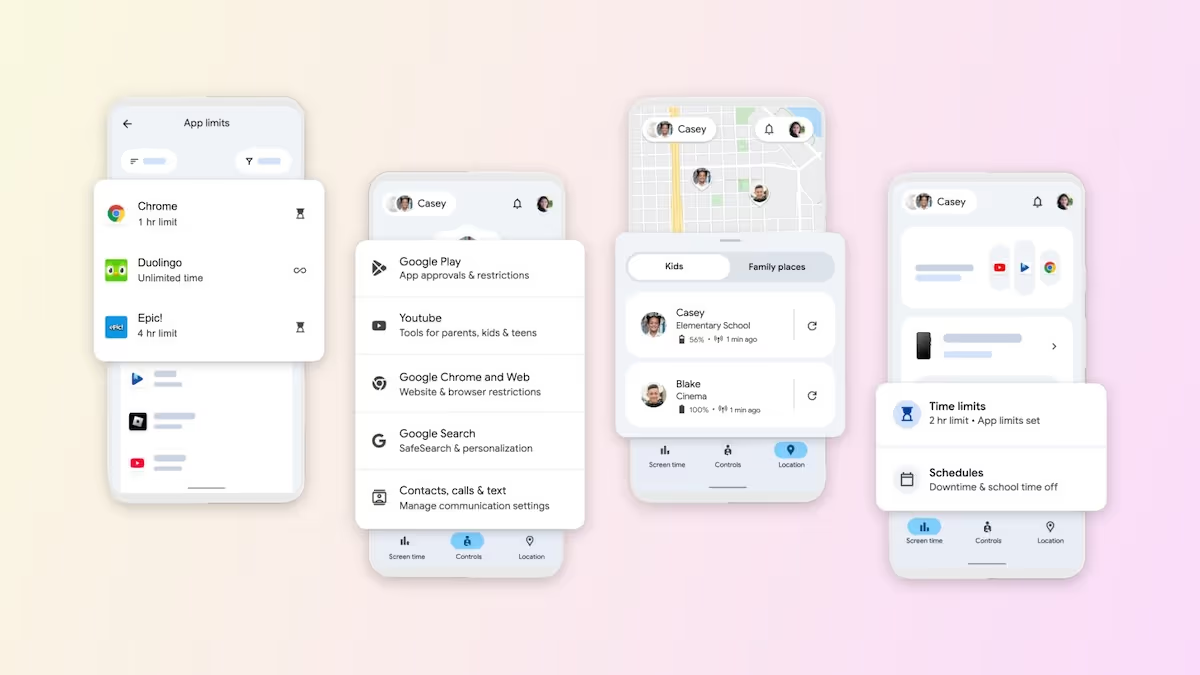
When unstructured time collides with the pull of screens, parental controls can take some of the daily friction off your plate.
In this more recent post, Lisa and I share our favorite guidelines for setting up or adjusting controls, along with a resource our team spent a long time compiling.
I am a big believer in "trust and verify," and in being transparent rather than monitoring in secret, which can quietly erode the very trust you are working so hard to build.
Key takeaway: controls are a helpful tool, but they never replace the weekly conversation about tech. That short, regular check-in remains my number one piece of advice.
Read Screen Time and Parental Controls


Learn more about showing our movies in your school or community!
Join Screenagers filmmaker Delaney Ruston MD for our latest Podcast

Learn more about our Screen-Free Sleep campaign at the website!
Our movie made for parents and educators of younger kids
Learn more about showing our movies in your school or community!
Register your interest in bringing our new movie to your school or community
Prefer to listen rather than read? This one began as a "Blogcast," an audio version of the summer reset theme.
I talk through screen time policies and offline ideas together, including why I still keep a device curfew in the summer (even a later one), why phones charge in my room rather than a common space, and the value of setting aside a day, or even a whole week, when tech is fully put away.
Key takeaway: aim for 80-90% consistency, not perfection. A few well-held policies do far more than a long list you cannot keep.
Read or listen to Summer Reset, Online and Offline

Once you have made some room, the question becomes what to do with it.
This post is a menu of family-friendly ideas across social connection and healthy habits, from a tradition-swapping game that had all of us laughing to a "signature dish" cooking challenge.
Before you read it, I invite you to make a small "pre-commitment" to actually try one idea, because we all know how easy it is to read a list like this and do none of it.
Key takeaway: Do not let anxiety drive your summer planning. Emotions are contagious, so rather than trying to cram in lost time, point out what is going right and celebrate the small wins.
Read 12 Summer Fun Ideas for the Whole Family
Summer reading comes loaded with our hopes, and often with our disappointments.
Here I get honest about how judgy I was for too long about the books my daughter chose, and why I came to regret it.
I make the case for loosening our grip, including appreciating the real benefits of audiobooks and learning to be a pleasant story listener rather than a critic.
Key takeaway: whatever captures their attention counts as an entry point. And do not underestimate the power of the word "yet," plenty of kids who are not into reading simply have not turned that corner yet.
Read Rethinking Our Kids' Summer Reading
As kids start thinking about summer work, this post looks at the often-overlooked mental health upsides of having a job.
I share the story of my own teenage boss, who made me feel trusted and capable, and a moving scene from Screenagers Under the Influence where a young man named Elijah thanks his former boss for helping him find purpose and rethink the friendships he was keeping.
Key takeaway: a summer job can offer far more than a paycheck. A sense of purpose, a caring mentor, and the feeling of being trusted can all be quietly powerful for a young person's well-being.
Read When You Were a Teen, What Job Made You Feel Good?
Whatever this summer holds for your family, I hope one or two of these give you a useful place to start. As always, the goal is not a perfect summer, just a slightly more intentional one.
Learn more about showing our movies in your school or community!
Join Screenagers filmmaker Delaney Ruston MD for our latest Podcast
Learn more about our Screen-Free Sleep campaign at the website!
Our movie made for parents and educators of younger kids
Join Screenagers filmmaker Delaney Ruston MD for our latest Podcast
Register your interest in bringing our new movie to your school or community
Subscribe to our YouTube Channel! We add new videos regularly and you'll find over 100 videos covering parenting advice, guidance, podcasts, movie clips and more. Here's our most recent:

As we’re about to celebrate 10 years of Screenagers, we want to hear what’s been most helpful and what you’d like to see next.
Please click here to share your thoughts with us in our community survey. It only takes 5–10 minutes, and everyone who completes it will be entered to win one of five $50 Amazon vouchers.
Something a little different this week.
Every June, as the school year winds down, I notice the same questions start landing in my inbox. How do I reset our screen time rules now that the structure of school is gone? And what on earth do we do with all of these wide open hours?
Over the years, I have written a lot about summer, so rather than start from scratch, I wanted to gather some of my favorite posts in one place.
I have grouped them into two buckets. The first is about resetting how screens fit into the season. The second is about filling those freed-up hours with things that are good for our kids and good for us.
Pick whichever speaks to where your family is right now.
If you read only one of these, make it this one. It is my go-to playbook for hitting reset on family tech rules once the school-day structure disappears.
I walk through how to introduce new guidelines without a fight, including the idea of "procedural justice," which simply means that when kids feel heard and have some say, they are far more likely to go along with the rules, even when they do not get everything they want.
There are practical swaps in here too, like pairing an hour of fast-paced gaming with an hour of something more strategic or creative, plus ideas for calendars, vacation plans, and summer "house help" projects.
Key takeaway: resetting is always possible, even if you have let things slide for months. Summer is the perfect, natural moment to say, "It is time to reset our family policies."
Read Summer RESET: Tons of Tips
This is the companion piece to the post above. After I wrote about resetting, so many of you generously shared what actually happens in your own homes, and I gathered those real-world rules here.
You will find everything from punch-card systems and earn-your-screen-time setups to full device-free windows in the middle of the day.
Key takeaway: there is no single right answer. Seeing how a dozen different families handle the same challenge is one of the best ways to find the approach that fits yours.
Read People Share Their Summer Screen Time Rules
When unstructured time collides with the pull of screens, parental controls can take some of the daily friction off your plate.
In this more recent post, Lisa and I share our favorite guidelines for setting up or adjusting controls, along with a resource our team spent a long time compiling.
I am a big believer in "trust and verify," and in being transparent rather than monitoring in secret, which can quietly erode the very trust you are working so hard to build.
Key takeaway: controls are a helpful tool, but they never replace the weekly conversation about tech. That short, regular check-in remains my number one piece of advice.
Read Screen Time and Parental Controls
Prefer to listen rather than read? This one began as a "Blogcast," an audio version of the summer reset theme.
I talk through screen time policies and offline ideas together, including why I still keep a device curfew in the summer (even a later one), why phones charge in my room rather than a common space, and the value of setting aside a day, or even a whole week, when tech is fully put away.
Key takeaway: aim for 80-90% consistency, not perfection. A few well-held policies do far more than a long list you cannot keep.
Read or listen to Summer Reset, Online and Offline
Once you have made some room, the question becomes what to do with it.
This post is a menu of family-friendly ideas across social connection and healthy habits, from a tradition-swapping game that had all of us laughing to a "signature dish" cooking challenge.
Before you read it, I invite you to make a small "pre-commitment" to actually try one idea, because we all know how easy it is to read a list like this and do none of it.
Key takeaway: Do not let anxiety drive your summer planning. Emotions are contagious, so rather than trying to cram in lost time, point out what is going right and celebrate the small wins.
Read 12 Summer Fun Ideas for the Whole Family
Summer reading comes loaded with our hopes, and often with our disappointments.
Here I get honest about how judgy I was for too long about the books my daughter chose, and why I came to regret it.
I make the case for loosening our grip, including appreciating the real benefits of audiobooks and learning to be a pleasant story listener rather than a critic.
Key takeaway: whatever captures their attention counts as an entry point. And do not underestimate the power of the word "yet," plenty of kids who are not into reading simply have not turned that corner yet.
Read Rethinking Our Kids' Summer Reading
As kids start thinking about summer work, this post looks at the often-overlooked mental health upsides of having a job.
I share the story of my own teenage boss, who made me feel trusted and capable, and a moving scene from Screenagers Under the Influence where a young man named Elijah thanks his former boss for helping him find purpose and rethink the friendships he was keeping.
Key takeaway: a summer job can offer far more than a paycheck. A sense of purpose, a caring mentor, and the feeling of being trusted can all be quietly powerful for a young person's well-being.
Read When You Were a Teen, What Job Made You Feel Good?
Whatever this summer holds for your family, I hope one or two of these give you a useful place to start. As always, the goal is not a perfect summer, just a slightly more intentional one.
Subscribe to our YouTube Channel! We add new videos regularly and you'll find over 100 videos covering parenting advice, guidance, podcasts, movie clips and more. Here's our most recent:
Sign up here to receive the weekly Tech Talk Tuesdays newsletter from Screenagers filmmaker Delaney Ruston MD.
We respect your privacy.
Something a little different this week.
Every June, as the school year winds down, I notice the same questions start landing in my inbox. How do I reset our screen time rules now that the structure of school is gone? And what on earth do we do with all of these wide open hours?
Over the years, I have written a lot about summer, so rather than start from scratch, I wanted to gather some of my favorite posts in one place.
I have grouped them into two buckets. The first is about resetting how screens fit into the season. The second is about filling those freed-up hours with things that are good for our kids and good for us.
Pick whichever speaks to where your family is right now.
If you read only one of these, make it this one. It is my go-to playbook for hitting reset on family tech rules once the school-day structure disappears.
I walk through how to introduce new guidelines without a fight, including the idea of "procedural justice," which simply means that when kids feel heard and have some say, they are far more likely to go along with the rules, even when they do not get everything they want.
There are practical swaps in here too, like pairing an hour of fast-paced gaming with an hour of something more strategic or creative, plus ideas for calendars, vacation plans, and summer "house help" projects.
Key takeaway: resetting is always possible, even if you have let things slide for months. Summer is the perfect, natural moment to say, "It is time to reset our family policies."
Read Summer RESET: Tons of Tips
This is the companion piece to the post above. After I wrote about resetting, so many of you generously shared what actually happens in your own homes, and I gathered those real-world rules here.
You will find everything from punch-card systems and earn-your-screen-time setups to full device-free windows in the middle of the day.
Key takeaway: there is no single right answer. Seeing how a dozen different families handle the same challenge is one of the best ways to find the approach that fits yours.
Read People Share Their Summer Screen Time Rules
When unstructured time collides with the pull of screens, parental controls can take some of the daily friction off your plate.
In this more recent post, Lisa and I share our favorite guidelines for setting up or adjusting controls, along with a resource our team spent a long time compiling.
I am a big believer in "trust and verify," and in being transparent rather than monitoring in secret, which can quietly erode the very trust you are working so hard to build.
Key takeaway: controls are a helpful tool, but they never replace the weekly conversation about tech. That short, regular check-in remains my number one piece of advice.
Read Screen Time and Parental Controls

I've been noticing the ways I can be rude, in person and on my phone. This week I share two recent examples of my own, plus why correcting myself out loud strengthens self-awareness. The talk that follows isn't about your kid. It's about you going first.
READ MORE >
An Oakland library has started lending out sports equipment and games alongside books, so families can borrow gear to use at nearby parks. It is a reminder that borrowing and lending between families is a simple way to fill a summer afternoon without a screen, while quietly modelling generosity and humility. We are out of practice at asking, but the person on the other end is usually glad to help.
READ MORE >
E-readers are convenient, but there are three reasons to lean toward paper books this summer. First, e-readers are screens, and the pull of everything else you could do on one makes it harder to stay immersed. Second, a large meta-analysis found people understand and remember slightly better on paper, especially with longer texts. Third, easy access to endless book samples makes it too tempting to jump ship rather than work through the slower parts, since reading, unlike TikTok, is about delayed gratification.
READ MORE >for more like this, DR. DELANEY RUSTON'S NEW BOOK, PARENTING IN THE SCREEN AGE, IS THE DEFINITIVE GUIDE FOR TODAY’S PARENTS. WITH INSIGHTS ON SCREEN TIME FROM RESEARCHERS, INPUT FROM KIDS & TEENS, THIS BOOK IS PACKED WITH SOLUTIONS FOR HOW TO START AND SUSTAIN PRODUCTIVE FAMILY TALKS ABOUT TECHNOLOGY AND IT’S IMPACT ON OUR MENTAL WELLBEING.