



Kids with ADHD benefit most when parents provide support at the exact moment behavior happens, a science-backed approach called "point of performance." Abruptly shifting from high-stimulation screen time to demanding tasks creates a "dopamine cliff," a brain chemistry drop that often shows up as resistance and conflict. Understanding both concepts helps parents smooth those transitions and build real skills and confidence in their kids over time.
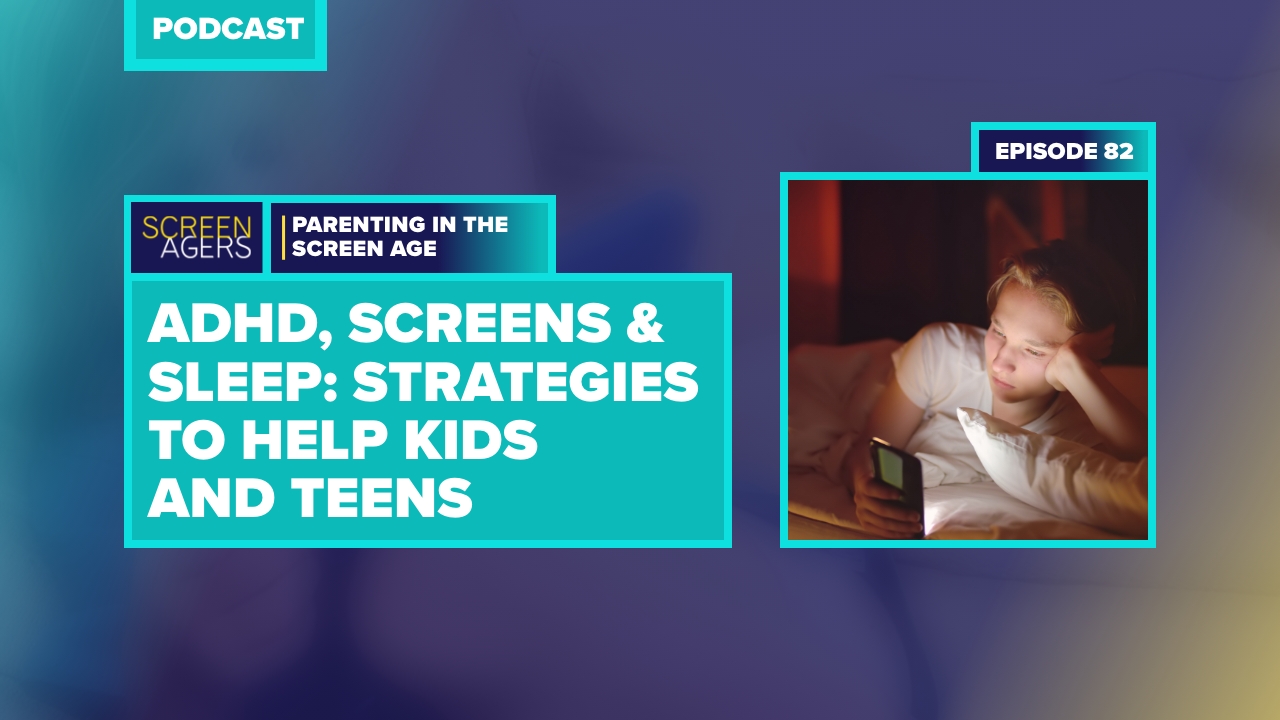
Yesterday, we released a new Parenting In the Screen Age podcast episode with guest Dr. Erin Schoenfelder Gonzalez, a clinical psychologist and researcher at Seattle Children’s Hospital who has spent much of her career helping young people with ADHD and their families.
Our conversation focuses on what ADHD looks like at different ages and what parenting skills can really help with screen time, physical activity, and sleep.
Today, I share two of the key strategies discussed.
You can listen to the episode here: Apple Podcasts // Spotify // YouTube // Website
Erin talks about why treating ADHD is not about having kids go to therapy once a week, but rather about parents learning how to provide reinforcement at the time of the behavior.
Here is what Erin says,
“What we find works is what the scientists call intervention at the point of performance. So that means helping kids in their real-world setting, where the behavior needs to happen. So we, that means adults, need to be equipped with that skill set to set them up for success and respond and give feedback in a way that is helpful and not, not harmful in the moment.
…so what we've found is if we can teach parents and educators everything that we've learned in the science about behavior change and supporting motivation and focus, that's where the change is gonna happen for kids.
When it comes to supporting children with ADHD, one of the most effective approaches is helping parents build skills through programs often known as Parent Behavior Management Training. Despite the name, these programs aren’t about “managing parents”— they’re designed to equip parents with practical, evidence-based strategies to support their their child better.
“...our parent behavior management training models focus on connecting the relationship, creating a lot of strength in that positive attachment bond, but then motivating kids by giving lots of attention to things we want to see more of, really engaging, drawing their attention to those things. Rewarding new behaviors that are not yet a habit. Creating external rewards so that kids can get consistent with the new behavior and have it become a habit and more automatic.”


Learn more about showing our movies in your school or community!
Join Screenagers filmmaker Delaney Ruston MD for our latest Podcast

Learn more about our Screen-Free Sleep campaign at the website!
Our movie made for parents and educators of younger kids
Learn more about showing our movies in your school or community!
Register your interest in bringing our new movie to your school or community
This is what happens when a child is asked to go straight from a highly stimulating activity, like scrolling on YouTube, to something that requires sustained effort, like homework.
From a brain standpoint, that is a steep drop, and it often shows up as resistance, avoidance, or conflict. When we understand this brain chemistry, it shifts how we, as parents, can approach these moments.
Instead of expecting kids to make that jump instantly, we can help smooth the transition. A quick play moment, going outside, or even just staying nearby can help bridge that gap.
When we combine this with supporting kids at the point of performance, we are not just managing behavior, we are giving them the support they need to build skills and confidence over time.
Learn more about showing our movies in your school or community!
Join Screenagers filmmaker Delaney Ruston MD for our latest Podcast
Learn more about our Screen-Free Sleep campaign at the website!
Our movie made for parents and educators of younger kids
Join Screenagers filmmaker Delaney Ruston MD for our latest Podcast
Register your interest in bringing our new movie to your school or community
Subscribe to our YouTube Channel! We add new videos regularly and you'll find over 100 videos covering parenting advice, guidance, podcasts, movie clips and more. Here's our most recent:

As we’re about to celebrate 10 years of Screenagers, we want to hear what’s been most helpful and what you’d like to see next.
Please click here to share your thoughts with us in our community survey. It only takes 5–10 minutes, and everyone who completes it will be entered to win one of five $50 Amazon vouchers.
Yesterday, we released a new Parenting In the Screen Age podcast episode with guest Dr. Erin Schoenfelder Gonzalez, a clinical psychologist and researcher at Seattle Children’s Hospital who has spent much of her career helping young people with ADHD and their families.
Our conversation focuses on what ADHD looks like at different ages and what parenting skills can really help with screen time, physical activity, and sleep.
Today, I share two of the key strategies discussed.
You can listen to the episode here: Apple Podcasts // Spotify // YouTube // Website
Erin talks about why treating ADHD is not about having kids go to therapy once a week, but rather about parents learning how to provide reinforcement at the time of the behavior.
Here is what Erin says,
“What we find works is what the scientists call intervention at the point of performance. So that means helping kids in their real-world setting, where the behavior needs to happen. So we, that means adults, need to be equipped with that skill set to set them up for success and respond and give feedback in a way that is helpful and not, not harmful in the moment.
…so what we've found is if we can teach parents and educators everything that we've learned in the science about behavior change and supporting motivation and focus, that's where the change is gonna happen for kids.
When it comes to supporting children with ADHD, one of the most effective approaches is helping parents build skills through programs often known as Parent Behavior Management Training. Despite the name, these programs aren’t about “managing parents”— they’re designed to equip parents with practical, evidence-based strategies to support their their child better.
“...our parent behavior management training models focus on connecting the relationship, creating a lot of strength in that positive attachment bond, but then motivating kids by giving lots of attention to things we want to see more of, really engaging, drawing their attention to those things. Rewarding new behaviors that are not yet a habit. Creating external rewards so that kids can get consistent with the new behavior and have it become a habit and more automatic.”
This is what happens when a child is asked to go straight from a highly stimulating activity, like scrolling on YouTube, to something that requires sustained effort, like homework.
From a brain standpoint, that is a steep drop, and it often shows up as resistance, avoidance, or conflict. When we understand this brain chemistry, it shifts how we, as parents, can approach these moments.
Instead of expecting kids to make that jump instantly, we can help smooth the transition. A quick play moment, going outside, or even just staying nearby can help bridge that gap.
When we combine this with supporting kids at the point of performance, we are not just managing behavior, we are giving them the support they need to build skills and confidence over time.
Subscribe to our YouTube Channel! We add new videos regularly and you'll find over 100 videos covering parenting advice, guidance, podcasts, movie clips and more. Here's our most recent:
Sign up here to receive the weekly Tech Talk Tuesdays newsletter from Screenagers filmmaker Delaney Ruston MD.
We respect your privacy.
Yesterday, we released a new Parenting In the Screen Age podcast episode with guest Dr. Erin Schoenfelder Gonzalez, a clinical psychologist and researcher at Seattle Children’s Hospital who has spent much of her career helping young people with ADHD and their families.
Our conversation focuses on what ADHD looks like at different ages and what parenting skills can really help with screen time, physical activity, and sleep.
Today, I share two of the key strategies discussed.
You can listen to the episode here: Apple Podcasts // Spotify // YouTube // Website
Erin talks about why treating ADHD is not about having kids go to therapy once a week, but rather about parents learning how to provide reinforcement at the time of the behavior.
Here is what Erin says,
“What we find works is what the scientists call intervention at the point of performance. So that means helping kids in their real-world setting, where the behavior needs to happen. So we, that means adults, need to be equipped with that skill set to set them up for success and respond and give feedback in a way that is helpful and not, not harmful in the moment.
…so what we've found is if we can teach parents and educators everything that we've learned in the science about behavior change and supporting motivation and focus, that's where the change is gonna happen for kids.
When it comes to supporting children with ADHD, one of the most effective approaches is helping parents build skills through programs often known as Parent Behavior Management Training. Despite the name, these programs aren’t about “managing parents”— they’re designed to equip parents with practical, evidence-based strategies to support their their child better.
“...our parent behavior management training models focus on connecting the relationship, creating a lot of strength in that positive attachment bond, but then motivating kids by giving lots of attention to things we want to see more of, really engaging, drawing their attention to those things. Rewarding new behaviors that are not yet a habit. Creating external rewards so that kids can get consistent with the new behavior and have it become a habit and more automatic.”

I've been noticing the ways I can be rude, in person and on my phone. This week I share two recent examples of my own, plus why correcting myself out loud strengthens self-awareness. The talk that follows isn't about your kid. It's about you going first.
READ MORE >
An Oakland library has started lending out sports equipment and games alongside books, so families can borrow gear to use at nearby parks. It is a reminder that borrowing and lending between families is a simple way to fill a summer afternoon without a screen, while quietly modelling generosity and humility. We are out of practice at asking, but the person on the other end is usually glad to help.
READ MORE >
E-readers are convenient, but there are three reasons to lean toward paper books this summer. First, e-readers are screens, and the pull of everything else you could do on one makes it harder to stay immersed. Second, a large meta-analysis found people understand and remember slightly better on paper, especially with longer texts. Third, easy access to endless book samples makes it too tempting to jump ship rather than work through the slower parts, since reading, unlike TikTok, is about delayed gratification.
READ MORE >for more like this, DR. DELANEY RUSTON'S NEW BOOK, PARENTING IN THE SCREEN AGE, IS THE DEFINITIVE GUIDE FOR TODAY’S PARENTS. WITH INSIGHTS ON SCREEN TIME FROM RESEARCHERS, INPUT FROM KIDS & TEENS, THIS BOOK IS PACKED WITH SOLUTIONS FOR HOW TO START AND SUSTAIN PRODUCTIVE FAMILY TALKS ABOUT TECHNOLOGY AND IT’S IMPACT ON OUR MENTAL WELLBEING.