

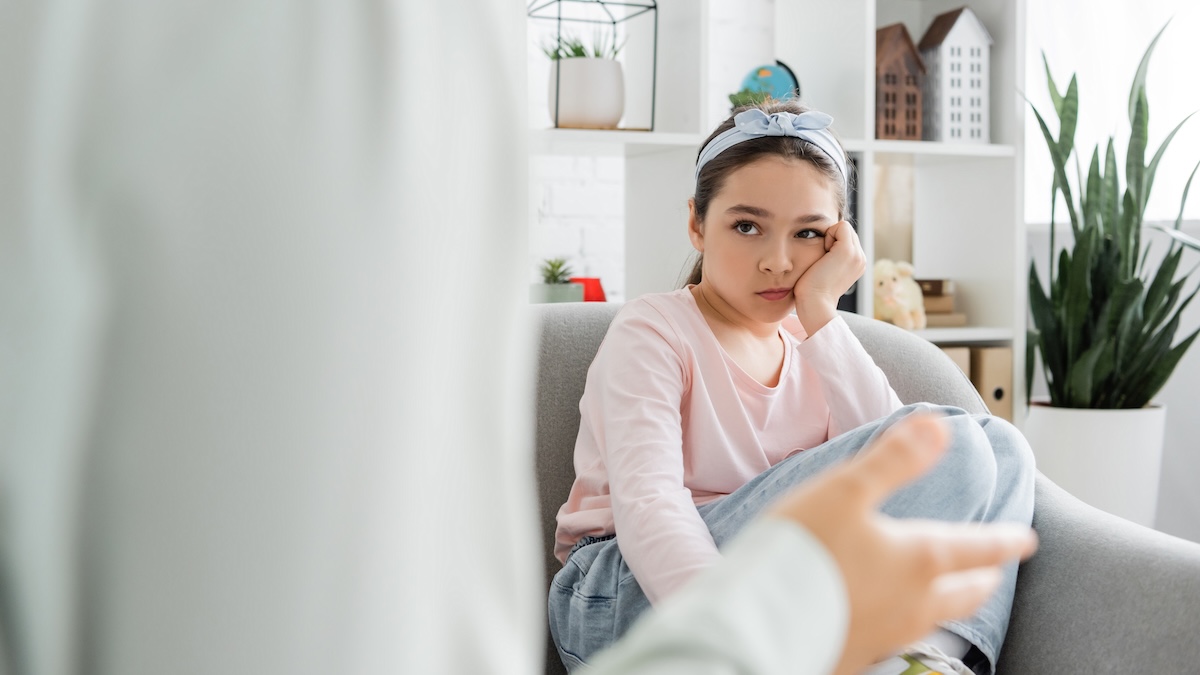

When kids break a rule, most parents default to handing down a consequence. But research on autonomy-supportive parenting shows that inviting kids to help decide the consequence leads to deeper learning, stronger accountability, and even kinder behavior toward others. Younger kids tend to overpunish themselves while teens often go easy, and both create natural openings for parents to guide the conversation. The goal isn't softer consequences. It's consequences that actually teach.
I got a text from a new friend last week asking if we could walk and talk about a situation that had just come up with her high school daughter.
On the walk, she told me that her daughter had upgraded to Snap+ on her mom's credit card without asking permission. And it was six months before her mom even noticed.
Her question for me: what consequence should there be?
I asked her, in turn, if she had asked her daughter what consequences she thought should happen.
But then I stopped myself and said, "You know what, I know from all the work I do in the parenting space that that's what we're supposed to do whenever possible: ask our kids what they think the consequences should be. But it always feels a little counterintuitive. I want to really understand this better."
So later I texted my friend Tammy Fisher Huson, PhD, a longtime school counselor, professor of new counselors, and author of the wonderful Fearless Parenting, to do an interview on exactly this topic. That conversation, which was released on my Parenting In The Screen Age Podcast yesterday, gave a clear roadmap for deciding on consequences for broken rules and examined specific scenarios.
The episode is called, A Clear Roadmap for When Your Kid Breaks a Rule and you can listen to it here: Apple Podcasts // Spotify // YouTube // Website
The part I want to share here today is about why asking kids and teens what they think the consequences should be matters so much.
The whole point of consequences is for kids to internalize that what they did was not okay.
When they have to think through their actions, sit with why it was a problem, and then consider what the outcome should be, they deepen their understanding in a way that a handed-down punishment simply doesn't produce.
As Tammy puts it: "It gets them into that role of understanding that all choices have an outcome."


Learn more about showing our movies in your school or community!
Join Screenagers filmmaker Delaney Ruston MD for our latest Podcast

Learn more about our Screen-Free Sleep campaign at the website!
Our movie made for parents and educators of younger kids
Learn more about showing our movies in your school or community!
Register your interest in bringing our new movie to your school or community
Our brains run constant subconscious if/then calculations; we are, at our core, prediction machines.
We want kids to be building their own understanding of life. We don't want to be the sole dispensers of "then" every time. A broken rule, a lash-out at a sibling, these are moments to invite a teen to grapple with cause and effect themselves.
Giving them that space is an act that prepares them to navigate their own choices as adults. This is also why the approach has a name: autonomy-supportive parenting.
A more collaborative approach to consequences, where kids have a hand in deciding them, has been linked in various studies to reduced oppositional behavior, greater internalization of why what they did wasn't okay, and a shift in focus from "this feels unfair" to "here's the lesson."
One of several studies I looked at around this topic connected autonomy-supportive parenting to kids being more likely to defend victims of bullying, among other positive effects.
When kids are involved, consequences feel less like something being done to them and more like something they're part of working through.
Tammy notes that younger children tend to overpunish themselves, while teens are more likely to go easy on themselves. When a child proposes something heavy, she suggests honoring the courage it takes: "That's a pretty significant consequence for the mistake you made. That takes a lot of ownership and accountability, and we want our kids to be accountable and responsible."
When they over-consequence, the parent gets to be the good guy, stepping in to say: "That feels like a big consequence for a first offense, something more fitting if this became a pattern."
She went home and asked her daughter what she thought the consequences should be. My friend sent me this text, shared here with her permission:
"She had already been thinking about it. She suggested she delete Snapchat from her phone for the duration of the Snap+ subscription, through May 4th. We also changed the settings on her phone so she can't download apps without parental consent. I agreed it seemed relatable, reasonable, and respectful."
The daughter took genuine responsibility, and they moved through it together with mutual respect.
All actions have consequences, and we have agency over the choices we make. When we work with our kids to decide what those consequences look like, we ensure they're understood as part of the learning, not punishment for punishment's sake.
Learn more about showing our movies in your school or community!
Join Screenagers filmmaker Delaney Ruston MD for our latest Podcast
Learn more about our Screen-Free Sleep campaign at the website!
Our movie made for parents and educators of younger kids
Join Screenagers filmmaker Delaney Ruston MD for our latest Podcast
Register your interest in bringing our new movie to your school or community
Subscribe to our YouTube Channel! We add new videos regularly and you'll find over 100 videos covering parenting advice, guidance, podcasts, movie clips and more. Here's our most recent:

As we’re about to celebrate 10 years of Screenagers, we want to hear what’s been most helpful and what you’d like to see next.
Please click here to share your thoughts with us in our community survey. It only takes 5–10 minutes, and everyone who completes it will be entered to win one of five $50 Amazon vouchers.
I got a text from a new friend last week asking if we could walk and talk about a situation that had just come up with her high school daughter.
On the walk, she told me that her daughter had upgraded to Snap+ on her mom's credit card without asking permission. And it was six months before her mom even noticed.
Her question for me: what consequence should there be?
I asked her, in turn, if she had asked her daughter what consequences she thought should happen.
But then I stopped myself and said, "You know what, I know from all the work I do in the parenting space that that's what we're supposed to do whenever possible: ask our kids what they think the consequences should be. But it always feels a little counterintuitive. I want to really understand this better."
So later I texted my friend Tammy Fisher Huson, PhD, a longtime school counselor, professor of new counselors, and author of the wonderful Fearless Parenting, to do an interview on exactly this topic. That conversation, which was released on my Parenting In The Screen Age Podcast yesterday, gave a clear roadmap for deciding on consequences for broken rules and examined specific scenarios.
The episode is called, A Clear Roadmap for When Your Kid Breaks a Rule and you can listen to it here: Apple Podcasts // Spotify // YouTube // Website
The part I want to share here today is about why asking kids and teens what they think the consequences should be matters so much.
The whole point of consequences is for kids to internalize that what they did was not okay.
When they have to think through their actions, sit with why it was a problem, and then consider what the outcome should be, they deepen their understanding in a way that a handed-down punishment simply doesn't produce.
As Tammy puts it: "It gets them into that role of understanding that all choices have an outcome."
Our brains run constant subconscious if/then calculations; we are, at our core, prediction machines.
We want kids to be building their own understanding of life. We don't want to be the sole dispensers of "then" every time. A broken rule, a lash-out at a sibling, these are moments to invite a teen to grapple with cause and effect themselves.
Giving them that space is an act that prepares them to navigate their own choices as adults. This is also why the approach has a name: autonomy-supportive parenting.
A more collaborative approach to consequences, where kids have a hand in deciding them, has been linked in various studies to reduced oppositional behavior, greater internalization of why what they did wasn't okay, and a shift in focus from "this feels unfair" to "here's the lesson."
One of several studies I looked at around this topic connected autonomy-supportive parenting to kids being more likely to defend victims of bullying, among other positive effects.
When kids are involved, consequences feel less like something being done to them and more like something they're part of working through.
Tammy notes that younger children tend to overpunish themselves, while teens are more likely to go easy on themselves. When a child proposes something heavy, she suggests honoring the courage it takes: "That's a pretty significant consequence for the mistake you made. That takes a lot of ownership and accountability, and we want our kids to be accountable and responsible."
When they over-consequence, the parent gets to be the good guy, stepping in to say: "That feels like a big consequence for a first offense, something more fitting if this became a pattern."
She went home and asked her daughter what she thought the consequences should be. My friend sent me this text, shared here with her permission:
"She had already been thinking about it. She suggested she delete Snapchat from her phone for the duration of the Snap+ subscription, through May 4th. We also changed the settings on her phone so she can't download apps without parental consent. I agreed it seemed relatable, reasonable, and respectful."
The daughter took genuine responsibility, and they moved through it together with mutual respect.
All actions have consequences, and we have agency over the choices we make. When we work with our kids to decide what those consequences look like, we ensure they're understood as part of the learning, not punishment for punishment's sake.
Subscribe to our YouTube Channel! We add new videos regularly and you'll find over 100 videos covering parenting advice, guidance, podcasts, movie clips and more. Here's our most recent:
Sign up here to receive the weekly Tech Talk Tuesdays newsletter from Screenagers filmmaker Delaney Ruston MD.
We respect your privacy.
I got a text from a new friend last week asking if we could walk and talk about a situation that had just come up with her high school daughter.
On the walk, she told me that her daughter had upgraded to Snap+ on her mom's credit card without asking permission. And it was six months before her mom even noticed.
Her question for me: what consequence should there be?
I asked her, in turn, if she had asked her daughter what consequences she thought should happen.
But then I stopped myself and said, "You know what, I know from all the work I do in the parenting space that that's what we're supposed to do whenever possible: ask our kids what they think the consequences should be. But it always feels a little counterintuitive. I want to really understand this better."
So later I texted my friend Tammy Fisher Huson, PhD, a longtime school counselor, professor of new counselors, and author of the wonderful Fearless Parenting, to do an interview on exactly this topic. That conversation, which was released on my Parenting In The Screen Age Podcast yesterday, gave a clear roadmap for deciding on consequences for broken rules and examined specific scenarios.
The episode is called, A Clear Roadmap for When Your Kid Breaks a Rule and you can listen to it here: Apple Podcasts // Spotify // YouTube // Website
The part I want to share here today is about why asking kids and teens what they think the consequences should be matters so much.
The whole point of consequences is for kids to internalize that what they did was not okay.
When they have to think through their actions, sit with why it was a problem, and then consider what the outcome should be, they deepen their understanding in a way that a handed-down punishment simply doesn't produce.
As Tammy puts it: "It gets them into that role of understanding that all choices have an outcome."
I've been noticing the ways I can be rude, in person and on my phone. This week I share two recent examples of my own, plus why correcting myself out loud strengthens self-awareness. The talk that follows isn't about your kid. It's about you going first.
READ MORE >
An Oakland library has started lending out sports equipment and games alongside books, so families can borrow gear to use at nearby parks. It is a reminder that borrowing and lending between families is a simple way to fill a summer afternoon without a screen, while quietly modelling generosity and humility. We are out of practice at asking, but the person on the other end is usually glad to help.
READ MORE >
E-readers are convenient, but there are three reasons to lean toward paper books this summer. First, e-readers are screens, and the pull of everything else you could do on one makes it harder to stay immersed. Second, a large meta-analysis found people understand and remember slightly better on paper, especially with longer texts. Third, easy access to endless book samples makes it too tempting to jump ship rather than work through the slower parts, since reading, unlike TikTok, is about delayed gratification.
READ MORE >for more like this, DR. DELANEY RUSTON'S NEW BOOK, PARENTING IN THE SCREEN AGE, IS THE DEFINITIVE GUIDE FOR TODAY’S PARENTS. WITH INSIGHTS ON SCREEN TIME FROM RESEARCHERS, INPUT FROM KIDS & TEENS, THIS BOOK IS PACKED WITH SOLUTIONS FOR HOW TO START AND SUSTAIN PRODUCTIVE FAMILY TALKS ABOUT TECHNOLOGY AND IT’S IMPACT ON OUR MENTAL WELLBEING.