

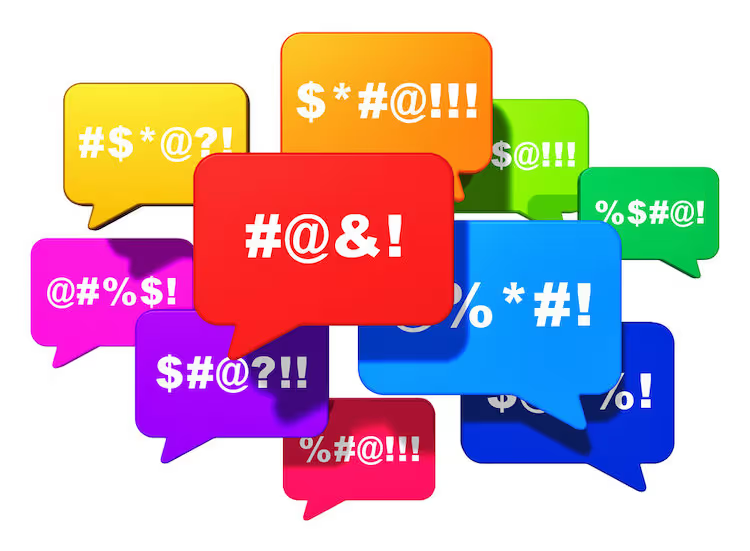

It turns out swearing is on the rise according to this study. Even without a study, we know that through all the media and social media youth are exposed to these days, they are seeing swear words like never before. That’s where our work as loving adults is required. It is crucial that we take the time to have short, calm conversations about key topics, like this one. This study found that fewer than half of U.S. parents regularly discuss social media content with their pre-teens or teens. Let’s be among those parents that do address it.
I remember so clearly when my son had a flip phone—which was only eight years ago when he was 11—and I let him text me for rides as well as to communicate with his friends. We discussed that since online communication was new to him, I would monitor it now and then to make sure that it was going okay. I recall I had a bad feeling when I saw a fair amount of swearing in texts. Can you relate? I know I’m not the only parent that feels this way when our kids start using this language. The wider reaching consequence is particularly worrisome because so much of communication happens in group chats, on social media, and playing video games online.
Similar to 5-year-olds getting a little buzz from the reactions they elicit when they use “potty talk,” preteens are getting a buzz from using “forbidden words.” It makes them feel older, cooler, and separate from parents. The primary drive, of course, is that it’s a way to fit in with their peers who are also using that language. Issues around strong words continue into their teen years, so this TTT applies to kids of all ages who communicate online.
Being strategic is the best approach to the discussion because if we lecture our kids, or if we talk about it in a concerned tone, they are likely to tune us out. One way to decrease defensiveness and push back is to bring up the science around swearing. Here is an experiment that brings up a possible upside of why an individual might say harsh words to themselves in a difficult situation. In this experiment, researchers found that the people who swore while submerging a hand in ice water were able to keep their hands in the ice much longer than those who didn’t curse. The researchers theorize that using harsh words activates the flight or fight adrenal response and interferes with the link between fearing and perceiving pain, so subjects who swore could tolerate more pain.
You might want to also talk about some of the downsides of swearing. For example, using harsh words can make the people around you feel uncomfortable. And specifically, when people swear online, it's hard to interpret the meaning and the context of the words and you may be misunderstood.
We would love for you to share this TTT any way that works for you, whether that’s on social media or via a newsletter. If you want to send it out in your newsletter we just ask that you credit us and link to our website, and let us know at lisa@screenagersmovie.com.
HOST A SCREENING to help spark change.
FIND EVENT LISTINGS
Do you organize professional development in schools? We now have a 6-hour, 3-part training module. Request more information here Professional Development.
Stay in touch with the Screenagers community on Facebook, Twitter and leave comments below.


Learn more about showing our movies in your school or community!
Join Screenagers filmmaker Delaney Ruston MD for our latest Podcast

Learn more about our Screen-Free Sleep campaign at the website!
Our movie made for parents and educators of younger kids
Learn more about showing our movies in your school or community!
Register your interest in bringing our new movie to your school or community
Learn more about showing our movies in your school or community!
Join Screenagers filmmaker Delaney Ruston MD for our latest Podcast
Learn more about our Screen-Free Sleep campaign at the website!
Our movie made for parents and educators of younger kids
Join Screenagers filmmaker Delaney Ruston MD for our latest Podcast
Register your interest in bringing our new movie to your school or community

As we’re about to celebrate 10 years of Screenagers, we want to hear what’s been most helpful and what you’d like to see next.
Please click here to share your thoughts with us in our community survey. It only takes 5–10 minutes, and everyone who completes it will be entered to win one of five $50 Amazon vouchers.
It turns out swearing is on the rise according to this study. Even without a study, we know that through all the media and social media youth are exposed to these days, they are seeing swear words like never before. That’s where our work as loving adults is required. It is crucial that we take the time to have short, calm conversations about key topics, like this one. This study found that fewer than half of U.S. parents regularly discuss social media content with their pre-teens or teens. Let’s be among those parents that do address it.
I remember so clearly when my son had a flip phone—which was only eight years ago when he was 11—and I let him text me for rides as well as to communicate with his friends. We discussed that since online communication was new to him, I would monitor it now and then to make sure that it was going okay. I recall I had a bad feeling when I saw a fair amount of swearing in texts. Can you relate? I know I’m not the only parent that feels this way when our kids start using this language. The wider reaching consequence is particularly worrisome because so much of communication happens in group chats, on social media, and playing video games online.
Similar to 5-year-olds getting a little buzz from the reactions they elicit when they use “potty talk,” preteens are getting a buzz from using “forbidden words.” It makes them feel older, cooler, and separate from parents. The primary drive, of course, is that it’s a way to fit in with their peers who are also using that language. Issues around strong words continue into their teen years, so this TTT applies to kids of all ages who communicate online.
Being strategic is the best approach to the discussion because if we lecture our kids, or if we talk about it in a concerned tone, they are likely to tune us out. One way to decrease defensiveness and push back is to bring up the science around swearing. Here is an experiment that brings up a possible upside of why an individual might say harsh words to themselves in a difficult situation. In this experiment, researchers found that the people who swore while submerging a hand in ice water were able to keep their hands in the ice much longer than those who didn’t curse. The researchers theorize that using harsh words activates the flight or fight adrenal response and interferes with the link between fearing and perceiving pain, so subjects who swore could tolerate more pain.
You might want to also talk about some of the downsides of swearing. For example, using harsh words can make the people around you feel uncomfortable. And specifically, when people swear online, it's hard to interpret the meaning and the context of the words and you may be misunderstood.
We would love for you to share this TTT any way that works for you, whether that’s on social media or via a newsletter. If you want to send it out in your newsletter we just ask that you credit us and link to our website, and let us know at lisa@screenagersmovie.com.
HOST A SCREENING to help spark change.
FIND EVENT LISTINGS
Do you organize professional development in schools? We now have a 6-hour, 3-part training module. Request more information here Professional Development.
Stay in touch with the Screenagers community on Facebook, Twitter and leave comments below.
Sign up here to receive the weekly Tech Talk Tuesdays newsletter from Screenagers filmmaker Delaney Ruston MD.
We respect your privacy.
It turns out swearing is on the rise according to this study. Even without a study, we know that through all the media and social media youth are exposed to these days, they are seeing swear words like never before. That’s where our work as loving adults is required. It is crucial that we take the time to have short, calm conversations about key topics, like this one. This study found that fewer than half of U.S. parents regularly discuss social media content with their pre-teens or teens. Let’s be among those parents that do address it.
I remember so clearly when my son had a flip phone—which was only eight years ago when he was 11—and I let him text me for rides as well as to communicate with his friends. We discussed that since online communication was new to him, I would monitor it now and then to make sure that it was going okay. I recall I had a bad feeling when I saw a fair amount of swearing in texts. Can you relate? I know I’m not the only parent that feels this way when our kids start using this language. The wider reaching consequence is particularly worrisome because so much of communication happens in group chats, on social media, and playing video games online.
Similar to 5-year-olds getting a little buzz from the reactions they elicit when they use “potty talk,” preteens are getting a buzz from using “forbidden words.” It makes them feel older, cooler, and separate from parents. The primary drive, of course, is that it’s a way to fit in with their peers who are also using that language. Issues around strong words continue into their teen years, so this TTT applies to kids of all ages who communicate online.
Being strategic is the best approach to the discussion because if we lecture our kids, or if we talk about it in a concerned tone, they are likely to tune us out. One way to decrease defensiveness and push back is to bring up the science around swearing. Here is an experiment that brings up a possible upside of why an individual might say harsh words to themselves in a difficult situation. In this experiment, researchers found that the people who swore while submerging a hand in ice water were able to keep their hands in the ice much longer than those who didn’t curse. The researchers theorize that using harsh words activates the flight or fight adrenal response and interferes with the link between fearing and perceiving pain, so subjects who swore could tolerate more pain.
You might want to also talk about some of the downsides of swearing. For example, using harsh words can make the people around you feel uncomfortable. And specifically, when people swear online, it's hard to interpret the meaning and the context of the words and you may be misunderstood.
We would love for you to share this TTT any way that works for you, whether that’s on social media or via a newsletter. If you want to send it out in your newsletter we just ask that you credit us and link to our website, and let us know at lisa@screenagersmovie.com.
HOST A SCREENING to help spark change.
FIND EVENT LISTINGS
Do you organize professional development in schools? We now have a 6-hour, 3-part training module. Request more information here Professional Development.
Stay in touch with the Screenagers community on Facebook, Twitter and leave comments below.
I've been noticing the ways I can be rude, in person and on my phone. This week I share two recent examples of my own, plus why correcting myself out loud strengthens self-awareness. The talk that follows isn't about your kid. It's about you going first.
READ MORE >
An Oakland library has started lending out sports equipment and games alongside books, so families can borrow gear to use at nearby parks. It is a reminder that borrowing and lending between families is a simple way to fill a summer afternoon without a screen, while quietly modelling generosity and humility. We are out of practice at asking, but the person on the other end is usually glad to help.
READ MORE >
E-readers are convenient, but there are three reasons to lean toward paper books this summer. First, e-readers are screens, and the pull of everything else you could do on one makes it harder to stay immersed. Second, a large meta-analysis found people understand and remember slightly better on paper, especially with longer texts. Third, easy access to endless book samples makes it too tempting to jump ship rather than work through the slower parts, since reading, unlike TikTok, is about delayed gratification.
READ MORE >for more like this, DR. DELANEY RUSTON'S NEW BOOK, PARENTING IN THE SCREEN AGE, IS THE DEFINITIVE GUIDE FOR TODAY’S PARENTS. WITH INSIGHTS ON SCREEN TIME FROM RESEARCHERS, INPUT FROM KIDS & TEENS, THIS BOOK IS PACKED WITH SOLUTIONS FOR HOW TO START AND SUSTAIN PRODUCTIVE FAMILY TALKS ABOUT TECHNOLOGY AND IT’S IMPACT ON OUR MENTAL WELLBEING.