


When I was a kid, screen and phone time existed, and kids and parents had conflicts over them. We played games, got our entertainment, gossiped with friends, and relied on technology and devices to do it. So how different was it?
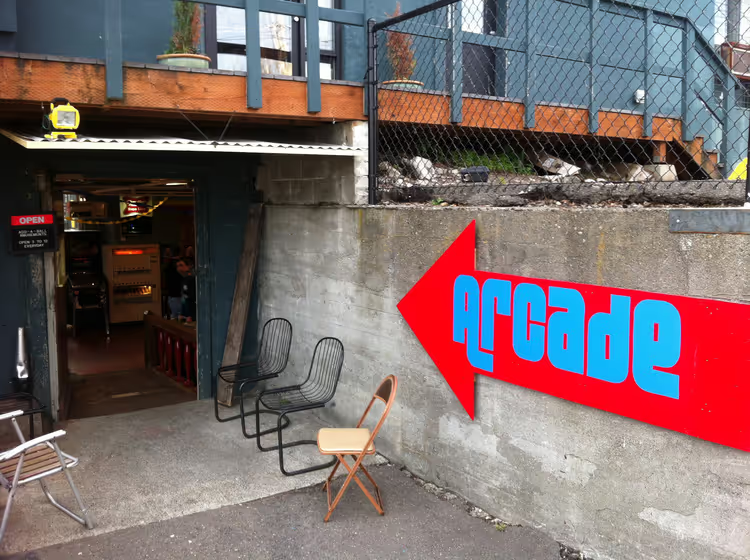
Back then I met friends at the video game arcade down on Durant in Berkeley. For a home movie night, we could meet up at the local video rental store and browse the choices together. Parents would run into other parents and get movie recommendations from the people they knew. At home, only one person could be on the phone at a time. Some families had a favorite T.V. show that aired once a week on one of the four tv networks, and the whole family would gather at that same night every week to be together to watch it. To do research for a school project, I would go to the local library.
At my house today we can each watch our own YouTube video, indie film or Hollywood blockbuster on our own personal screen whenever we feel like it. My daughter can FaceTime with my Screenager producer’s daughter to catch up long-distance. We moved from Seattle all the way to NY and everyone in my family can have conversations with anyone “back home” easily. Research for school or work can happen regardless of library hours.


Learn more about showing our movies in your school or community!
Join Screenagers filmmaker Delaney Ruston MD for our latest Podcast

Learn more about our Screen-Free Sleep campaign at the website!
Our movie made for parents and educators of younger kids
Learn more about showing our movies in your school or community!
Register your interest in bringing our new movie to your school or community
Learn more about showing our movies in your school or community!
Join Screenagers filmmaker Delaney Ruston MD for our latest Podcast
Learn more about our Screen-Free Sleep campaign at the website!
Our movie made for parents and educators of younger kids
Join Screenagers filmmaker Delaney Ruston MD for our latest Podcast
Register your interest in bringing our new movie to your school or community

As we’re about to celebrate 10 years of Screenagers, we want to hear what’s been most helpful and what you’d like to see next.
Please click here to share your thoughts with us in our community survey. It only takes 5–10 minutes, and everyone who completes it will be entered to win one of five $50 Amazon vouchers.
When I was a kid, screen and phone time existed, and kids and parents had conflicts over them. We played games, got our entertainment, gossiped with friends, and relied on technology and devices to do it. So how different was it?
Back then I met friends at the video game arcade down on Durant in Berkeley. For a home movie night, we could meet up at the local video rental store and browse the choices together. Parents would run into other parents and get movie recommendations from the people they knew. At home, only one person could be on the phone at a time. Some families had a favorite T.V. show that aired once a week on one of the four tv networks, and the whole family would gather at that same night every week to be together to watch it. To do research for a school project, I would go to the local library.
At my house today we can each watch our own YouTube video, indie film or Hollywood blockbuster on our own personal screen whenever we feel like it. My daughter can FaceTime with my Screenager producer’s daughter to catch up long-distance. We moved from Seattle all the way to NY and everyone in my family can have conversations with anyone “back home” easily. Research for school or work can happen regardless of library hours.
Sign up here to receive the weekly Tech Talk Tuesdays newsletter from Screenagers filmmaker Delaney Ruston MD.
We respect your privacy.
When I was a kid, screen and phone time existed, and kids and parents had conflicts over them. We played games, got our entertainment, gossiped with friends, and relied on technology and devices to do it. So how different was it?
Back then I met friends at the video game arcade down on Durant in Berkeley. For a home movie night, we could meet up at the local video rental store and browse the choices together. Parents would run into other parents and get movie recommendations from the people they knew. At home, only one person could be on the phone at a time. Some families had a favorite T.V. show that aired once a week on one of the four tv networks, and the whole family would gather at that same night every week to be together to watch it. To do research for a school project, I would go to the local library.
At my house today we can each watch our own YouTube video, indie film or Hollywood blockbuster on our own personal screen whenever we feel like it. My daughter can FaceTime with my Screenager producer’s daughter to catch up long-distance. We moved from Seattle all the way to NY and everyone in my family can have conversations with anyone “back home” easily. Research for school or work can happen regardless of library hours.
I've been noticing the ways I can be rude, in person and on my phone. This week I share two recent examples of my own, plus why correcting myself out loud strengthens self-awareness. The talk that follows isn't about your kid. It's about you going first.
READ MORE >
An Oakland library has started lending out sports equipment and games alongside books, so families can borrow gear to use at nearby parks. It is a reminder that borrowing and lending between families is a simple way to fill a summer afternoon without a screen, while quietly modelling generosity and humility. We are out of practice at asking, but the person on the other end is usually glad to help.
READ MORE >
E-readers are convenient, but there are three reasons to lean toward paper books this summer. First, e-readers are screens, and the pull of everything else you could do on one makes it harder to stay immersed. Second, a large meta-analysis found people understand and remember slightly better on paper, especially with longer texts. Third, easy access to endless book samples makes it too tempting to jump ship rather than work through the slower parts, since reading, unlike TikTok, is about delayed gratification.
READ MORE >for more like this, DR. DELANEY RUSTON'S NEW BOOK, PARENTING IN THE SCREEN AGE, IS THE DEFINITIVE GUIDE FOR TODAY’S PARENTS. WITH INSIGHTS ON SCREEN TIME FROM RESEARCHERS, INPUT FROM KIDS & TEENS, THIS BOOK IS PACKED WITH SOLUTIONS FOR HOW TO START AND SUSTAIN PRODUCTIVE FAMILY TALKS ABOUT TECHNOLOGY AND IT’S IMPACT ON OUR MENTAL WELLBEING.