


Two recent times I was rude: not saying hello before asking a stranger for directions, and cutting a friend off on the phone. Correcting myself out loud in the moment is what makes the self-awareness stick. Rudeness is a practice to keep noticing, not a one-and-done fix, and the conversation starters ask you to share your own examples rather than point out your kid's.
I don't want to be rude. And I've realized the best way not to be is to first notice the ways I already am sometimes.
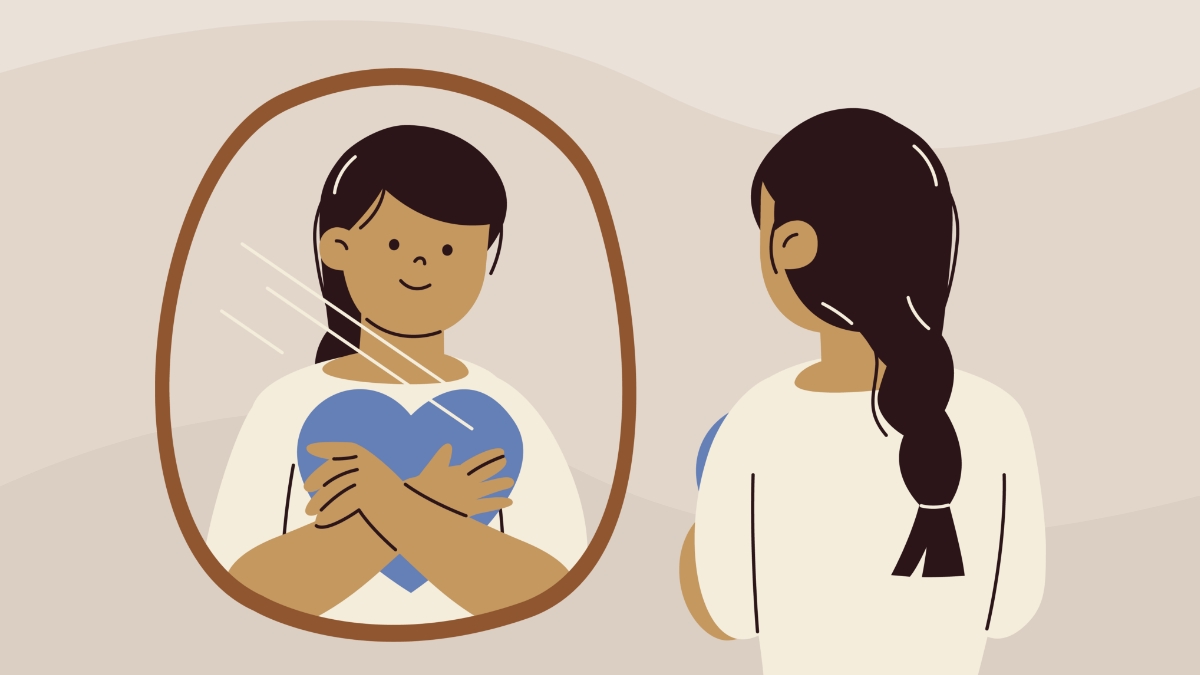
Self-awareness isn't a given. It's a quality, a strength, that, like a muscle, can be built up.
Before I talk about my rudeness, let me say what my regular readers already know, which is that I am writing all of this in hopes that you will be inspired to talk with a youth in your life about rudeness. For this talk, it should not be about them (the youth) but about you (the adult).
One way I am unfortunately rude at times is how I approach a stranger and ask a question. I became aware of this about a year ago when I asked someone for directions, and they said back to me, "You did not even say hello first."
They had a somewhat harsh tone when they said that, so at first I felt that little spinny feeling of defensiveness come up.
But seconds later, I had the “Aha, yes, this person is absolutely right.” I said to him, "Yes, yes, you are right. My apologies. I should have said ‘hello and excuse me.’ “ I realized at that moment that there have surely been many times that I don’t say hello and/ or excuse me first when asking for help out in the world. Bad on me.
Ever since then, I try to do that first. But it is a practice, because sure enough, I messed up 4 nights ago. I was waiting for my daughter Tessa to arrive at BART (the subway in the SF Bay Area) on her way to downtown San Francisco, and I saw vendors on the street. I asked, "Are you taking down or setting up?"
Yes, I know that question sounds innocuous. But for me, I had an immediate inner monologue of "Shoot, you forgot to say a kind 'hi' first."
So I quickly said, "Oops, I meant to say hi first."
They surely didn't even know why I added that, but to me, correcting my mistake out loud aligns with my values of treating people kindly and respectfully. Also, I know that making the correction in real time and out loud strengthens my self-awareness even more, and thus helps me pause and intentionally choose my words before asking someone a question.


Learn more about showing our movies in your school or community!
Join Screenagers filmmaker Delaney Ruston MD for our latest Podcast

Learn more about our Screen-Free Sleep campaign at the website!
Our movie made for parents and educators of younger kids
Learn more about showing our movies in your school or community!
Register your interest in bringing our new movie to your school or community
As I was waiting for Tessa, I got a call from my friend Adrienne. We were talking when Tessa called me.
I said super quickly to Adrienne, "I have to go, Tessa is calling, bye," and hung up. (Can you relate to dropping everything to answer a call from your kid? I bet many of you can.)
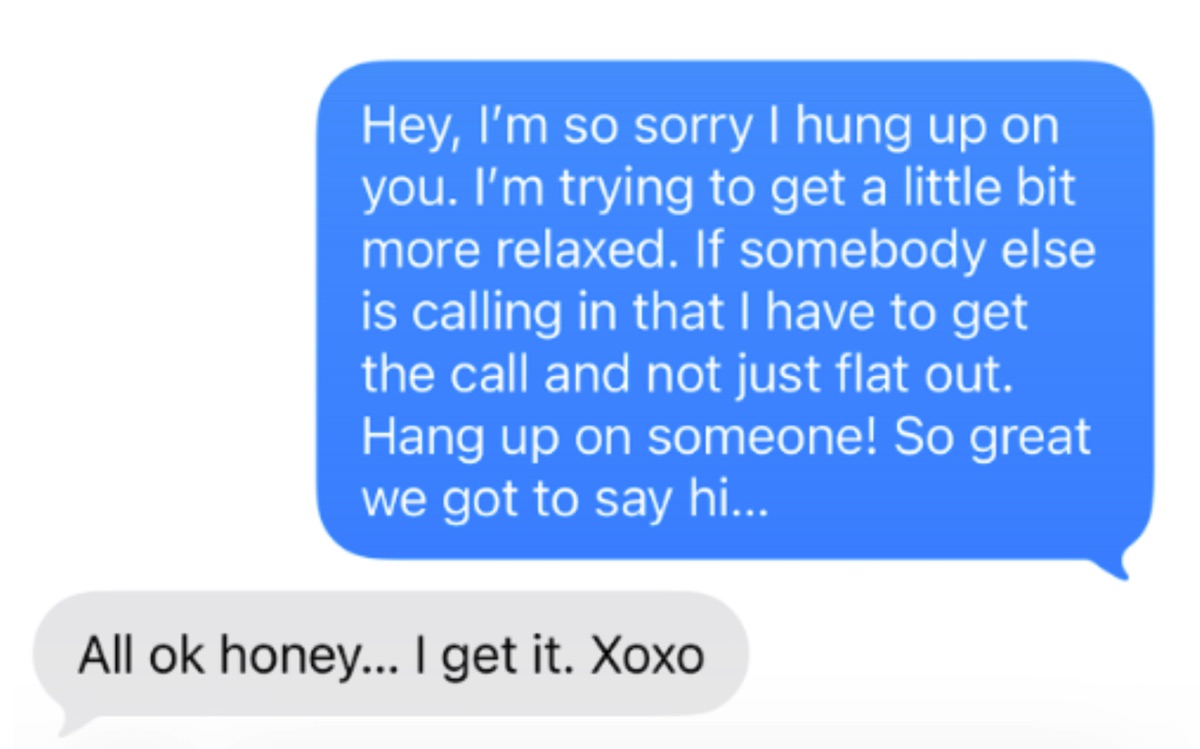
I spoke with Tessa, who let me know which subway exit she would be coming out of. Right as I was talking with Tessa, I felt the need to apologize to Adrienne for essentially hanging up on her.
To me, I would have preferred to let Adrienne know more calmly that I needed to go and to say a proper, kind goodbye. And, in the worst case, I would have missed Tessa's call but could have called her right back.
This is the text I sent Adrienne and her response: (By the way, I dictate my messages and don't always do a good job of fixing the grammar.)
So today I'm sharing a couple of examples of ways I am rude at times. Needless to say, I am human, and I also act in other rude ways that I am working to extinguish.
Insight, repair/correction, and self-compassion require ongoing practice, and they are not indicative of being a bad person, but rather of interacting in ways that aren’t in line with my goals/values.
I hope you might be able to share an example or two with a youth in your life of how, at times, you act rudely and ask some of the questions below, focusing on the concepts of self-awareness, correction, and practice.
Learn more about showing our movies in your school or community!
Join Screenagers filmmaker Delaney Ruston MD for our latest Podcast
Learn more about our Screen-Free Sleep campaign at the website!
Our movie made for parents and educators of younger kids
Join Screenagers filmmaker Delaney Ruston MD for our latest Podcast
Register your interest in bringing our new movie to your school or community
Subscribe to our YouTube Channel! We add new videos regularly and you'll find over 100 videos covering parenting advice, guidance, podcasts, movie clips and more. Here's our most recent:

As we’re about to celebrate 10 years of Screenagers, we want to hear what’s been most helpful and what you’d like to see next.
Please click here to share your thoughts with us in our community survey. It only takes 5–10 minutes, and everyone who completes it will be entered to win one of five $50 Amazon vouchers.
I don't want to be rude. And I've realized the best way not to be is to first notice the ways I already am sometimes.
Self-awareness isn't a given. It's a quality, a strength, that, like a muscle, can be built up.
Before I talk about my rudeness, let me say what my regular readers already know, which is that I am writing all of this in hopes that you will be inspired to talk with a youth in your life about rudeness. For this talk, it should not be about them (the youth) but about you (the adult).
One way I am unfortunately rude at times is how I approach a stranger and ask a question. I became aware of this about a year ago when I asked someone for directions, and they said back to me, "You did not even say hello first."
They had a somewhat harsh tone when they said that, so at first I felt that little spinny feeling of defensiveness come up.
But seconds later, I had the “Aha, yes, this person is absolutely right.” I said to him, "Yes, yes, you are right. My apologies. I should have said ‘hello and excuse me.’ “ I realized at that moment that there have surely been many times that I don’t say hello and/ or excuse me first when asking for help out in the world. Bad on me.
Ever since then, I try to do that first. But it is a practice, because sure enough, I messed up 4 nights ago. I was waiting for my daughter Tessa to arrive at BART (the subway in the SF Bay Area) on her way to downtown San Francisco, and I saw vendors on the street. I asked, "Are you taking down or setting up?"
Yes, I know that question sounds innocuous. But for me, I had an immediate inner monologue of "Shoot, you forgot to say a kind 'hi' first."
So I quickly said, "Oops, I meant to say hi first."
They surely didn't even know why I added that, but to me, correcting my mistake out loud aligns with my values of treating people kindly and respectfully. Also, I know that making the correction in real time and out loud strengthens my self-awareness even more, and thus helps me pause and intentionally choose my words before asking someone a question.
As I was waiting for Tessa, I got a call from my friend Adrienne. We were talking when Tessa called me.
I said super quickly to Adrienne, "I have to go, Tessa is calling, bye," and hung up. (Can you relate to dropping everything to answer a call from your kid? I bet many of you can.)
I spoke with Tessa, who let me know which subway exit she would be coming out of. Right as I was talking with Tessa, I felt the need to apologize to Adrienne for essentially hanging up on her.
To me, I would have preferred to let Adrienne know more calmly that I needed to go and to say a proper, kind goodbye. And, in the worst case, I would have missed Tessa's call but could have called her right back.
This is the text I sent Adrienne and her response: (By the way, I dictate my messages and don't always do a good job of fixing the grammar.)
So today I'm sharing a couple of examples of ways I am rude at times. Needless to say, I am human, and I also act in other rude ways that I am working to extinguish.
Insight, repair/correction, and self-compassion require ongoing practice, and they are not indicative of being a bad person, but rather of interacting in ways that aren’t in line with my goals/values.
I hope you might be able to share an example or two with a youth in your life of how, at times, you act rudely and ask some of the questions below, focusing on the concepts of self-awareness, correction, and practice.
Subscribe to our YouTube Channel! We add new videos regularly and you'll find over 100 videos covering parenting advice, guidance, podcasts, movie clips and more. Here's our most recent:
Sign up here to receive the weekly Tech Talk Tuesdays newsletter from Screenagers filmmaker Delaney Ruston MD.
We respect your privacy.
I don't want to be rude. And I've realized the best way not to be is to first notice the ways I already am sometimes.
Self-awareness isn't a given. It's a quality, a strength, that, like a muscle, can be built up.
Before I talk about my rudeness, let me say what my regular readers already know, which is that I am writing all of this in hopes that you will be inspired to talk with a youth in your life about rudeness. For this talk, it should not be about them (the youth) but about you (the adult).
One way I am unfortunately rude at times is how I approach a stranger and ask a question. I became aware of this about a year ago when I asked someone for directions, and they said back to me, "You did not even say hello first."
They had a somewhat harsh tone when they said that, so at first I felt that little spinny feeling of defensiveness come up.
But seconds later, I had the “Aha, yes, this person is absolutely right.” I said to him, "Yes, yes, you are right. My apologies. I should have said ‘hello and excuse me.’ “ I realized at that moment that there have surely been many times that I don’t say hello and/ or excuse me first when asking for help out in the world. Bad on me.
Ever since then, I try to do that first. But it is a practice, because sure enough, I messed up 4 nights ago. I was waiting for my daughter Tessa to arrive at BART (the subway in the SF Bay Area) on her way to downtown San Francisco, and I saw vendors on the street. I asked, "Are you taking down or setting up?"
Yes, I know that question sounds innocuous. But for me, I had an immediate inner monologue of "Shoot, you forgot to say a kind 'hi' first."
So I quickly said, "Oops, I meant to say hi first."
They surely didn't even know why I added that, but to me, correcting my mistake out loud aligns with my values of treating people kindly and respectfully. Also, I know that making the correction in real time and out loud strengthens my self-awareness even more, and thus helps me pause and intentionally choose my words before asking someone a question.

An Oakland library has started lending out sports equipment and games alongside books, so families can borrow gear to use at nearby parks. It is a reminder that borrowing and lending between families is a simple way to fill a summer afternoon without a screen, while quietly modelling generosity and humility. We are out of practice at asking, but the person on the other end is usually glad to help.
READ MORE >
E-readers are convenient, but there are three reasons to lean toward paper books this summer. First, e-readers are screens, and the pull of everything else you could do on one makes it harder to stay immersed. Second, a large meta-analysis found people understand and remember slightly better on paper, especially with longer texts. Third, easy access to endless book samples makes it too tempting to jump ship rather than work through the slower parts, since reading, unlike TikTok, is about delayed gratification.
READ MORE >
Summer's wide open hours raise two perennial questions: how to reset screen time once the school-year structure disappears, and how to fill the freed-up days with things that are good for kids and parents alike. This week rounds up seven favorite past summer posts to help with both.
READ MORE >for more like this, DR. DELANEY RUSTON'S NEW BOOK, PARENTING IN THE SCREEN AGE, IS THE DEFINITIVE GUIDE FOR TODAY’S PARENTS. WITH INSIGHTS ON SCREEN TIME FROM RESEARCHERS, INPUT FROM KIDS & TEENS, THIS BOOK IS PACKED WITH SOLUTIONS FOR HOW TO START AND SUSTAIN PRODUCTIVE FAMILY TALKS ABOUT TECHNOLOGY AND IT’S IMPACT ON OUR MENTAL WELLBEING.