

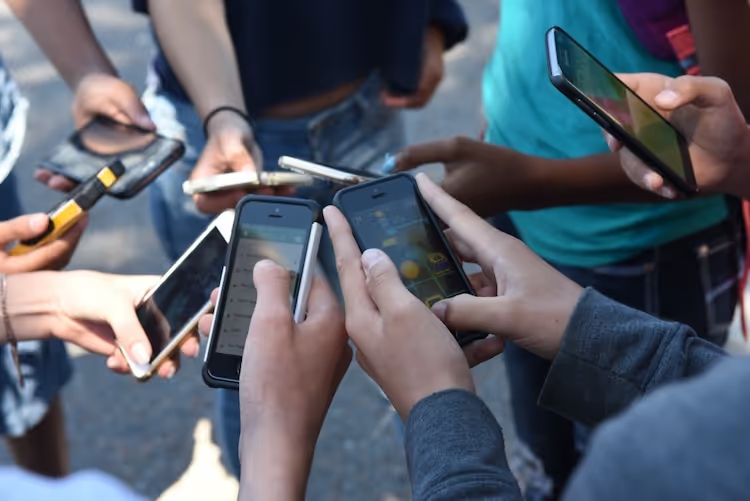
Talking with our kids and teens about media, social media, and the immensely important issue of racial injustice is so critical right now. How do these platforms bring us together to find solutions? How do they fracture us and make finding solutions harder?
As a past researcher in communication science at UC San Francisco, I am focused on how we can best talk with young people that will engage them the most. It is clear that when we talk about the positives of social media, they feel much less defensive and more open to talking about all sorts of other related topics.
Youth tell me that they are so appreciative of many aspects of social media right now. My daughter and five other teens last week told me almost exactly the same thing — on Instagram, in particular, they are learning so much, finding ways to help with such things as petitions to sign, ways to donate time and resources, help educate others, and they feel connected to something that is incredibly important.
So if you have youth on social media, it can be great to put on your curiosity calm cap and see if they would not mind sharing a bit of one of their sites with you. I suggest seeing if they will show you things for at least a few minutes every day or every other day as a way to foster conversations right now. I have been doing this with Tessa, and I love sitting by her side as she shares and teaches me about what she sees, what she wants to be changed in our world, actions she is taking, and more.
My family and I are talking about topics such as the many unjust policies and laws that have been passed over the years; the importance of crisis intervention teams to help get people with severe mental illness treatment, not imprisonment; and what kinds of changes can and should happen in police forces across the country.
Access to biographies at our fingertips over the internet means that my family has been able to learn about and then discuss different ways racial injustice manifests itself in society. Over the past two weeks, we have read, watched films, and talked about people such as Sam Cook, Nina Simone, Malcolm X, and Rubin "Hurricane" Carter, an American-Canadian middleweight boxer who was wrongfully convicted of murder and served 20 years in prison. His story involves a 17-year-old boy who started visiting him in prison, which gave Mr. Carter new hope. Carter’s story was made into a film starring Denzel Washington. Of course, we also talk about the tragic killings of George Floyd, Breonna Taylor, and the many others.
As a possible discussion topic, I want to share data from Common Sense Media’s “Social Media, Social Life” reports. The reports were based on two surveys of nationally representative samples of over one thousand teens in the US age 13 to 17 — first in 2012 and then in 2018.
One survey question was about how often young people encountered hate speech, such as racist posts online. In 2012, 43 percent said they often or sometimes see such posts. In 2018 that number went up to 52 percent.
That increase is very concerning — especially considering it’s likely even worse than reported. In 2012 the survey question asked about all online content while in 2018, it focused only on social media, missing other racist content on web sites, chat rooms, etc. So the percentage of 2018 would most likely have been higher had the original question been asked again.
One significant difference in the data by ethnicity is that black teens were more likely than white teens to say they “often” encounter racist content online (19 percent vs. 9 percent). That is a really important point to discuss. For example, how often are things posted that are offensive, but people have not learned why that would be the case? What have your students learned in school, anything about racial issues?
Another negative of social media and the news that is important to discuss right now is how to know what can be trusted. We are exposed to things all the time ranging from totally true, to pretty accurate, to blatant lies. How to know the difference?
Here is one recent example. My local newspaper, The Seattle Times, discovered that another news agency, Fox News, put up three photos that were digitally altered. The photos had to do with a section of a neighborhood, in our city, where peaceful protests are happening for Black Lives Matter.
One photo had a destroyed building with a man with a gun in front. That did not happen. The window with the broken glass was from a completely different day.
This is what the Seattle Times said: “The image was actually a mashup of photos from different days, taken by different photographers — it was done by splicing a Getty Images photo of an armed man, who had been at the protest zone June 10, with other images from May 30 of smashed windows in downtown Seattle. Another altered image combined the gunman photo with yet another image, making it appear as though he was standing in front of a sign declaring “You are now entering Free Cap Hill.”
Once The Seattle Times uncovered them, Fox News took them down.
News gets posted fast, and, of course, there are errors in reporting all the time in all news outlets and social media posts. It is so important that we talk about things like, When is it purposeful? When is it an oversight? When is it because that stories are unfolding and rumors are flying?
I end by saying, I am constantly moved by conversations these days with young people, and I seeing them work tirelessly to help make positive change.
We NOW have a way for people to host online events during this time. We still strongly believe in the coming together as a group model for showing both movies, so these temporary online events will be here only while the social distancing is in place.
Click here if you are interested in hosting an ONLINE screening for your community.
Click here if you want to attend an ONLINE screening.


Learn more about showing our movies in your school or community!
Join Screenagers filmmaker Delaney Ruston MD for our latest Podcast

Learn more about our Screen-Free Sleep campaign at the website!
Our movie made for parents and educators of younger kids
Learn more about showing our movies in your school or community!
Register your interest in bringing our new movie to your school or community
Learn more about showing our movies in your school or community!
Join Screenagers filmmaker Delaney Ruston MD for our latest Podcast
Learn more about our Screen-Free Sleep campaign at the website!
Our movie made for parents and educators of younger kids
Join Screenagers filmmaker Delaney Ruston MD for our latest Podcast
Register your interest in bringing our new movie to your school or community

As we’re about to celebrate 10 years of Screenagers, we want to hear what’s been most helpful and what you’d like to see next.
Please click here to share your thoughts with us in our community survey. It only takes 5–10 minutes, and everyone who completes it will be entered to win one of five $50 Amazon vouchers.
Talking with our kids and teens about media, social media, and the immensely important issue of racial injustice is so critical right now. How do these platforms bring us together to find solutions? How do they fracture us and make finding solutions harder?
As a past researcher in communication science at UC San Francisco, I am focused on how we can best talk with young people that will engage them the most. It is clear that when we talk about the positives of social media, they feel much less defensive and more open to talking about all sorts of other related topics.
Youth tell me that they are so appreciative of many aspects of social media right now. My daughter and five other teens last week told me almost exactly the same thing — on Instagram, in particular, they are learning so much, finding ways to help with such things as petitions to sign, ways to donate time and resources, help educate others, and they feel connected to something that is incredibly important.
So if you have youth on social media, it can be great to put on your curiosity calm cap and see if they would not mind sharing a bit of one of their sites with you. I suggest seeing if they will show you things for at least a few minutes every day or every other day as a way to foster conversations right now. I have been doing this with Tessa, and I love sitting by her side as she shares and teaches me about what she sees, what she wants to be changed in our world, actions she is taking, and more.
My family and I are talking about topics such as the many unjust policies and laws that have been passed over the years; the importance of crisis intervention teams to help get people with severe mental illness treatment, not imprisonment; and what kinds of changes can and should happen in police forces across the country.
Access to biographies at our fingertips over the internet means that my family has been able to learn about and then discuss different ways racial injustice manifests itself in society. Over the past two weeks, we have read, watched films, and talked about people such as Sam Cook, Nina Simone, Malcolm X, and Rubin "Hurricane" Carter, an American-Canadian middleweight boxer who was wrongfully convicted of murder and served 20 years in prison. His story involves a 17-year-old boy who started visiting him in prison, which gave Mr. Carter new hope. Carter’s story was made into a film starring Denzel Washington. Of course, we also talk about the tragic killings of George Floyd, Breonna Taylor, and the many others.
As a possible discussion topic, I want to share data from Common Sense Media’s “Social Media, Social Life” reports. The reports were based on two surveys of nationally representative samples of over one thousand teens in the US age 13 to 17 — first in 2012 and then in 2018.
One survey question was about how often young people encountered hate speech, such as racist posts online. In 2012, 43 percent said they often or sometimes see such posts. In 2018 that number went up to 52 percent.
That increase is very concerning — especially considering it’s likely even worse than reported. In 2012 the survey question asked about all online content while in 2018, it focused only on social media, missing other racist content on web sites, chat rooms, etc. So the percentage of 2018 would most likely have been higher had the original question been asked again.
One significant difference in the data by ethnicity is that black teens were more likely than white teens to say they “often” encounter racist content online (19 percent vs. 9 percent). That is a really important point to discuss. For example, how often are things posted that are offensive, but people have not learned why that would be the case? What have your students learned in school, anything about racial issues?
Another negative of social media and the news that is important to discuss right now is how to know what can be trusted. We are exposed to things all the time ranging from totally true, to pretty accurate, to blatant lies. How to know the difference?
Here is one recent example. My local newspaper, The Seattle Times, discovered that another news agency, Fox News, put up three photos that were digitally altered. The photos had to do with a section of a neighborhood, in our city, where peaceful protests are happening for Black Lives Matter.
One photo had a destroyed building with a man with a gun in front. That did not happen. The window with the broken glass was from a completely different day.
This is what the Seattle Times said: “The image was actually a mashup of photos from different days, taken by different photographers — it was done by splicing a Getty Images photo of an armed man, who had been at the protest zone June 10, with other images from May 30 of smashed windows in downtown Seattle. Another altered image combined the gunman photo with yet another image, making it appear as though he was standing in front of a sign declaring “You are now entering Free Cap Hill.”
Once The Seattle Times uncovered them, Fox News took them down.
News gets posted fast, and, of course, there are errors in reporting all the time in all news outlets and social media posts. It is so important that we talk about things like, When is it purposeful? When is it an oversight? When is it because that stories are unfolding and rumors are flying?
I end by saying, I am constantly moved by conversations these days with young people, and I seeing them work tirelessly to help make positive change.
We NOW have a way for people to host online events during this time. We still strongly believe in the coming together as a group model for showing both movies, so these temporary online events will be here only while the social distancing is in place.
Click here if you are interested in hosting an ONLINE screening for your community.
Click here if you want to attend an ONLINE screening.
Sign up here to receive the weekly Tech Talk Tuesdays newsletter from Screenagers filmmaker Delaney Ruston MD.
We respect your privacy.
Talking with our kids and teens about media, social media, and the immensely important issue of racial injustice is so critical right now. How do these platforms bring us together to find solutions? How do they fracture us and make finding solutions harder?
As a past researcher in communication science at UC San Francisco, I am focused on how we can best talk with young people that will engage them the most. It is clear that when we talk about the positives of social media, they feel much less defensive and more open to talking about all sorts of other related topics.
Youth tell me that they are so appreciative of many aspects of social media right now. My daughter and five other teens last week told me almost exactly the same thing — on Instagram, in particular, they are learning so much, finding ways to help with such things as petitions to sign, ways to donate time and resources, help educate others, and they feel connected to something that is incredibly important.
So if you have youth on social media, it can be great to put on your curiosity calm cap and see if they would not mind sharing a bit of one of their sites with you. I suggest seeing if they will show you things for at least a few minutes every day or every other day as a way to foster conversations right now. I have been doing this with Tessa, and I love sitting by her side as she shares and teaches me about what she sees, what she wants to be changed in our world, actions she is taking, and more.
My family and I are talking about topics such as the many unjust policies and laws that have been passed over the years; the importance of crisis intervention teams to help get people with severe mental illness treatment, not imprisonment; and what kinds of changes can and should happen in police forces across the country.
Access to biographies at our fingertips over the internet means that my family has been able to learn about and then discuss different ways racial injustice manifests itself in society. Over the past two weeks, we have read, watched films, and talked about people such as Sam Cook, Nina Simone, Malcolm X, and Rubin "Hurricane" Carter, an American-Canadian middleweight boxer who was wrongfully convicted of murder and served 20 years in prison. His story involves a 17-year-old boy who started visiting him in prison, which gave Mr. Carter new hope. Carter’s story was made into a film starring Denzel Washington. Of course, we also talk about the tragic killings of George Floyd, Breonna Taylor, and the many others.
As a possible discussion topic, I want to share data from Common Sense Media’s “Social Media, Social Life” reports. The reports were based on two surveys of nationally representative samples of over one thousand teens in the US age 13 to 17 — first in 2012 and then in 2018.
One survey question was about how often young people encountered hate speech, such as racist posts online. In 2012, 43 percent said they often or sometimes see such posts. In 2018 that number went up to 52 percent.
That increase is very concerning — especially considering it’s likely even worse than reported. In 2012 the survey question asked about all online content while in 2018, it focused only on social media, missing other racist content on web sites, chat rooms, etc. So the percentage of 2018 would most likely have been higher had the original question been asked again.
One significant difference in the data by ethnicity is that black teens were more likely than white teens to say they “often” encounter racist content online (19 percent vs. 9 percent). That is a really important point to discuss. For example, how often are things posted that are offensive, but people have not learned why that would be the case? What have your students learned in school, anything about racial issues?
Another negative of social media and the news that is important to discuss right now is how to know what can be trusted. We are exposed to things all the time ranging from totally true, to pretty accurate, to blatant lies. How to know the difference?
Here is one recent example. My local newspaper, The Seattle Times, discovered that another news agency, Fox News, put up three photos that were digitally altered. The photos had to do with a section of a neighborhood, in our city, where peaceful protests are happening for Black Lives Matter.
One photo had a destroyed building with a man with a gun in front. That did not happen. The window with the broken glass was from a completely different day.
This is what the Seattle Times said: “The image was actually a mashup of photos from different days, taken by different photographers — it was done by splicing a Getty Images photo of an armed man, who had been at the protest zone June 10, with other images from May 30 of smashed windows in downtown Seattle. Another altered image combined the gunman photo with yet another image, making it appear as though he was standing in front of a sign declaring “You are now entering Free Cap Hill.”
Once The Seattle Times uncovered them, Fox News took them down.
News gets posted fast, and, of course, there are errors in reporting all the time in all news outlets and social media posts. It is so important that we talk about things like, When is it purposeful? When is it an oversight? When is it because that stories are unfolding and rumors are flying?
I end by saying, I am constantly moved by conversations these days with young people, and I seeing them work tirelessly to help make positive change.
We NOW have a way for people to host online events during this time. We still strongly believe in the coming together as a group model for showing both movies, so these temporary online events will be here only while the social distancing is in place.
Click here if you are interested in hosting an ONLINE screening for your community.
Click here if you want to attend an ONLINE screening.
Meta's $17.1 billion settlement requires new safety measures for under-18 users, including a two-hour daily limit and blocking Instagram and Facebook overnight. I'm frustrated it took this long, and that an overnight block can falsely reassure parents when what we really need is a national push for screen-free sleep. I'm glad it happened. And with AI, we have to move much faster.
READ MORE >
The first of more than a thousand school district lawsuits against TikTok, Snapchat, Meta, and YouTube has settled, with a small Kentucky district awarded $27 million. Discovery records made public showed the companies designed to reach kids during the school day, from in-class alerts to keeping notifications on against safety teams' advice, while research finds students spend about 1.5 hours of a 6.5-hour school day on their phones.
READ MORE >
The first of 1,200+ school district lawsuits against social media companies just settled, with Meta, YouTube, Snap, and TikTok all paying out rather than face a jury. Meta points to its Teen Accounts feature as proof of safety, but a study by former Meta safety lead Arturo Bejar found only 8 of 47 advertised features actually work as described.
READ MORE >for more like this, DR. DELANEY RUSTON'S NEW BOOK, PARENTING IN THE SCREEN AGE, IS THE DEFINITIVE GUIDE FOR TODAY’S PARENTS. WITH INSIGHTS ON SCREEN TIME FROM RESEARCHERS, INPUT FROM KIDS & TEENS, THIS BOOK IS PACKED WITH SOLUTIONS FOR HOW TO START AND SUSTAIN PRODUCTIVE FAMILY TALKS ABOUT TECHNOLOGY AND IT’S IMPACT ON OUR MENTAL WELLBEING.