


It feels like we’re finally hitting a tipping point. The harms from social media in young people’s lives have been building for far too long, and bold solutions can’t wait any longer. That’s why what just happened in Australia is extremely exciting. Their new nationwide move marks one of the biggest attempts yet to protect kids online. And as we released a new podcast episode yesterday featuring a mother who lost her 14-year-old son after a tragic connection made through social media, I couldn’t help but think: this is exactly the kind of real-world action families have been desperate for. In today’s blog, I share five key things to understand about what Australia is doing because it’s big, it’s controversial, and it might just spark global change.
Just last month, a study published in JAMA (an excellent medical journal), showed that when teens went off social media for a week, their mental health improved. There is no shortage of research showing similar findings.
So what can be done on a large scale?
Australia is leading the way in answering just that question.
The country is making a major move, and I want us all to know 5 points about what they are attempting to do. I also want our kids and students to understand these five points because it will help them see how serious this is.
Many countries have passed laws to ban cellphones in schools, but Australia is going far beyond that.
Starting December 10, age-restricted social media platforms in Australia must:
Designated Platforms include: TikTok, Instagram, Snapchat, YouTube, Facebook, X, Twitch, Reddit, Threads, and Kick.
Platforms must show they are taking “reasonable steps” to verify users’ ages. Ways they do this include phone or email checks, ID verification, or facial age estimation technology. Teens who are close to turning 16 may still be asked to provide ID if they appear younger.
I am eager to better understand facial age estimation technology.


Learn more about showing our movies in your school or community!
Join Screenagers filmmaker Delaney Ruston MD for our latest Podcast

Learn more about our Screen-Free Sleep campaign at the website!
Our movie made for parents and educators of younger kids
Learn more about showing our movies in your school or community!
Register your interest in bringing our new movie to your school or community
Meta starts deactivating accounts on December 4, and Snapchat will let users deactivate for up to 3 years until they turn 16. I believe that if they reactivate it within that time period, their content will still be there.
Overall, young people are being told to download their photos and videos now since Streaks, posts, and followers may be lost.
Our winter is Australia’s summer. Because the rollout lands right before Australia’s long eight-week summer holiday, millions of kids may experience their first break in years without constant scrolling or easy online contact with friends.
This shift is being compared to past safety reforms like seatbelts and cigarette warnings. Other countries are studying Australia’s approach, and similar age verification laws may spread globally.
It is time for bold solutions to the problems social media is creating in young people’s lives. For too long, the harms have continued to grow.
For example, yesterday we released a new podcast episode titled From Grief to Advocacy: A Mother's Fight Against Snapchat, which features my conversation with Amy Neville, who tragically lost her 14-year-old son after he connected with a drug dealer through social media. He was given a counterfeit OxyContin pill laced with fentanyl.
If you want more specifics about all of this, including pushback coming from young influencers, I recommend this CNN news piece.
Learn more about showing our movies in your school or community!
Join Screenagers filmmaker Delaney Ruston MD for our latest Podcast
Learn more about our Screen-Free Sleep campaign at the website!
Our movie made for parents and educators of younger kids
Join Screenagers filmmaker Delaney Ruston MD for our latest Podcast
Register your interest in bringing our new movie to your school or community
Subscribe to our YouTube Channel! We add new videos regularly and you'll find over 100 videos covering parenting advice, guidance, podcasts, movie clips and more. Here's our most recent:
As we’re about to celebrate 10 years of Screenagers, we want to hear what’s been most helpful and what you’d like to see next.
Please click here to share your thoughts with us in our community survey. It only takes 5–10 minutes, and everyone who completes it will be entered to win one of five $50 Amazon vouchers.
Just last month, a study published in JAMA (an excellent medical journal), showed that when teens went off social media for a week, their mental health improved. There is no shortage of research showing similar findings.
So what can be done on a large scale?
Australia is leading the way in answering just that question.
The country is making a major move, and I want us all to know 5 points about what they are attempting to do. I also want our kids and students to understand these five points because it will help them see how serious this is.
Many countries have passed laws to ban cellphones in schools, but Australia is going far beyond that.
Starting December 10, age-restricted social media platforms in Australia must:
Designated Platforms include: TikTok, Instagram, Snapchat, YouTube, Facebook, X, Twitch, Reddit, Threads, and Kick.
Platforms must show they are taking “reasonable steps” to verify users’ ages. Ways they do this include phone or email checks, ID verification, or facial age estimation technology. Teens who are close to turning 16 may still be asked to provide ID if they appear younger.
I am eager to better understand facial age estimation technology.
Meta starts deactivating accounts on December 4, and Snapchat will let users deactivate for up to 3 years until they turn 16. I believe that if they reactivate it within that time period, their content will still be there.
Overall, young people are being told to download their photos and videos now since Streaks, posts, and followers may be lost.
Our winter is Australia’s summer. Because the rollout lands right before Australia’s long eight-week summer holiday, millions of kids may experience their first break in years without constant scrolling or easy online contact with friends.
This shift is being compared to past safety reforms like seatbelts and cigarette warnings. Other countries are studying Australia’s approach, and similar age verification laws may spread globally.
It is time for bold solutions to the problems social media is creating in young people’s lives. For too long, the harms have continued to grow.
For example, yesterday we released a new podcast episode titled From Grief to Advocacy: A Mother's Fight Against Snapchat, which features my conversation with Amy Neville, who tragically lost her 14-year-old son after he connected with a drug dealer through social media. He was given a counterfeit OxyContin pill laced with fentanyl.
If you want more specifics about all of this, including pushback coming from young influencers, I recommend this CNN news piece.
Subscribe to our YouTube Channel! We add new videos regularly and you'll find over 100 videos covering parenting advice, guidance, podcasts, movie clips and more. Here's our most recent:
Sign up here to receive the weekly Tech Talk Tuesdays newsletter from Screenagers filmmaker Delaney Ruston MD.
We respect your privacy.
Just last month, a study published in JAMA (an excellent medical journal), showed that when teens went off social media for a week, their mental health improved. There is no shortage of research showing similar findings.
So what can be done on a large scale?
Australia is leading the way in answering just that question.
The country is making a major move, and I want us all to know 5 points about what they are attempting to do. I also want our kids and students to understand these five points because it will help them see how serious this is.
Many countries have passed laws to ban cellphones in schools, but Australia is going far beyond that.
Starting December 10, age-restricted social media platforms in Australia must:
Designated Platforms include: TikTok, Instagram, Snapchat, YouTube, Facebook, X, Twitch, Reddit, Threads, and Kick.
Platforms must show they are taking “reasonable steps” to verify users’ ages. Ways they do this include phone or email checks, ID verification, or facial age estimation technology. Teens who are close to turning 16 may still be asked to provide ID if they appear younger.
I am eager to better understand facial age estimation technology.
Meta's $17.1 billion settlement requires new safety measures for under-18 users, including a two-hour daily limit and blocking Instagram and Facebook overnight. I'm frustrated it took this long, and that an overnight block can falsely reassure parents when what we really need is a national push for screen-free sleep. I'm glad it happened. And with AI, we have to move much faster.
READ MORE >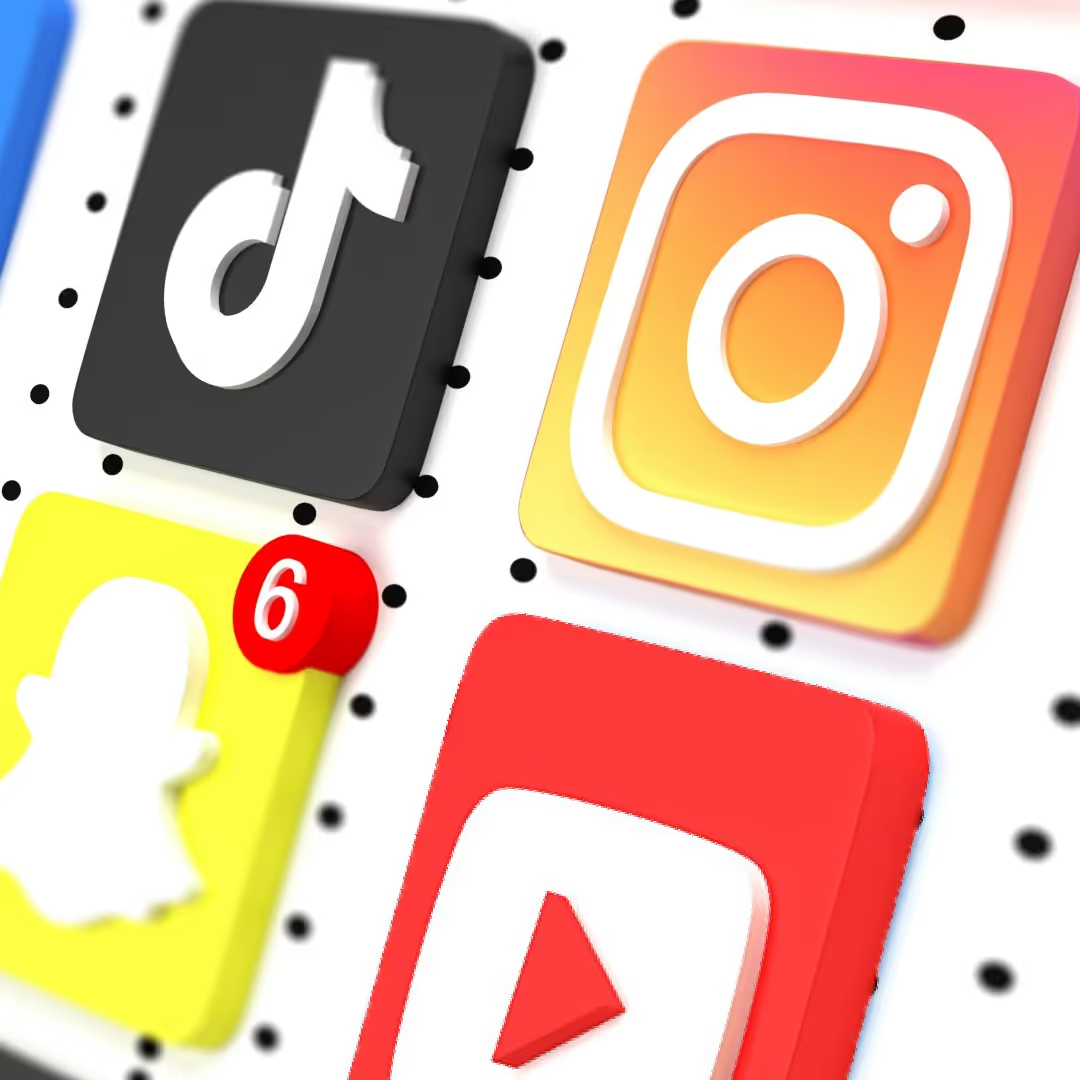
The first of more than a thousand school district lawsuits against TikTok, Snapchat, Meta, and YouTube has settled, with a small Kentucky district awarded $27 million. Discovery records made public showed the companies designed to reach kids during the school day, from in-class alerts to keeping notifications on against safety teams' advice, while research finds students spend about 1.5 hours of a 6.5-hour school day on their phones.
READ MORE >
The first of 1,200+ school district lawsuits against social media companies just settled, with Meta, YouTube, Snap, and TikTok all paying out rather than face a jury. Meta points to its Teen Accounts feature as proof of safety, but a study by former Meta safety lead Arturo Bejar found only 8 of 47 advertised features actually work as described.
READ MORE >for more like this, DR. DELANEY RUSTON'S NEW BOOK, PARENTING IN THE SCREEN AGE, IS THE DEFINITIVE GUIDE FOR TODAY’S PARENTS. WITH INSIGHTS ON SCREEN TIME FROM RESEARCHERS, INPUT FROM KIDS & TEENS, THIS BOOK IS PACKED WITH SOLUTIONS FOR HOW TO START AND SUSTAIN PRODUCTIVE FAMILY TALKS ABOUT TECHNOLOGY AND IT’S IMPACT ON OUR MENTAL WELLBEING.