Media Literacy

How to Talk About “TV shows” with our Kids

a school gathering to watch screenagers
February 27, 2018
min read
Delaney Ruston, MD
a school gathering to watch screenagers

In Summary

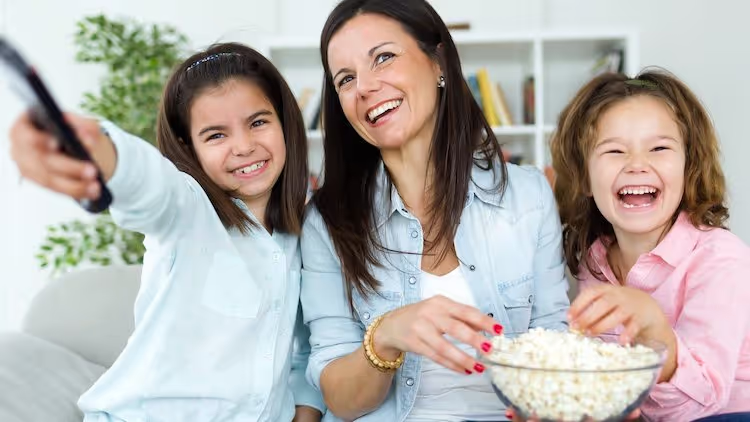
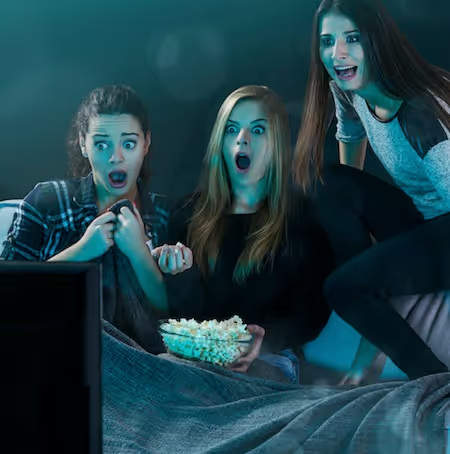
Mother and 2 children with popcorn

How do we get our kids and students to talk with us about the “TV shows” they watch productively? (I put TV in quotes since so often shows are watched on many types of personal devices.) I had to work hard on this because often my teens would cringe when I entered the room when they were watching some popular show on a screen. They felt really judged by me and having any conversations were then fraught with tension. Fortunately, I saw that this approach was not furthering my goal of helping them gain greater media awareness. So I have made two successful changes in how I approach my kids about the shows they are watching, and I wanted to share my advice:

First: Use research when you talk to your kids. Data is not judgemental. I have a good study to share here. Before you discuss the study, ask your kids what they think are the most represented values in popular shows?  In this study psychologist Patricia Greenfield and her team analyzed the two most popular television shows with tweens (kids ages 9-11) and the top values depicted on the shows every decade from 1967 to 2007. Sixty raters ages 18 to 59 watched the shows and marked how often certain values were portrayed.

Here are the shows (which are fun to watch with your kids to show them what media was like back in our day)

  • 1967: Andy Griffith and The Lucy Show
  • 1977: Laverne and Shirley and Happy Days
  • 1987: Growing Pains and Alf
  • 1997: Sabrina the Teenage Witch and Boy Meets World
  • 2007: American Idol and Hannah Montana

And these are the two top values of each pairing conveyed, respectively.

  • 1967: community feeling, benevolence
  • 1977: community feeling, image
  • 1987: self-acceptance, community feeling
  • 1997: community feeling, benevolence
  • 2007: fame, achievement

Here is the take home from the study: “Fame, an individualistic value, was judged the top value from the shows of 2007, up from number fifteen (out of sixteen) in most of the prior decades. In contrast, community feeling was eleventh in 2007, down from first or second place in all prior decades.”

Ask your kids why they think community feeling sank while the individualistic value of fame rose. I recognize this particular data is from 2007, so maybe try identifying what the top values are that you notice in shows you’ve watched this year.

Second: I try to watch a show with my kids now and then and keep my mouth shut through the whole show—I usually fail a bit and blurt out something like “Oh that would never happen” and then quickly kick myself and reapply my metaphorical duct tape. Then, I wait for a day or two and say something positive about the show. For example, for the show “How I Met Your Mother” I might say something like, “It’s amazing how they come up with so many jokes one right after the other.” What I really want to say is “Have you noticed that every other joke seems to be about sex,” but I hold back. They already know that I feel that way and that is why they are defensive about all these shows and my co-viewing. But they also know that I work hard to see things from many perspectives, so they are willing to engage with me….if I am thoughtful in how I am approaching things.

From this place of positivity, I then might ask what they like about the show? What seems true to life and what seems untrue? This approach has made our talks go much smoother.

So for this TTT let’s talk about the popular values of today’s “TV shows” and what that means for each of us:

  • What “TV shows” do you like these days? What values are in it?
  • What are our family, individual values?
  • Are there any shows that you have watched that mirror your values?
  • Why are people often drawn to shows that focus on opposite values from their own?

February 27, 2018

As well as our weekly blog, we publish videos like this one every week on the Screenagers YouTube channel

continues below
Share
Facebook logo.Rightward curved arrow symbol for sharing or forwarding.
host a screening

Learn more about showing our movies in your school or community!

Podcast

Join Screenagers filmmaker Delaney Ruston MD for our latest Podcast

Learn more about our Screen-Free Sleep campaign at the website!

Screenagers elementary edition

Our movie made for parents and educators of younger kids

host a screening

Learn more about showing our movies in your school or community!

host a screening

Learn more about showing our movies in your school or community!

Podcast

Join Screenagers filmmaker Delaney Ruston MD for our latest Podcast

Learn more about our Screen-Free Sleep campaign at the website!

Screenagers elementary edition

Our movie made for parents and educators of younger kids

Podcast

Join Screenagers filmmaker Delaney Ruston MD for our latest Podcast

Get our latest posts and practical advice in your inbox, weekly.

You have subscribed to our emails. Thank you!
Oops! Something went wrong while submitting the form.

We respect your privacy.

More Like This

Media Literacy

How to Talk About “TV shows” with our Kids

Delaney Ruston, MD
Lisa Tabb smiling to camera (Screenagers Producer)
Lisa Tabb
February 27, 2018

As we’re about to celebrate 10 years of Screenagers, we want to hear what’s been most helpful and what you’d like to see next.

Please click here to share your thoughts with us in our community survey. It only takes 5–10 minutes, and everyone who completes it will be entered to win one of five $50 Amazon vouchers.

Mother and 2 children with popcorn

How do we get our kids and students to talk with us about the “TV shows” they watch productively? (I put TV in quotes since so often shows are watched on many types of personal devices.) I had to work hard on this because often my teens would cringe when I entered the room when they were watching some popular show on a screen. They felt really judged by me and having any conversations were then fraught with tension. Fortunately, I saw that this approach was not furthering my goal of helping them gain greater media awareness. So I have made two successful changes in how I approach my kids about the shows they are watching, and I wanted to share my advice:

First: Use research when you talk to your kids. Data is not judgemental. I have a good study to share here. Before you discuss the study, ask your kids what they think are the most represented values in popular shows?  In this study psychologist Patricia Greenfield and her team analyzed the two most popular television shows with tweens (kids ages 9-11) and the top values depicted on the shows every decade from 1967 to 2007. Sixty raters ages 18 to 59 watched the shows and marked how often certain values were portrayed.

Here are the shows (which are fun to watch with your kids to show them what media was like back in our day)

  • 1967: Andy Griffith and The Lucy Show
  • 1977: Laverne and Shirley and Happy Days
  • 1987: Growing Pains and Alf
  • 1997: Sabrina the Teenage Witch and Boy Meets World
  • 2007: American Idol and Hannah Montana

And these are the two top values of each pairing conveyed, respectively.

  • 1967: community feeling, benevolence
  • 1977: community feeling, image
  • 1987: self-acceptance, community feeling
  • 1997: community feeling, benevolence
  • 2007: fame, achievement

Here is the take home from the study: “Fame, an individualistic value, was judged the top value from the shows of 2007, up from number fifteen (out of sixteen) in most of the prior decades. In contrast, community feeling was eleventh in 2007, down from first or second place in all prior decades.”

Ask your kids why they think community feeling sank while the individualistic value of fame rose. I recognize this particular data is from 2007, so maybe try identifying what the top values are that you notice in shows you’ve watched this year.

Second: I try to watch a show with my kids now and then and keep my mouth shut through the whole show—I usually fail a bit and blurt out something like “Oh that would never happen” and then quickly kick myself and reapply my metaphorical duct tape. Then, I wait for a day or two and say something positive about the show. For example, for the show “How I Met Your Mother” I might say something like, “It’s amazing how they come up with so many jokes one right after the other.” What I really want to say is “Have you noticed that every other joke seems to be about sex,” but I hold back. They already know that I feel that way and that is why they are defensive about all these shows and my co-viewing. But they also know that I work hard to see things from many perspectives, so they are willing to engage with me….if I am thoughtful in how I am approaching things.

From this place of positivity, I then might ask what they like about the show? What seems true to life and what seems untrue? This approach has made our talks go much smoother.
So for this TTT let’s talk about the popular values of today’s “TV shows” and what that means for each of us:

  • What “TV shows” do you like these days? What values are in it?
  • What are our family, individual values?
  • Are there any shows that you have watched that mirror your values?
  • Why are people often drawn to shows that focus on opposite values from their own?

February 27, 2018

As well as our weekly blog, we publish videos like this one every week on the Screenagers YouTube channel

Join
443
others who have made the pledge!
Thank you for making the pledge!
Please try again
Book page button

Available now - Parenting in the Screen Age, from Screenagers filmmaker Delaney Ruston MD

Order Here
Find A screening Button

Find a Screening - Find a screening of our movies in your local community

Learn More
Smiling woman with long blonde hair wearing a dark teal sweater, next to text: The Screenagers Podcast with Delaney Ruston, MD.

Screenagers Podcast - Join Screenagers filmmaker Delaney Ruston MD for the latest Podcast

Learn More
Book page button

Available now - Parenting in the Screen Age, from Screenagers filmmaker Delaney Ruston MD

Learn More
Host a Screening Button

Community Screenings - Learn more about hosting your own Screenagers community screening event!

Learn More
Parenting In The Screen Age Book Cover

Free Book Preview - Download a free preview of "Parenting In The Screen Age" by Delaney Ruston, MD

Learn More
The Screenagers Project title in bold white text on a dark blue background with teal underline and partially visible screenshots of a website behind.

Join Today - Members can screen and view our movies year-round, access new lesson plans, resources and much more!

Learn More
Screenagers Under The Influence Banner

Our New Movie - Learn more about the third movie in the Screenagers Trilogy

Learn More
YouTube play button icon next to the text 'SCREENAGERS YOUTUBE' on a dark blue background with images of web pages around the edges.

The Screenagers YouTube Channel - Subscribe for new videos and content from our team weekly!

Learn More
Host a Screening Button

Community Screenings - Learn more about hosting your own Screenagers community screening event!

Learn More
Find A screening Button

Find a Screening - Find a screening of our movies in your local community

Learn More
Smiling woman with long blonde hair wearing a dark teal sweater, next to text: The Screenagers Podcast with Delaney Ruston, MD.

Screenagers Podcast - Join Screenagers filmmaker Delaney Ruston MD for the latest Podcast

Learn More
Book page button

Available now - Parenting in the Screen Age, from Screenagers filmmaker Delaney Ruston MD

Learn More
Host a Screening Button

Community Screenings - Learn more about hosting your own Screenagers community screening event!

Learn More
Parenting In The Screen Age Book Cover

Free Book Preview - Download a free preview of "Parenting In The Screen Age" by Delaney Ruston, MD

Learn More
The Screenagers Project title in bold white text on a dark blue background with teal underline and partially visible screenshots of a website behind.

Join Today - Members can screen and view our movies year-round, access new lesson plans, resources and much more!

Learn More
Screenagers Under The Influence Banner

Our New Movie - Learn more about the third movie in the Screenagers Trilogy

Learn More
YouTube play button icon next to the text 'SCREENAGERS YOUTUBE' on a dark blue background with images of web pages around the edges.

The Screenagers YouTube Channel - Subscribe for new videos and content from our team weekly!

Learn More
Thank you! Your submission has been received!
Oops! Something went wrong while submitting the form.

We respect your privacy.

Book page button

Available now - Parenting in the Screen Age, from Screenagers filmmaker Delaney Ruston MD

Order Here
Find A screening Button

Find a Screening - Find a screening of our movies in your local community

Learn More
Smiling woman with long blonde hair wearing a dark teal sweater, next to text: The Screenagers Podcast with Delaney Ruston, MD.

Screenagers Podcast - Join Screenagers filmmaker Delaney Ruston MD for the latest Podcast

Learn More
Book page button

Available now - Parenting in the Screen Age, from Screenagers filmmaker Delaney Ruston MD

Learn More
Host a Screening Button

Community Screenings - Learn more about hosting your own Screenagers community screening event!

Learn More
Parenting In The Screen Age Book Cover

Free Book Preview - Download a free preview of "Parenting In The Screen Age" by Delaney Ruston, MD

Learn More
The Screenagers Project title in bold white text on a dark blue background with teal underline and partially visible screenshots of a website behind.

Join Today - Members can screen and view our movies year-round, access new lesson plans, resources and much more!

Learn More
Screenagers Under The Influence Banner

Learn more about the third movie in the Screenagers movie series

Learn More
YouTube play button icon next to the text 'SCREENAGERS YOUTUBE' on a dark blue background with images of web pages around the edges.

The Screenagers YouTube Channel - Subscribe for new videos and content from our team weekly!

Learn More
Six children standing outdoors using tablets and smartphones, with text overlay 'SCREEN AGERS ELEMENTARY SCHOOL AGE EDITION'.

Screenagers: Elementary School Age Edition - Learn more about our latest movie.

Learn More
Child sleeping peacefully in bed under a gray blanket with text saying 'Screen-Free Sleep' and cartoon purple Z's.

Learn more about the Screen-Free Sleep campaign at the website!

Visit Website
Host a Screening Button

Community Screenings - Learn more about hosting your own Screenagers community screening event!

Learn More
Find A screening Button

Find a Screening - Find a screening of our movies in your local community

Learn More
Smiling woman with long blonde hair wearing a dark teal sweater, next to text: The Screenagers Podcast with Delaney Ruston, MD.

Screenagers Podcast - Join Screenagers filmmaker Delaney Ruston MD for the latest Podcast

Learn More
Book page button

Available now - Parenting in the Screen Age, from Screenagers filmmaker Delaney Ruston MD

Learn More
Host a Screening Button

Community Screenings - Learn more about hosting your own Screenagers community screening event!

Learn More
Parenting In The Screen Age Book Cover

Free Book Preview - Download a free preview of "Parenting In The Screen Age" by Delaney Ruston, MD

Learn More
The Screenagers Project title in bold white text on a dark blue background with teal underline and partially visible screenshots of a website behind.

Join Today - Members can screen and view our movies year-round, access new lesson plans, resources and much more!

Learn More
Screenagers Under The Influence Banner

Screenagers Under The Influence - Learn more about this movie and watch the trailer.

Learn More
YouTube play button icon next to the text 'SCREENAGERS YOUTUBE' on a dark blue background with images of web pages around the edges.

The Screenagers YouTube Channel - Subscribe for new videos and content from our team weekly!

Learn More
Six children standing outdoors using tablets and smartphones, with text overlay 'SCREEN AGERS ELEMENTARY SCHOOL AGE EDITION'.

Screenagers: Elementary School Age Edition - Learn more about our latest movie.

Learn More
Child sleeping peacefully in bed under a gray blanket with text saying 'Screen-Free Sleep' and cartoon purple Z's.

Learn more about the Screen-Free Sleep campaign at the website!

Visit Website
Media Literacy

How to Talk About “TV shows” with our Kids

Delaney Ruston, MD
February 27, 2018
Mother and 2 children with popcorn

How do we get our kids and students to talk with us about the “TV shows” they watch productively? (I put TV in quotes since so often shows are watched on many types of personal devices.) I had to work hard on this because often my teens would cringe when I entered the room when they were watching some popular show on a screen. They felt really judged by me and having any conversations were then fraught with tension. Fortunately, I saw that this approach was not furthering my goal of helping them gain greater media awareness. So I have made two successful changes in how I approach my kids about the shows they are watching, and I wanted to share my advice:

First: Use research when you talk to your kids. Data is not judgemental. I have a good study to share here. Before you discuss the study, ask your kids what they think are the most represented values in popular shows?  In this study psychologist Patricia Greenfield and her team analyzed the two most popular television shows with tweens (kids ages 9-11) and the top values depicted on the shows every decade from 1967 to 2007. Sixty raters ages 18 to 59 watched the shows and marked how often certain values were portrayed.

Here are the shows (which are fun to watch with your kids to show them what media was like back in our day)

  • 1967: Andy Griffith and The Lucy Show
  • 1977: Laverne and Shirley and Happy Days
  • 1987: Growing Pains and Alf
  • 1997: Sabrina the Teenage Witch and Boy Meets World
  • 2007: American Idol and Hannah Montana

And these are the two top values of each pairing conveyed, respectively.

  • 1967: community feeling, benevolence
  • 1977: community feeling, image
  • 1987: self-acceptance, community feeling
  • 1997: community feeling, benevolence
  • 2007: fame, achievement

Here is the take home from the study: “Fame, an individualistic value, was judged the top value from the shows of 2007, up from number fifteen (out of sixteen) in most of the prior decades. In contrast, community feeling was eleventh in 2007, down from first or second place in all prior decades.”

Ask your kids why they think community feeling sank while the individualistic value of fame rose. I recognize this particular data is from 2007, so maybe try identifying what the top values are that you notice in shows you’ve watched this year.

Second: I try to watch a show with my kids now and then and keep my mouth shut through the whole show—I usually fail a bit and blurt out something like “Oh that would never happen” and then quickly kick myself and reapply my metaphorical duct tape. Then, I wait for a day or two and say something positive about the show. For example, for the show “How I Met Your Mother” I might say something like, “It’s amazing how they come up with so many jokes one right after the other.” What I really want to say is “Have you noticed that every other joke seems to be about sex,” but I hold back. They already know that I feel that way and that is why they are defensive about all these shows and my co-viewing. But they also know that I work hard to see things from many perspectives, so they are willing to engage with me….if I am thoughtful in how I am approaching things.

From this place of positivity, I then might ask what they like about the show? What seems true to life and what seems untrue? This approach has made our talks go much smoother.

So for this TTT let’s talk about the popular values of today’s “TV shows” and what that means for each of us:

  • What “TV shows” do you like these days? What values are in it?
  • What are our family, individual values?
  • Are there any shows that you have watched that mirror your values?
  • Why are people often drawn to shows that focus on opposite values from their own?

February 27, 2018

As well as our weekly blog, we publish videos like this one every week on the Screenagers YouTube channel

More Like This

How To Protect Kids From Overly Scary Films and Shows
October 25, 2022
Media Literacy

How To Protect Kids From Overly Scary Films and Shows

Many young people and adults love horror films and talk about how they love the feeling of being scared. This is so very different from me. I am not at all a fan. This week I have been thinking about ways to talk with kids about when horror in movies, TV shows, and online, in general, go too far.

READ MORE >

Teens Talk About HBO’s Euphoria
October 11, 2022
Media Literacy

Teens Talk About HBO’s Euphoria

The Screenagers’ Tech Talk Tuesday blog from two weeks ago provided four questions for teens to answer regarding the HBO show Euphoria. As intended, the questions sparked conversations among adults and teens, and we got many thoughtful answers from teens in the questionnaire.

READ MORE >
Euphoria And My Unusual Request
September 27, 2022
Media Literacy

Euphoria And My Unusual Request

I find HBO’s Euphoria incredibly disturbing and know that although so many of our kids have watched it, many parents never have. Today, I offer a way into a conversation with youth about the show’s topics and popularity.

READ MORE >

parenting in the screen age

for more like this, DR. DELANEY RUSTON'S NEW BOOK, PARENTING IN THE SCREEN AGE, IS THE DEFINITIVE GUIDE FOR TODAY’S PARENTS. WITH INSIGHTS ON SCREEN TIME FROM RESEARCHERS, INPUT FROM KIDS & TEENS, THIS BOOK IS PACKED WITH SOLUTIONS FOR HOW TO START AND SUSTAIN PRODUCTIVE FAMILY TALKS ABOUT TECHNOLOGY AND IT’S IMPACT ON OUR MENTAL WELLBEING.  

ORDER HERE
Parenting in the Screen Age book cover