


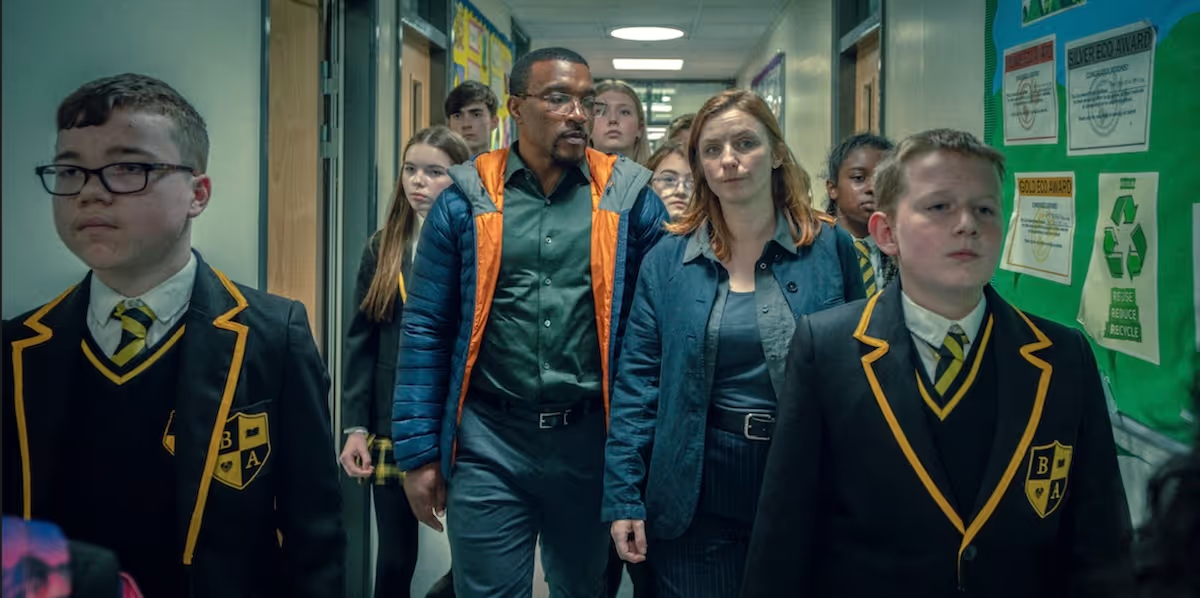


How do we raise girls with fierce ambition and critical awareness of gender inequality without making them feel disheartened? And how do we help boys understand the hidden costs of rigid masculinity without shaming them into silence?
These questions take center stage in our latest podcast episode, Tradwives, the Manosphere, and Online Sexism: What Can Parents Do? These topics are especially relevant to the conversations sparked by the hit Netflix series Adolescence, which has reignited public debate about gender roles, aggression, and social conditioning.
In this episode, I sit down with Jo-Ann Finkelstein, PhD, psychologist and author of Sexism and Sensibility, whose work has been featured in the New York Times, Oprah Daily, Women's Health, and more.
Our conversation dives deep into the invisible pressures shaping both girls and boys: from the objectifying forces of beauty culture to the emotional restrictions imposed by "boy code." Jo-Ann offers eye-opening insights into how we can raise emotionally whole, socially aware kids without perpetuating cycles of blame or shame.


Learn more about showing our movies in your school or community!
Join Screenagers filmmaker Delaney Ruston MD for our latest Podcast

Learn more about our Screen-Free Sleep campaign at the website!
Our movie made for parents and educators of younger kids
Learn more about showing our movies in your school or community!
Register your interest in bringing our new movie to your school or community
She explains why boys need to see how sexism limits them too and how egalitarian parenting can help build a kind of internal “sexism detector” that empowers all children to value connection over domination.
We also discuss the hidden toll of self-objectification on girls and how even well-meaning compliments can chip away at their mental focus and sense of worth.
This episode is packed with research, real-life parenting moments, and practical strategies for those ready to challenge gender norms at home and beyond.
If you have some time today, I'd really love it if you could listen to the episode. Some of the insights raised are so important.
You can listen above, or at any of these links to listen where you normally get your podcasts
Apple Podcasts // Spotify // Castbox // Youtube // Show Page
Learn more about showing our movies in your school or community!
Join Screenagers filmmaker Delaney Ruston MD for our latest Podcast
Learn more about our Screen-Free Sleep campaign at the website!
Our movie made for parents and educators of younger kids
Join Screenagers filmmaker Delaney Ruston MD for our latest Podcast
Register your interest in bringing our new movie to your school or community
Be sure to subscribe to our YouTube Channel! We add new videos regularly and you'll find over 100 videos covering parenting advice, guidance, podcasts, movie clips and more. Here's our most recent:

As we’re about to celebrate 10 years of Screenagers, we want to hear what’s been most helpful and what you’d like to see next.
Please click here to share your thoughts with us in our community survey. It only takes 5–10 minutes, and everyone who completes it will be entered to win one of five $50 Amazon vouchers.
How do we raise girls with fierce ambition and critical awareness of gender inequality without making them feel disheartened? And how do we help boys understand the hidden costs of rigid masculinity without shaming them into silence?
These questions take center stage in our latest podcast episode, Tradwives, the Manosphere, and Online Sexism: What Can Parents Do? These topics are especially relevant to the conversations sparked by the hit Netflix series Adolescence, which has reignited public debate about gender roles, aggression, and social conditioning.
In this episode, I sit down with Jo-Ann Finkelstein, PhD, psychologist and author of Sexism and Sensibility, whose work has been featured in the New York Times, Oprah Daily, Women's Health, and more.
Our conversation dives deep into the invisible pressures shaping both girls and boys: from the objectifying forces of beauty culture to the emotional restrictions imposed by "boy code." Jo-Ann offers eye-opening insights into how we can raise emotionally whole, socially aware kids without perpetuating cycles of blame or shame.
She explains why boys need to see how sexism limits them too and how egalitarian parenting can help build a kind of internal “sexism detector” that empowers all children to value connection over domination.
We also discuss the hidden toll of self-objectification on girls and how even well-meaning compliments can chip away at their mental focus and sense of worth.
This episode is packed with research, real-life parenting moments, and practical strategies for those ready to challenge gender norms at home and beyond.
If you have some time today, I'd really love it if you could listen to the episode. Some of the insights raised are so important.
You can listen above, or at any of these links to listen where you normally get your podcasts
Apple Podcasts // Spotify // Castbox // Youtube // Show Page
Be sure to subscribe to our YouTube Channel! We add new videos regularly and you'll find over 100 videos covering parenting advice, guidance, podcasts, movie clips and more. Here's our most recent:
Sign up here to receive the weekly Tech Talk Tuesdays newsletter from Screenagers filmmaker Delaney Ruston MD.
We respect your privacy.
How do we raise girls with fierce ambition and critical awareness of gender inequality without making them feel disheartened? And how do we help boys understand the hidden costs of rigid masculinity without shaming them into silence?
These questions take center stage in our latest podcast episode, Tradwives, the Manosphere, and Online Sexism: What Can Parents Do? These topics are especially relevant to the conversations sparked by the hit Netflix series Adolescence, which has reignited public debate about gender roles, aggression, and social conditioning.
In this episode, I sit down with Jo-Ann Finkelstein, PhD, psychologist and author of Sexism and Sensibility, whose work has been featured in the New York Times, Oprah Daily, Women's Health, and more.
Our conversation dives deep into the invisible pressures shaping both girls and boys: from the objectifying forces of beauty culture to the emotional restrictions imposed by "boy code." Jo-Ann offers eye-opening insights into how we can raise emotionally whole, socially aware kids without perpetuating cycles of blame or shame.

More than half of teens ages 12–17 don’t know what sextortion is, despite nearly 1 in 5 reporting they experienced it as minors. New data from Thorn shows sextortion often involves demands for more images, in-person meetings, or ongoing relationships, and increasingly includes deepfake images. Awareness, clear definitions, and knowing where to get help are critical for prevention and response.
READ MORE >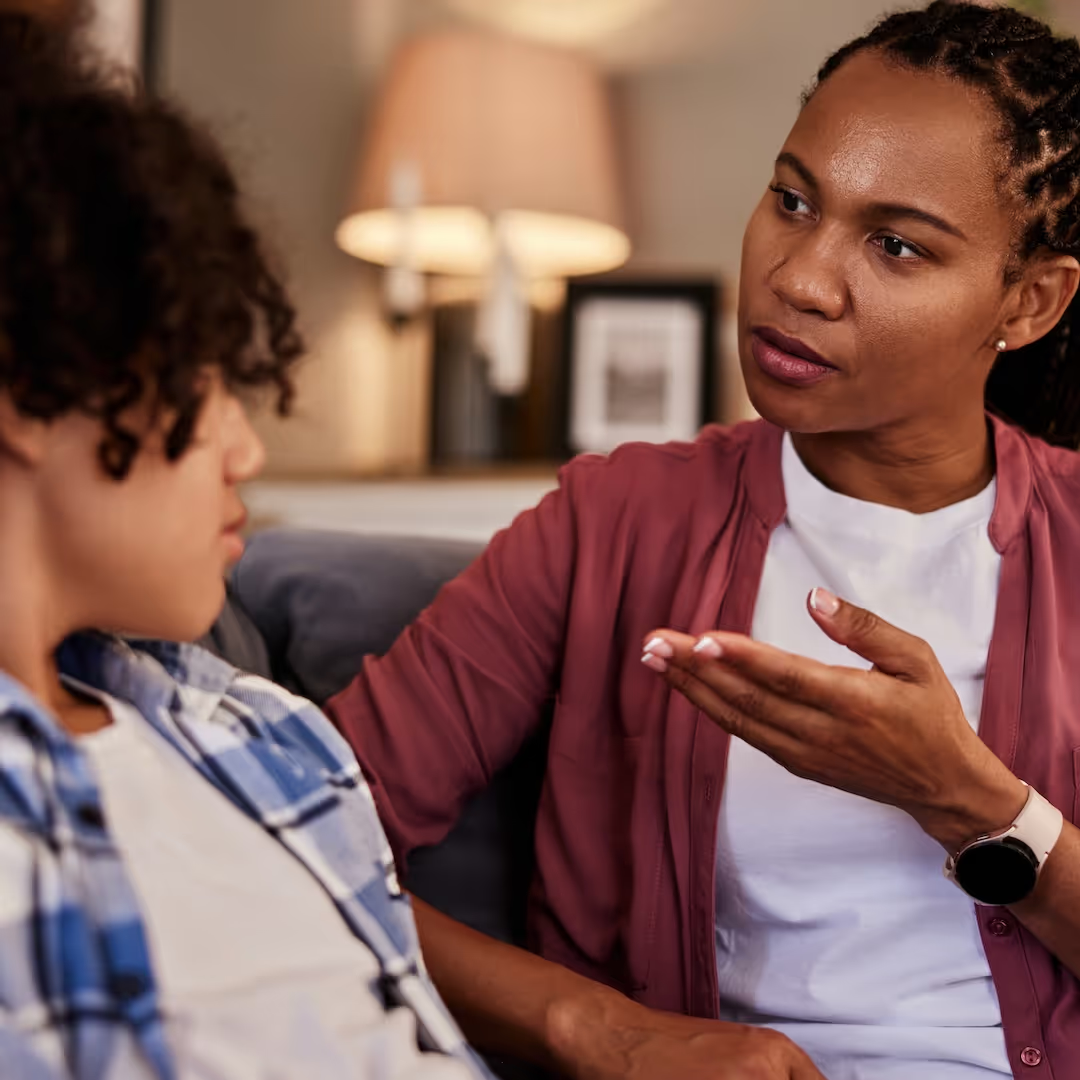
So what is pornography, and how do we talk with our young people about this prickly topic? Every time I sit down to write about this, I feel a bit of sadness and, frankly, disbelief. It’s hard to accept that we’ve created a society where youth can be just a click away from all sorts of highly explicit sexual material. And yes, parental controls and blockers can help, but the internet is everywhere, and chances are, they will see things somewhere. But we have to talk about it.
READ MORE >
A parent recently told me how upset she was because her teen’s sports team posted something inappropriate in their social media group. Today I share my advice to the mom about ways to handle such a situation.
READ MORE >for more like this, DR. DELANEY RUSTON'S NEW BOOK, PARENTING IN THE SCREEN AGE, IS THE DEFINITIVE GUIDE FOR TODAY’S PARENTS. WITH INSIGHTS ON SCREEN TIME FROM RESEARCHERS, INPUT FROM KIDS & TEENS, THIS BOOK IS PACKED WITH SOLUTIONS FOR HOW TO START AND SUSTAIN PRODUCTIVE FAMILY TALKS ABOUT TECHNOLOGY AND IT’S IMPACT ON OUR MENTAL WELLBEING.