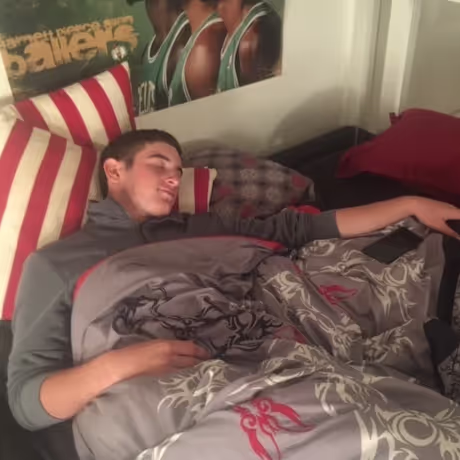

School is back in session. For most of us, that means early mornings and sleepy kids. The national average start time for American public high schools is 7:59 a.m., with some starting as early as 7:00 a.m., according to the National Center for Education Statistics. My son just did his last two years of high school in New York and his start time was 7:05 a.m. Why so early?
One reason for early start times is busing. School districts were under financial strain and cut buses to save money. Districts doubled their routes with fewer buses. One bus would pick up high schoolers very early, drop them off, then go back out and pick up elementary and middle school students later in the morning. Bigger fleets would allow for ALL students to have later start times.
The American Medical Association (AMA), the American Academy of Pediatrics (AAP) and, the American Academy of Sleep Medicine (AASM) all say later start times are vital for the health and well-being of pre-teens and teens.
We also know that late night screen use is contributing to big sleep problems with our kids. A recent UCSF study found that “as smartphone use increased – particularly around bedtime - sleep duration and quality decreased.”
In their 2014 position paper on later school start times, the AAP says, “Studies show that adolescents who don't get enough sleep often suffer physical and mental-health problems, an increased risk of automobile accidents, and a decline in academic performance … Getting enough sleep each night can be hard for teens whose natural sleep cycles make it difficult for them to fall asleep before 11 p.m.—and who face a first-period class at 7:30 a.m. or earlier the next day." Melatonin is secreted in teenagers later in the night when compared to younger and older people which explains why adolescents naturally might want to go to bed late.
We just moved back to Seattle, and my daughter starts high school here this week. She is very excited that Seattle is one of the largest school districts to institute later start times. Lisa, my co-producer, has a daughter who started high school last week and her school also has a later start time. Of course, the concern for many is how to make sure the day doesn’t push out after school activities. At Lisa’s daughter’s school, they did several things including shortening some of the passing periods from 20 minutes to 10 minutes and ending school about 15 minutes later most days. So far, Lisa’s daughter is rising easily and rested, but she is complaining that she feels rushed getting from class-to-class and misses having more social time at school.


Learn more about showing our movies in your school or community!
Join Screenagers filmmaker Delaney Ruston MD for our latest Podcast

Learn more about our Screen-Free Sleep campaign at the website!
Our movie made for parents and educators of younger kids
Learn more about showing our movies in your school or community!
Register your interest in bringing our new movie to your school or community
Learn more about showing our movies in your school or community!
Join Screenagers filmmaker Delaney Ruston MD for our latest Podcast
Learn more about our Screen-Free Sleep campaign at the website!
Our movie made for parents and educators of younger kids
Join Screenagers filmmaker Delaney Ruston MD for our latest Podcast
Register your interest in bringing our new movie to your school or community

As we’re about to celebrate 10 years of Screenagers, we want to hear what’s been most helpful and what you’d like to see next.
Please click here to share your thoughts with us in our community survey. It only takes 5–10 minutes, and everyone who completes it will be entered to win one of five $50 Amazon vouchers.
School is back in session. For most of us, that means early mornings and sleepy kids. The national average start time for American public high schools is 7:59 a.m., with some starting as early as 7:00 a.m., according to the National Center for Education Statistics. My son just did his last two years of high school in New York and his start time was 7:05 a.m. Why so early?
One reason for early start times is busing. School districts were under financial strain and cut buses to save money. Districts doubled their routes with fewer buses. One bus would pick up high schoolers very early, drop them off, then go back out and pick up elementary and middle school students later in the morning. Bigger fleets would allow for ALL students to have later start times.
The American Medical Association (AMA), the American Academy of Pediatrics (AAP) and, the American Academy of Sleep Medicine (AASM) all say later start times are vital for the health and well-being of pre-teens and teens.
We also know that late night screen use is contributing to big sleep problems with our kids. A recent UCSF study found that “as smartphone use increased – particularly around bedtime - sleep duration and quality decreased.”
In their 2014 position paper on later school start times, the AAP says, “Studies show that adolescents who don't get enough sleep often suffer physical and mental-health problems, an increased risk of automobile accidents, and a decline in academic performance … Getting enough sleep each night can be hard for teens whose natural sleep cycles make it difficult for them to fall asleep before 11 p.m.—and who face a first-period class at 7:30 a.m. or earlier the next day." Melatonin is secreted in teenagers later in the night when compared to younger and older people which explains why adolescents naturally might want to go to bed late.
We just moved back to Seattle, and my daughter starts high school here this week. She is very excited that Seattle is one of the largest school districts to institute later start times. Lisa, my co-producer, has a daughter who started high school last week and her school also has a later start time. Of course, the concern for many is how to make sure the day doesn’t push out after school activities. At Lisa’s daughter’s school, they did several things including shortening some of the passing periods from 20 minutes to 10 minutes and ending school about 15 minutes later most days. So far, Lisa’s daughter is rising easily and rested, but she is complaining that she feels rushed getting from class-to-class and misses having more social time at school.
Sign up here to receive the weekly Tech Talk Tuesdays newsletter from Screenagers filmmaker Delaney Ruston MD.
We respect your privacy.
School is back in session. For most of us, that means early mornings and sleepy kids. The national average start time for American public high schools is 7:59 a.m., with some starting as early as 7:00 a.m., according to the National Center for Education Statistics. My son just did his last two years of high school in New York and his start time was 7:05 a.m. Why so early?
One reason for early start times is busing. School districts were under financial strain and cut buses to save money. Districts doubled their routes with fewer buses. One bus would pick up high schoolers very early, drop them off, then go back out and pick up elementary and middle school students later in the morning. Bigger fleets would allow for ALL students to have later start times.
The American Medical Association (AMA), the American Academy of Pediatrics (AAP) and, the American Academy of Sleep Medicine (AASM) all say later start times are vital for the health and well-being of pre-teens and teens.
We also know that late night screen use is contributing to big sleep problems with our kids. A recent UCSF study found that “as smartphone use increased – particularly around bedtime - sleep duration and quality decreased.”
In their 2014 position paper on later school start times, the AAP says, “Studies show that adolescents who don't get enough sleep often suffer physical and mental-health problems, an increased risk of automobile accidents, and a decline in academic performance … Getting enough sleep each night can be hard for teens whose natural sleep cycles make it difficult for them to fall asleep before 11 p.m.—and who face a first-period class at 7:30 a.m. or earlier the next day." Melatonin is secreted in teenagers later in the night when compared to younger and older people which explains why adolescents naturally might want to go to bed late.
We just moved back to Seattle, and my daughter starts high school here this week. She is very excited that Seattle is one of the largest school districts to institute later start times. Lisa, my co-producer, has a daughter who started high school last week and her school also has a later start time. Of course, the concern for many is how to make sure the day doesn’t push out after school activities. At Lisa’s daughter’s school, they did several things including shortening some of the passing periods from 20 minutes to 10 minutes and ending school about 15 minutes later most days. So far, Lisa’s daughter is rising easily and rested, but she is complaining that she feels rushed getting from class-to-class and misses having more social time at school.
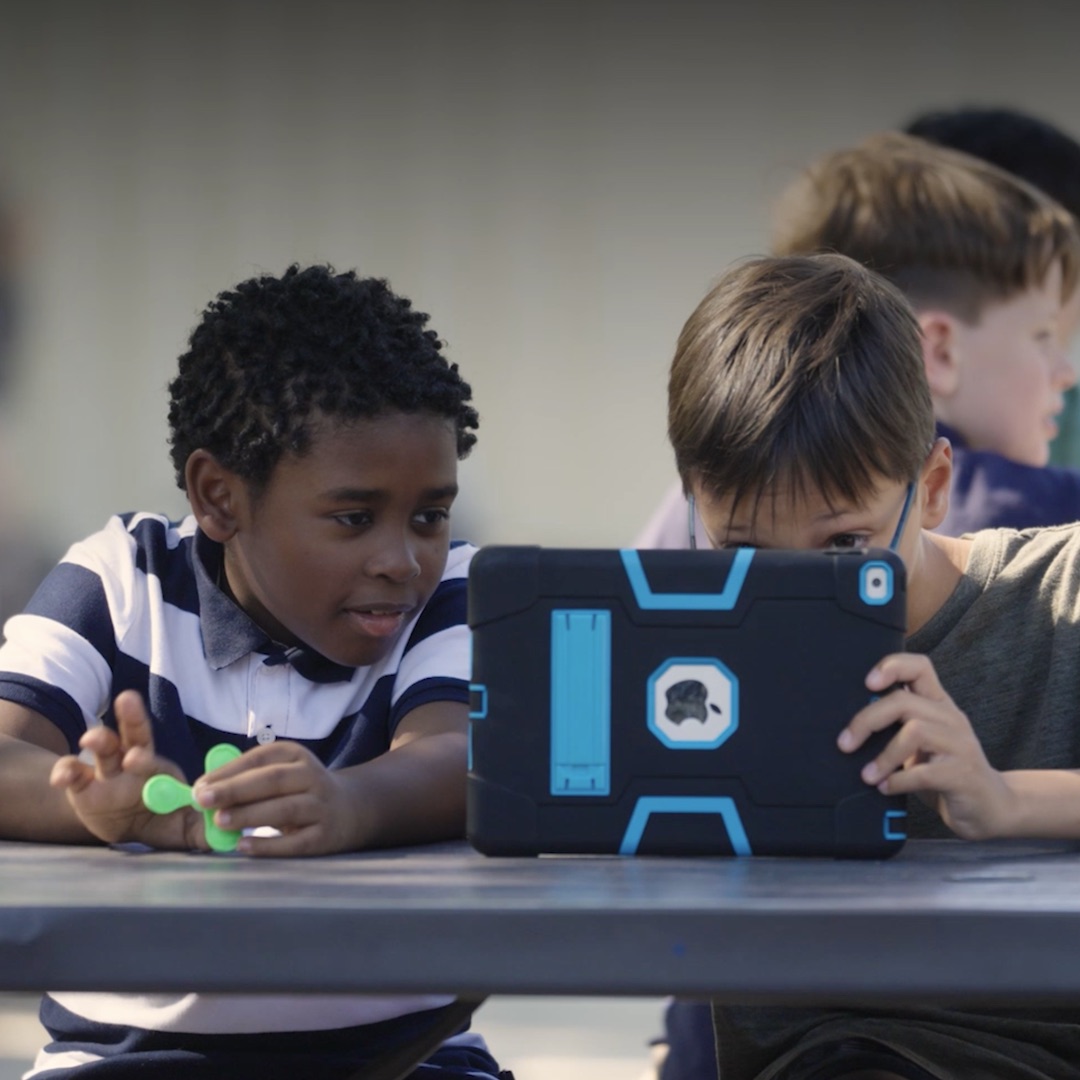
The Los Angeles Unified School District, the second-largest in the country, just approved districtwide screen time limits starting in the 2026–27 school year. Students through 1st grade won't use school devices, grades 2–5 will move from 1-to-1 iPads to shared laptop carts, and older students will face screen time limits with YouTube blocked. Devices also won't be allowed during passing periods, lunch, or recess. Credit goes to the parent- and teacher-led group Schools Beyond Screens, whose organizing and advocacy work helped make it happen.
READ MORE >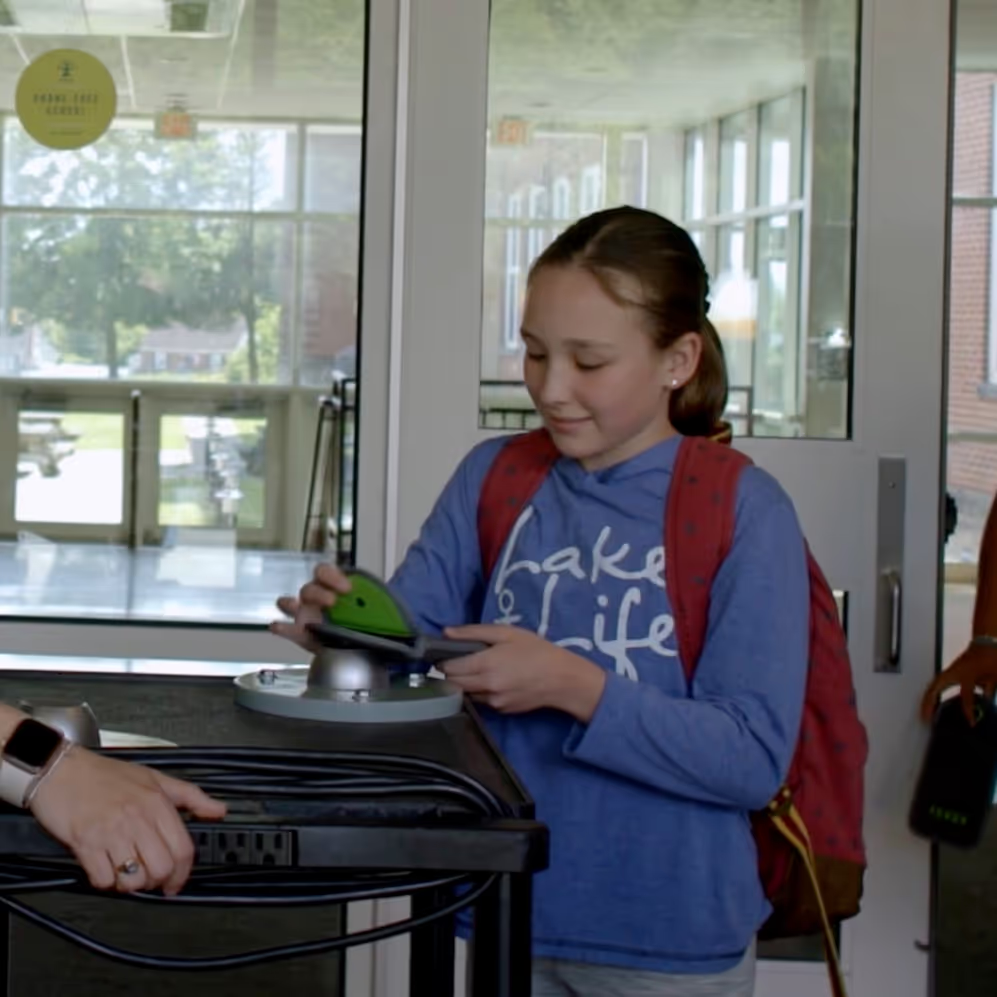
This year, millions of students are experiencing a major shift: school days without phones, smartwatches, or other personal devices. Today we explore the wins, hurdles, and solutions helping schools succeed. We also share our resources that you can use to support technology policy changes in your schools.
READ MORE >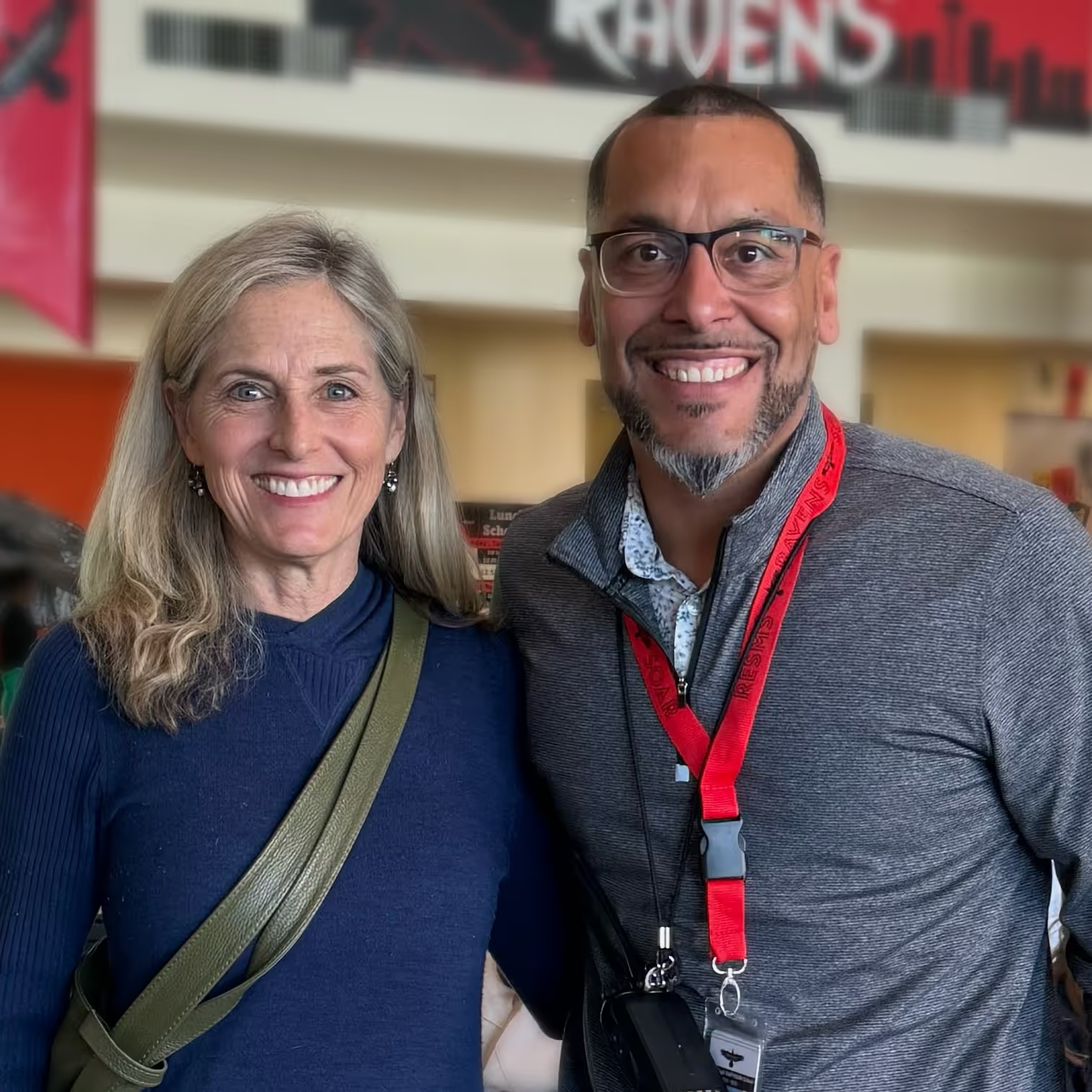
I recently sat down with middle school principal Zach at his school in Washington State. We talked about the challenges Zach and his team faced in his early years as principal when students used phones during school, and how he brought about a powerful transformation by having phones and smartwatches put away in locked pouches for the whole school day. In today’s blog, to raise awareness of the challenges, I share five real examples from Zach of the troubling ways students use phones at school to be unkind.
READ MORE >for more like this, DR. DELANEY RUSTON'S NEW BOOK, PARENTING IN THE SCREEN AGE, IS THE DEFINITIVE GUIDE FOR TODAY’S PARENTS. WITH INSIGHTS ON SCREEN TIME FROM RESEARCHERS, INPUT FROM KIDS & TEENS, THIS BOOK IS PACKED WITH SOLUTIONS FOR HOW TO START AND SUSTAIN PRODUCTIVE FAMILY TALKS ABOUT TECHNOLOGY AND IT’S IMPACT ON OUR MENTAL WELLBEING.