



There’s been a lot of buzz recently about the new four-part Netflix series Adolescence. In this intense, well-acted series, a 13-year-old boy is accused of committing a horrific act of violence against another student. The story touches on the dark world of toxic online groups, like "incel" communities, and the disturbing ways students use social media to bully and isolate each other…much of this is happening during school hours.
With all the conversation this series has sparked, it felt like the right moment to release a new episode of The Screenagers Podcast titled Inside a Middle School’s Fight Against Smartphone-Fueled Cruelty and Bullying. And trust me, this is one you won’t want to miss.
In this powerful episode, I sit down with middle school principal Zach at his school in Washington State. I first heard about Zach from my dear friend Jason, who trains school leaders and raved about Zach’s deep caring for his students and commitment to making needed changes to improve school culture. After spending an afternoon with him, I couldn't agree more.
We dive deep into the challenges Zach and his team faced in his early years as principal when students used phones during school. Phones were allowed during breaks and lunch, and the issues piled up: bullying, exclusion, ridicule, and constant conflict.
Of course, conflict is a part of life, but the point is that when phones are allowed in schools, they expand the ways that hurt can happen. And, of course, most students do not use phones to harm, but even if they do not, they will witness things that impact them emotionally. And all of this happening when you’re supposed to be learning geometry!?
This year, Zach succeeded in changing the school to becoming an Away For The Day school. Now, phones and smartwatches are placed in Yondr pouches for the entire school day. While not a perfect solution, this change has dramatically reduced device use and related problems.
In today’s blog, I share five troubling ways students use phones at school to be unkind — real examples Zach shared during our conversation. These examples are a powerful starting point for important conversations with kids and teens about harmful digital behavior. (As a side note: Youth Violence Prevention Week is coming up from April 28 to May 2, which is a great time to revisit these topics.)
Zach told me how, before the school implemented the Away For The Day policy, he spent much of his time dealing with the repercussions of conflicts fostered on phones and social media, leaving little room for anything else. Now, contrast that with what he shared about how things have changed under the new policies. He told me the following during our interview that was done right after the lunch period:
Zach:
"We just had lunch. You're sitting in my office talking. I have time and capacity to do this. There's not one conflict that happened. I can tell you that fourth, fifth, and sixth periods were all about the drama — all tied to phones during lunch. I would not have had this time and capacity last year or the year before because we would be dealing with something phone-related."


Learn more about showing our movies in your school or community!
Join Screenagers filmmaker Delaney Ruston MD for our latest Podcast

Learn more about our Screen-Free Sleep campaign at the website!
Our movie made for parents and educators of younger kids
Learn more about showing our movies in your school or community!
Register your interest in bringing our new movie to your school or community
Below are five examples from our conversation. Sharing these with kids and teens can help spark awareness and change.
Zach:
"There would be a group project, and kids would purposely try to fail because they didn't want to present in front of the class. Someone might sneak out a phone and take a picture. The next day, the student comes to school in tears because there are 30 comments mocking them."
This trend involves students taking photos or videos of classmates — often unflattering and without consent—and posting them side-by-side on social media to ask, "Should these two be in a relationship (ship), or should they dip?"
Zach:
"Kids would just be walking, and others would snap photos, often unflattering. They'd post them and ask if the pair should be together or not. It was usually negative and mean."
Zach:
"On my first day at this school, three girls jumped another girl. Everyone’s phones were out. It was like, what are we doing? People were screen capturing, snapping, sharing. It just kept spreading."
Zach:
"At lunch, certain kids would take unflattering photos of others eating and post them to Instagram. People would comment with things they thought were funny—but it was just mean. Some kids stopped eating lunch altogether."
Zach:
"Who's getting added? Who's getting kicked out? Kids use group chats to include or exclude and say things they’d never say face to face."
And again, if you haven’t yet, please listen to this podcast episode. Whether you’re a parent, educator, or simply someone who cares about the wellbeing of kids, Zach’s perspective is eye-opening and full of practical wisdom.
Listen Here: Apple Podcasts // Spotify // Castbox // YouTube // Website
Learn more about showing our movies in your school or community!
Join Screenagers filmmaker Delaney Ruston MD for our latest Podcast
Learn more about our Screen-Free Sleep campaign at the website!
Our movie made for parents and educators of younger kids
Join Screenagers filmmaker Delaney Ruston MD for our latest Podcast
Register your interest in bringing our new movie to your school or community
Be sure to subscribe to our YouTube Channel! We add new videos regularly and you'll find over 100 videos covering parenting advice, guidance, podcasts, movie clips and more. Here's our most recent:

As we’re about to celebrate 10 years of Screenagers, we want to hear what’s been most helpful and what you’d like to see next.
Please click here to share your thoughts with us in our community survey. It only takes 5–10 minutes, and everyone who completes it will be entered to win one of five $50 Amazon vouchers.
There’s been a lot of buzz recently about the new four-part Netflix series Adolescence. In this intense, well-acted series, a 13-year-old boy is accused of committing a horrific act of violence against another student. The story touches on the dark world of toxic online groups, like "incel" communities, and the disturbing ways students use social media to bully and isolate each other…much of this is happening during school hours.
With all the conversation this series has sparked, it felt like the right moment to release a new episode of The Screenagers Podcast titled Inside a Middle School’s Fight Against Smartphone-Fueled Cruelty and Bullying. And trust me, this is one you won’t want to miss.
In this powerful episode, I sit down with middle school principal Zach at his school in Washington State. I first heard about Zach from my dear friend Jason, who trains school leaders and raved about Zach’s deep caring for his students and commitment to making needed changes to improve school culture. After spending an afternoon with him, I couldn't agree more.
We dive deep into the challenges Zach and his team faced in his early years as principal when students used phones during school. Phones were allowed during breaks and lunch, and the issues piled up: bullying, exclusion, ridicule, and constant conflict.
Of course, conflict is a part of life, but the point is that when phones are allowed in schools, they expand the ways that hurt can happen. And, of course, most students do not use phones to harm, but even if they do not, they will witness things that impact them emotionally. And all of this happening when you’re supposed to be learning geometry!?
This year, Zach succeeded in changing the school to becoming an Away For The Day school. Now, phones and smartwatches are placed in Yondr pouches for the entire school day. While not a perfect solution, this change has dramatically reduced device use and related problems.
In today’s blog, I share five troubling ways students use phones at school to be unkind — real examples Zach shared during our conversation. These examples are a powerful starting point for important conversations with kids and teens about harmful digital behavior. (As a side note: Youth Violence Prevention Week is coming up from April 28 to May 2, which is a great time to revisit these topics.)
Zach told me how, before the school implemented the Away For The Day policy, he spent much of his time dealing with the repercussions of conflicts fostered on phones and social media, leaving little room for anything else. Now, contrast that with what he shared about how things have changed under the new policies. He told me the following during our interview that was done right after the lunch period:
Zach:
"We just had lunch. You're sitting in my office talking. I have time and capacity to do this. There's not one conflict that happened. I can tell you that fourth, fifth, and sixth periods were all about the drama — all tied to phones during lunch. I would not have had this time and capacity last year or the year before because we would be dealing with something phone-related."
Below are five examples from our conversation. Sharing these with kids and teens can help spark awareness and change.
Zach:
"There would be a group project, and kids would purposely try to fail because they didn't want to present in front of the class. Someone might sneak out a phone and take a picture. The next day, the student comes to school in tears because there are 30 comments mocking them."
This trend involves students taking photos or videos of classmates — often unflattering and without consent—and posting them side-by-side on social media to ask, "Should these two be in a relationship (ship), or should they dip?"
Zach:
"Kids would just be walking, and others would snap photos, often unflattering. They'd post them and ask if the pair should be together or not. It was usually negative and mean."
Zach:
"On my first day at this school, three girls jumped another girl. Everyone’s phones were out. It was like, what are we doing? People were screen capturing, snapping, sharing. It just kept spreading."
Zach:
"At lunch, certain kids would take unflattering photos of others eating and post them to Instagram. People would comment with things they thought were funny—but it was just mean. Some kids stopped eating lunch altogether."
Zach:
"Who's getting added? Who's getting kicked out? Kids use group chats to include or exclude and say things they’d never say face to face."
And again, if you haven’t yet, please listen to this podcast episode. Whether you’re a parent, educator, or simply someone who cares about the wellbeing of kids, Zach’s perspective is eye-opening and full of practical wisdom.
Listen Here: Apple Podcasts // Spotify // Castbox // YouTube // Website
Be sure to subscribe to our YouTube Channel! We add new videos regularly and you'll find over 100 videos covering parenting advice, guidance, podcasts, movie clips and more. Here's our most recent:
Sign up here to receive the weekly Tech Talk Tuesdays newsletter from Screenagers filmmaker Delaney Ruston MD.
We respect your privacy.
There’s been a lot of buzz recently about the new four-part Netflix series Adolescence. In this intense, well-acted series, a 13-year-old boy is accused of committing a horrific act of violence against another student. The story touches on the dark world of toxic online groups, like "incel" communities, and the disturbing ways students use social media to bully and isolate each other…much of this is happening during school hours.
With all the conversation this series has sparked, it felt like the right moment to release a new episode of The Screenagers Podcast titled Inside a Middle School’s Fight Against Smartphone-Fueled Cruelty and Bullying. And trust me, this is one you won’t want to miss.
In this powerful episode, I sit down with middle school principal Zach at his school in Washington State. I first heard about Zach from my dear friend Jason, who trains school leaders and raved about Zach’s deep caring for his students and commitment to making needed changes to improve school culture. After spending an afternoon with him, I couldn't agree more.
We dive deep into the challenges Zach and his team faced in his early years as principal when students used phones during school. Phones were allowed during breaks and lunch, and the issues piled up: bullying, exclusion, ridicule, and constant conflict.
Of course, conflict is a part of life, but the point is that when phones are allowed in schools, they expand the ways that hurt can happen. And, of course, most students do not use phones to harm, but even if they do not, they will witness things that impact them emotionally. And all of this happening when you’re supposed to be learning geometry!?
This year, Zach succeeded in changing the school to becoming an Away For The Day school. Now, phones and smartwatches are placed in Yondr pouches for the entire school day. While not a perfect solution, this change has dramatically reduced device use and related problems.
In today’s blog, I share five troubling ways students use phones at school to be unkind — real examples Zach shared during our conversation. These examples are a powerful starting point for important conversations with kids and teens about harmful digital behavior. (As a side note: Youth Violence Prevention Week is coming up from April 28 to May 2, which is a great time to revisit these topics.)
Zach told me how, before the school implemented the Away For The Day policy, he spent much of his time dealing with the repercussions of conflicts fostered on phones and social media, leaving little room for anything else. Now, contrast that with what he shared about how things have changed under the new policies. He told me the following during our interview that was done right after the lunch period:
Zach:
"We just had lunch. You're sitting in my office talking. I have time and capacity to do this. There's not one conflict that happened. I can tell you that fourth, fifth, and sixth periods were all about the drama — all tied to phones during lunch. I would not have had this time and capacity last year or the year before because we would be dealing with something phone-related."

The Los Angeles Unified School District, the second-largest in the country, just approved districtwide screen time limits starting in the 2026–27 school year. Students through 1st grade won't use school devices, grades 2–5 will move from 1-to-1 iPads to shared laptop carts, and older students will face screen time limits with YouTube blocked. Devices also won't be allowed during passing periods, lunch, or recess. Credit goes to the parent- and teacher-led group Schools Beyond Screens, whose organizing and advocacy work helped make it happen.
READ MORE >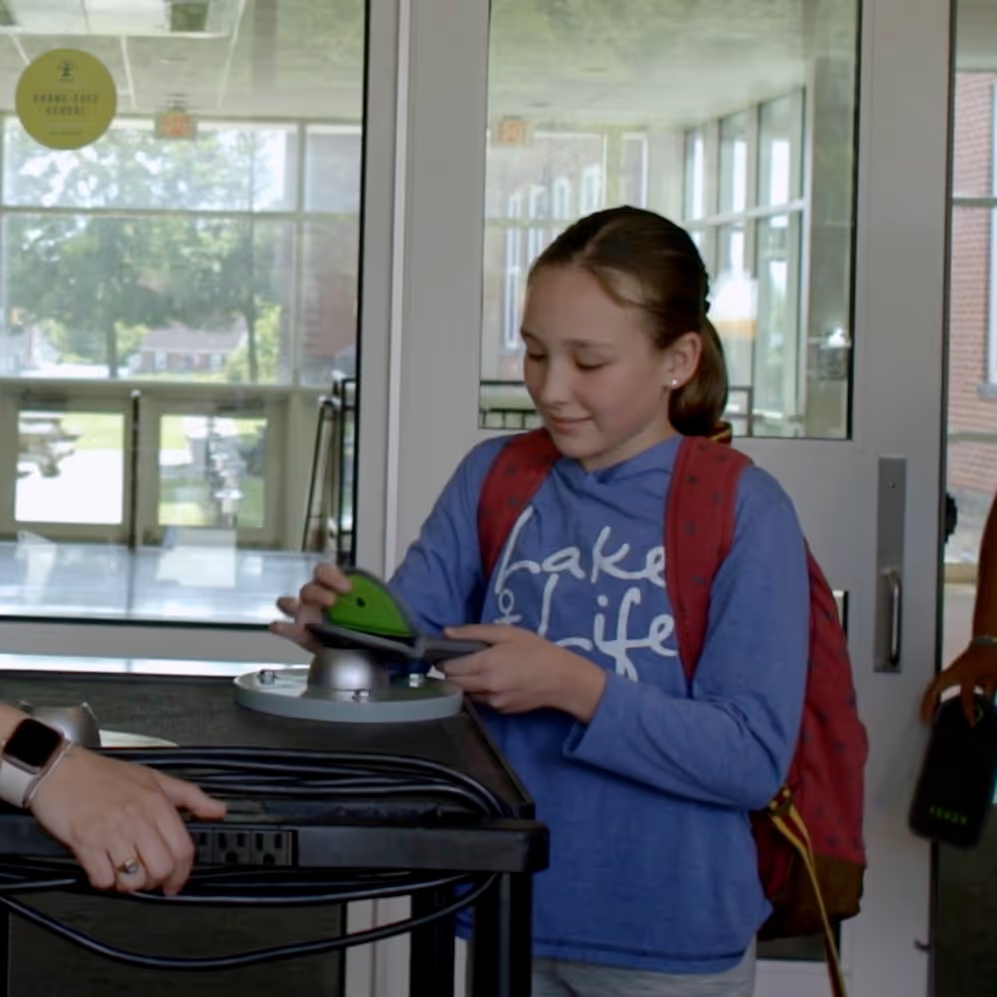
This year, millions of students are experiencing a major shift: school days without phones, smartwatches, or other personal devices. Today we explore the wins, hurdles, and solutions helping schools succeed. We also share our resources that you can use to support technology policy changes in your schools.
READ MORE >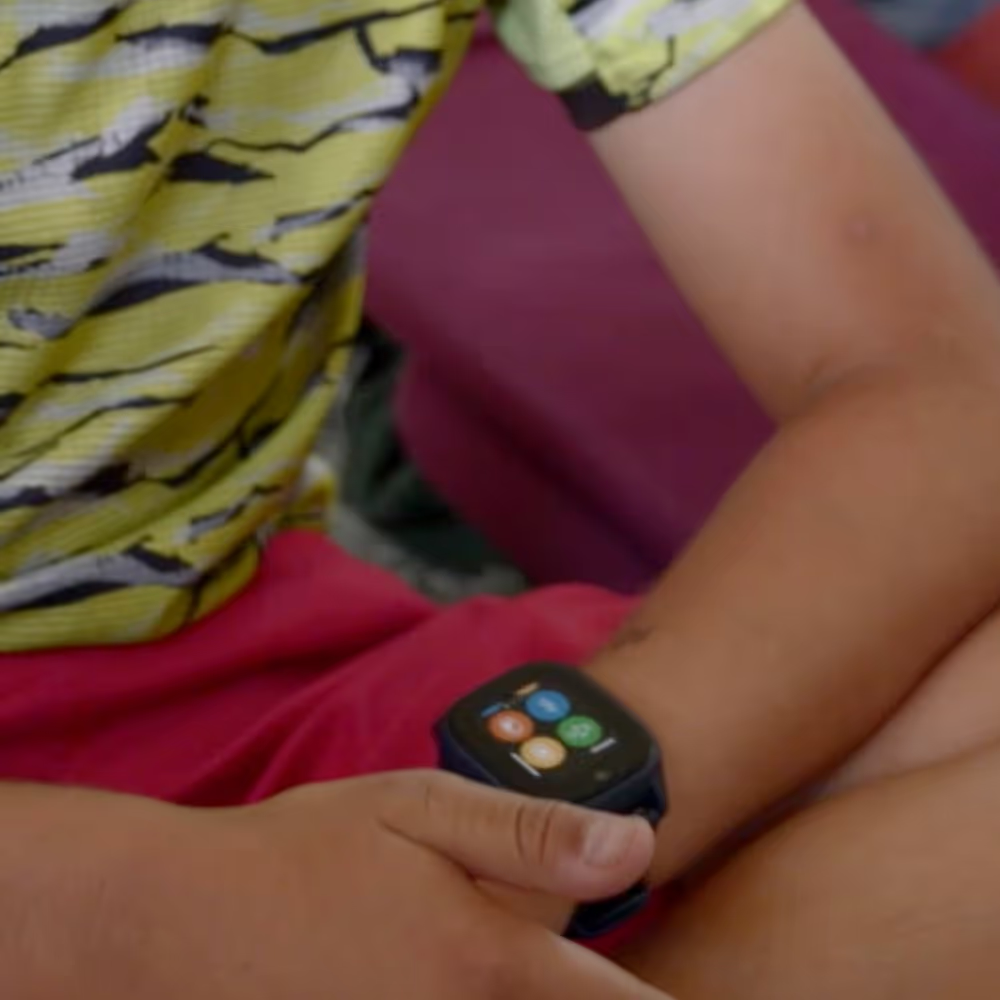
It is with great pleasure that I share with you today a piece that Lisa Tabb and I did for Jonathan Haidt's (Author of The Anxious Generation) and researcher Zack Rausch's Substack blog — After Babel. In it, we discuss the rise in use of smartwatches in elementary schools and the problems they pose. There is a real cost to arming (pun intended) our kids with these devices and sending them to school. Now is the time to stop and fully address this topic and ensure that schools become smartwatch and phone-free.
READ MORE >for more like this, DR. DELANEY RUSTON'S NEW BOOK, PARENTING IN THE SCREEN AGE, IS THE DEFINITIVE GUIDE FOR TODAY’S PARENTS. WITH INSIGHTS ON SCREEN TIME FROM RESEARCHERS, INPUT FROM KIDS & TEENS, THIS BOOK IS PACKED WITH SOLUTIONS FOR HOW TO START AND SUSTAIN PRODUCTIVE FAMILY TALKS ABOUT TECHNOLOGY AND IT’S IMPACT ON OUR MENTAL WELLBEING.