


AI can do remarkable things, like AlphaFold predicting protein structures in minutes, but the risks to young people are here now, from deepfakes and sextortion to AI companions linked to teen suicides. In Screenagers: Generation AI, we look at why AI literacy belongs in schools, meaning critical thinking about how AI works and who designed it, not just how to use it. I share what a few states are starting to mandate, and why this can't sit with parents alone.
Yes, AI can be an incredibly helpful tool. Think about science. Just the other day, my nephew, who works in a lab, shared an incredible fact: AlphaFold, an AI system developed by Google DeepMind, predicts the 3D shapes of some proteins in minutes, a task that used to take months or even years. Knowing a protein’s structure is incredibly valuable because its shape determines what it does and helps scientists understand diseases and design new drugs to target them.
At the same time, we can all agree that there are real risks.
In Screenagers: Generation AI, we examine social, academic, and mental health risks and offer solutions. One strategy we highlight to mitigate these risks is AI literacy in schools.
I love what Rebecca Winthrop, PhD, the director of the Center for Universal Education at the Brookings Institution, says in the film:
“They [students] do need to understand how the technology works, that it hallucinates, that it doesn't always say the right thing, how you engage with it, and ethics. Should you write a happy birthday note to your best friend using AI? Is that cool? Is it not cool?
And they need to understand that it has been designed by a group of human beings in a couple of geographic locations around the world. This is not the law of physics. We can design this technology any way we want.”
There is not one definition. But I think all the points Rebecca said are exactly key elements. Of course there is the whole topic of HOW to use AI as a tool, and sometimes that is called AI literacy, but that is not what I am referring to here.
I am talking more about how to think critically about all facets of AI. Why has it been designed to be sycophantic? Why are there no national-level safety regulations yet? What happens to information people share with AI platforms? What is happening due to AI’s ability to be used to create non-consensual sexual images? And other issues.
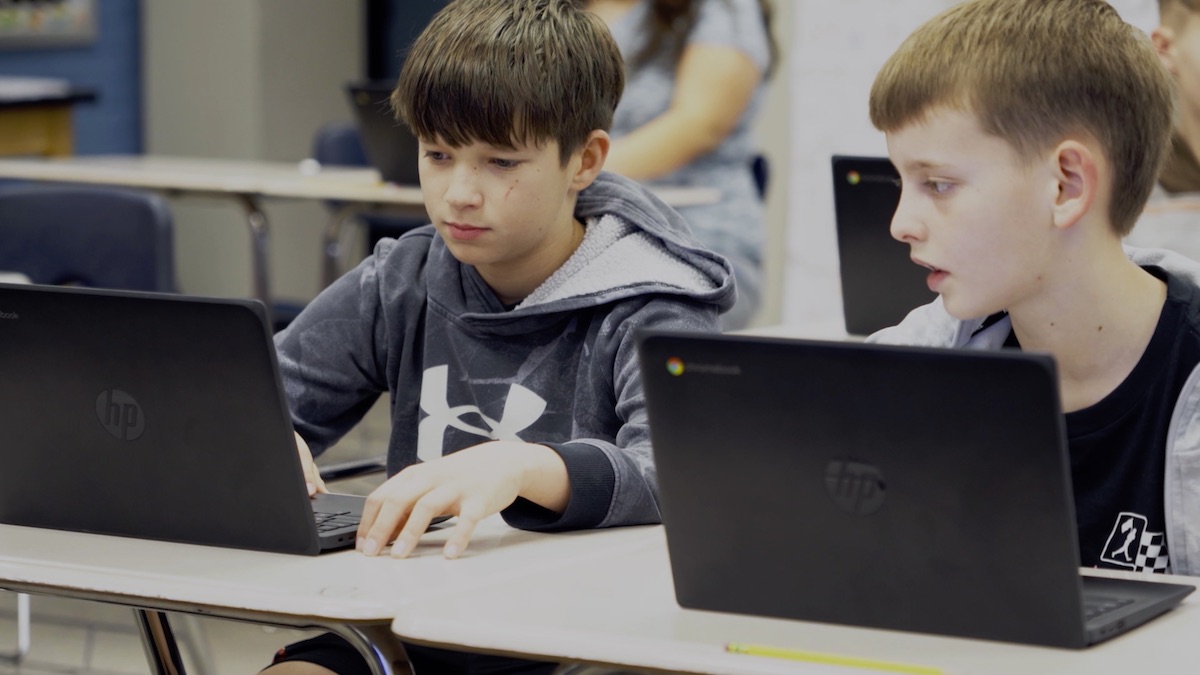
In Screenagers: Generation AI, a high school student from Oakland Technical High School in California talks about an assignment his English teacher gave the class. The students were instructed to write an essay without AI and then one using AI. In the film, he talks about seeing firsthand how ChatGPT made things up and how that experience changed his thinking about the tool.
I am all for that AI literacy assignment and really appreciate that it happened in English class.
Because these risks aren't hypothetical and coming in the future. Young people are encountering them right now.
AI-generated deepfakes are being made and spread, causing great pain to victims. At times, these types of images are being used for sextortion. We have young people forming relationships with AI companions, which has been linked to young people's suicides.


Learn more about showing our movies in your school or community!
Join Screenagers filmmaker Delaney Ruston MD for our latest Podcast

Learn more about our Screen-Free Sleep campaign at the website!
Our movie made for parents and educators of younger kids
Learn more about showing our movies in your school or community!
Register your interest in bringing our new movie to your school or community
This is why I believe AI literacy needs to become a standard part of what we teach students.
And I don’t think it should live only in a computer science class. It can be intertwined with media literacy and digital literacy, but it needs to be brought up at other times as well.
Think about SEL, social and emotional learning. It can be most powerful when it is part of a school's culture, with different teachers reinforcing the skills in different settings. I would love to see the same approach with AI literacy.
A handful of states are beginning to require AI literacy in schools, but things are not yet in place. North Carolina, for example, has enacted a law requiring K–12 AI literacy standards that include teaching students about AI’s limitations, privacy risks, how to evaluate and verify AI-generated information, and how to interact safely with AI and AI chatbots. The standards are required to be implemented beginning in the 2028–29 school year.
North Carolina’s law even specifically calls for teaching students best practices and safety when interacting with AI chatbots.
I know here at Screenagers, we are incredibly pleased knowing that the act of watching our new film, be it the full 1-hour version or the 2 classroom versions we have, is indeed AI literacy, both for adults and students.
“We all have to partner up together. This is one area where families and schools have to work together very closely.” This is another line in the film from Rebecca Winthrop, PhD, and she is talking in part about AI literacy.
We know protecting young people cannot rest entirely on parents having conversations at home. Schools have a role to play too.
We should absolutely be talking with our kids at home about AI. But parents cannot do this alone because the risks are too significant, and AI is everywhere.
Learn more about showing our movies in your school or community!
Join Screenagers filmmaker Delaney Ruston MD for our latest Podcast
Learn more about our Screen-Free Sleep campaign at the website!
Our movie made for parents and educators of younger kids
Join Screenagers filmmaker Delaney Ruston MD for our latest Podcast
Register your interest in bringing our new movie to your school or community
Subscribe to our YouTube Channel! We add new videos regularly and you'll find over 100 videos covering parenting advice, guidance, podcasts, movie clips and more. Here's our most recent:

As we’re about to celebrate 10 years of Screenagers, we want to hear what’s been most helpful and what you’d like to see next.
Please click here to share your thoughts with us in our community survey. It only takes 5–10 minutes, and everyone who completes it will be entered to win one of five $50 Amazon vouchers.
Yes, AI can be an incredibly helpful tool. Think about science. Just the other day, my nephew, who works in a lab, shared an incredible fact: AlphaFold, an AI system developed by Google DeepMind, predicts the 3D shapes of some proteins in minutes, a task that used to take months or even years. Knowing a protein’s structure is incredibly valuable because its shape determines what it does and helps scientists understand diseases and design new drugs to target them.
At the same time, we can all agree that there are real risks.
In Screenagers: Generation AI, we examine social, academic, and mental health risks and offer solutions. One strategy we highlight to mitigate these risks is AI literacy in schools.
I love what Rebecca Winthrop, PhD, the director of the Center for Universal Education at the Brookings Institution, says in the film:
“They [students] do need to understand how the technology works, that it hallucinates, that it doesn't always say the right thing, how you engage with it, and ethics. Should you write a happy birthday note to your best friend using AI? Is that cool? Is it not cool?
And they need to understand that it has been designed by a group of human beings in a couple of geographic locations around the world. This is not the law of physics. We can design this technology any way we want.”
There is not one definition. But I think all the points Rebecca said are exactly key elements. Of course there is the whole topic of HOW to use AI as a tool, and sometimes that is called AI literacy, but that is not what I am referring to here.
I am talking more about how to think critically about all facets of AI. Why has it been designed to be sycophantic? Why are there no national-level safety regulations yet? What happens to information people share with AI platforms? What is happening due to AI’s ability to be used to create non-consensual sexual images? And other issues.
In Screenagers: Generation AI, a high school student from Oakland Technical High School in California talks about an assignment his English teacher gave the class. The students were instructed to write an essay without AI and then one using AI. In the film, he talks about seeing firsthand how ChatGPT made things up and how that experience changed his thinking about the tool.
I am all for that AI literacy assignment and really appreciate that it happened in English class.
Because these risks aren't hypothetical and coming in the future. Young people are encountering them right now.
AI-generated deepfakes are being made and spread, causing great pain to victims. At times, these types of images are being used for sextortion. We have young people forming relationships with AI companions, which has been linked to young people's suicides.
This is why I believe AI literacy needs to become a standard part of what we teach students.
And I don’t think it should live only in a computer science class. It can be intertwined with media literacy and digital literacy, but it needs to be brought up at other times as well.
Think about SEL, social and emotional learning. It can be most powerful when it is part of a school's culture, with different teachers reinforcing the skills in different settings. I would love to see the same approach with AI literacy.
A handful of states are beginning to require AI literacy in schools, but things are not yet in place. North Carolina, for example, has enacted a law requiring K–12 AI literacy standards that include teaching students about AI’s limitations, privacy risks, how to evaluate and verify AI-generated information, and how to interact safely with AI and AI chatbots. The standards are required to be implemented beginning in the 2028–29 school year.
North Carolina’s law even specifically calls for teaching students best practices and safety when interacting with AI chatbots.
I know here at Screenagers, we are incredibly pleased knowing that the act of watching our new film, be it the full 1-hour version or the 2 classroom versions we have, is indeed AI literacy, both for adults and students.
“We all have to partner up together. This is one area where families and schools have to work together very closely.” This is another line in the film from Rebecca Winthrop, PhD, and she is talking in part about AI literacy.
We know protecting young people cannot rest entirely on parents having conversations at home. Schools have a role to play too.
We should absolutely be talking with our kids at home about AI. But parents cannot do this alone because the risks are too significant, and AI is everywhere.
Subscribe to our YouTube Channel! We add new videos regularly and you'll find over 100 videos covering parenting advice, guidance, podcasts, movie clips and more. Here's our most recent:
Sign up here to receive the weekly Tech Talk Tuesdays newsletter from Screenagers filmmaker Delaney Ruston MD.
We respect your privacy.
Yes, AI can be an incredibly helpful tool. Think about science. Just the other day, my nephew, who works in a lab, shared an incredible fact: AlphaFold, an AI system developed by Google DeepMind, predicts the 3D shapes of some proteins in minutes, a task that used to take months or even years. Knowing a protein’s structure is incredibly valuable because its shape determines what it does and helps scientists understand diseases and design new drugs to target them.
At the same time, we can all agree that there are real risks.
In Screenagers: Generation AI, we examine social, academic, and mental health risks and offer solutions. One strategy we highlight to mitigate these risks is AI literacy in schools.
I love what Rebecca Winthrop, PhD, the director of the Center for Universal Education at the Brookings Institution, says in the film:
“They [students] do need to understand how the technology works, that it hallucinates, that it doesn't always say the right thing, how you engage with it, and ethics. Should you write a happy birthday note to your best friend using AI? Is that cool? Is it not cool?
And they need to understand that it has been designed by a group of human beings in a couple of geographic locations around the world. This is not the law of physics. We can design this technology any way we want.”
There is not one definition. But I think all the points Rebecca said are exactly key elements. Of course there is the whole topic of HOW to use AI as a tool, and sometimes that is called AI literacy, but that is not what I am referring to here.
I am talking more about how to think critically about all facets of AI. Why has it been designed to be sycophantic? Why are there no national-level safety regulations yet? What happens to information people share with AI platforms? What is happening due to AI’s ability to be used to create non-consensual sexual images? And other issues.
In Screenagers: Generation AI, a high school student from Oakland Technical High School in California talks about an assignment his English teacher gave the class. The students were instructed to write an essay without AI and then one using AI. In the film, he talks about seeing firsthand how ChatGPT made things up and how that experience changed his thinking about the tool.
I am all for that AI literacy assignment and really appreciate that it happened in English class.
Because these risks aren't hypothetical and coming in the future. Young people are encountering them right now.
AI-generated deepfakes are being made and spread, causing great pain to victims. At times, these types of images are being used for sextortion. We have young people forming relationships with AI companions, which has been linked to young people's suicides.

Adam's Law was signed in California last week, named for Adam Raine, the 16-year-old who died by suicide in April 2025 after months of conversations with ChatGPT. It bars companion chatbots from encouraging self-harm, claiming to be human, simulating romantic interest in children, or claiming a special understanding of a child. That last group of protections particularly gets my attention. The good news is that people care deeply and are working hard to put guardrails in place, but we can't assume it's all resolved, because it isn't.
READ MORE >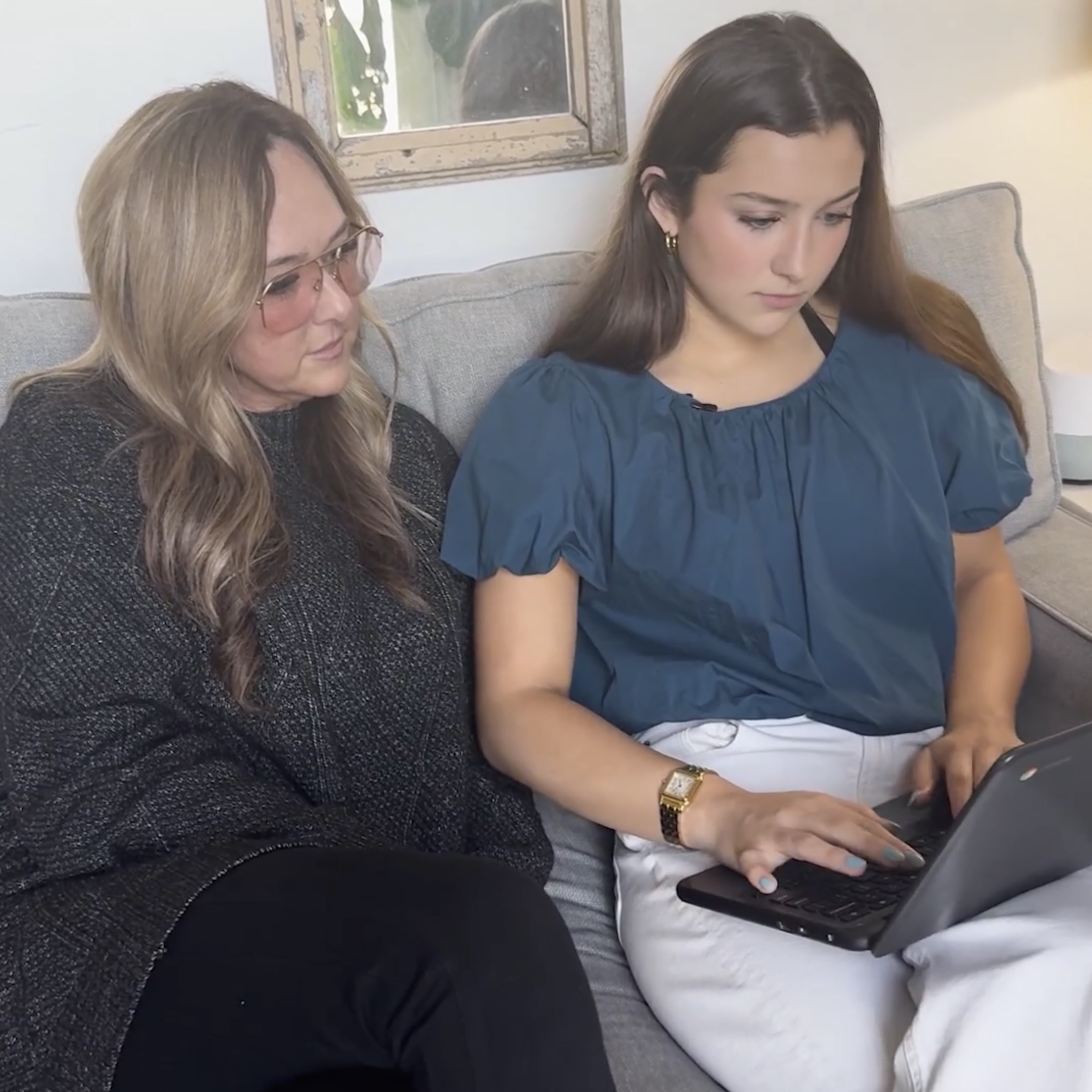
Elliston Berry was 14 when a classmate used a nudify app to turn one of her Instagram photos into a fake nude that spread through her school. Almost one in five teens has made AI sexual content or knows someone who has. In our new film, Elliston and her mom Anna explain how they went from that morning to helping pass a federal law, the Take It Down Act.
READ MORE >
Google's AI answers now appear in search results whether anyone asks for them or not, and nobody can turn them off. A new Common Sense Media study using pretend child accounts found those answers repeatedly failed young people in crisis... Today's quiz walks through the findings, and you can take it with your kids to spark a meaningful conversation about AI.
READ MORE >for more like this, DR. DELANEY RUSTON'S NEW BOOK, PARENTING IN THE SCREEN AGE, IS THE DEFINITIVE GUIDE FOR TODAY’S PARENTS. WITH INSIGHTS ON SCREEN TIME FROM RESEARCHERS, INPUT FROM KIDS & TEENS, THIS BOOK IS PACKED WITH SOLUTIONS FOR HOW TO START AND SUSTAIN PRODUCTIVE FAMILY TALKS ABOUT TECHNOLOGY AND IT’S IMPACT ON OUR MENTAL WELLBEING.