


Many teens turn to AI when struggling emotionally, but few admit it. In a new Jed Foundation survey, 57% of students said they had used AI to cope with hard emotions, yet only 8% said they seek its help. I share three questions to ask your teen, a story from my clinic, and why youth should turn to people, not AI.
Last week, I shared our new Family AI Agreement for Kids and Teens, with questions and suggested boundaries for using AI for mental health support.
This week, I’m offering more ways to discuss the topic. Here are some approaches to try.
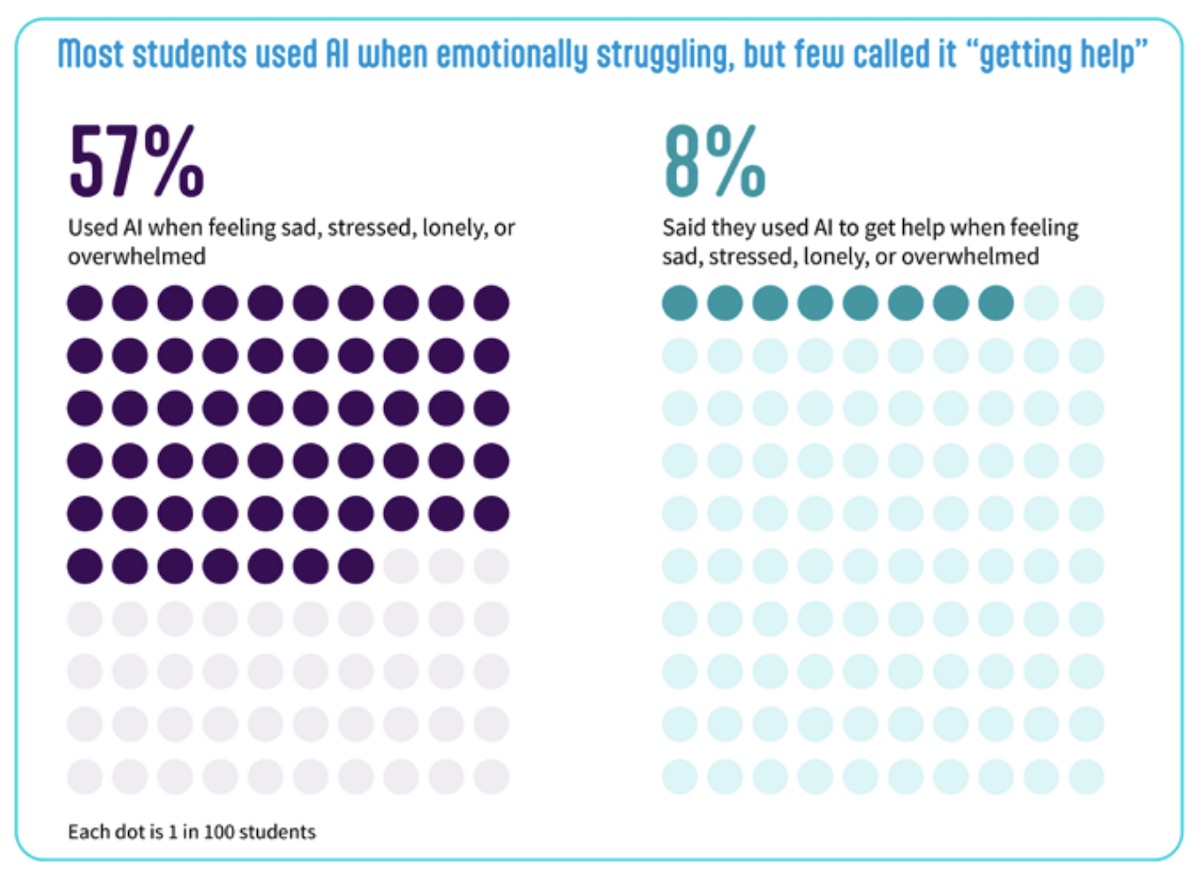
In a survey of middle and high school students from 21 schools across the country released by the Jed Foundation last week, I found it very intriguing that while 57% said they had used AI for advice, distraction, calming down, or feeling less lonely when they were “struggling emotionally,” only 8% said they seek AI’s help with emotional struggles.
Why the gap?
These findings offer a great way to start a conversation with our kids. This is the basis of the first question to ask your teen.
Share the data with them and ask something like: "Why do you think there's such a big difference between those two numbers?" Discuss why they might be getting help but don't see it as asking for help.
When interviewing numerous teens for Screenagers: Generation AI, the vast majority of them said they knew someone who used AI for emotional support but said they did not use it themselves. It became very clear that teens do not want to admit to using it.
The news about the risks is getting to them, which is good, but that doesn't mean it is enough to curb their use. For some it is, and for others it is not.


Learn more about showing our movies in your school or community!
Join Screenagers filmmaker Delaney Ruston MD for our latest Podcast

Learn more about our Screen-Free Sleep campaign at the website!
Our movie made for parents and educators of younger kids
Learn more about showing our movies in your school or community!
Register your interest in bringing our new movie to your school or community
I think about a teen in the film who said he had been using AI for mental health support but eventually realized it was not helpful in the way he needed.
On Thursday, I saw a teenager in my clinic who said he was having some concerns about his mental health. He couldn't describe his feelings specifically, so I explained symptoms of anxiety and depression, and he confirmed experiencing both. I asked whether he used AI for emotional support. He said no, preferring to talk to real people.
I agreed and offered a referral to our behavioral health team, which he welcomed.
Ask teens how they’d feel if you requested to see AI conversations related to emotions, relationships, or similar topics.
Clarify that you're not asking to see them now, but are just curious about what feelings the idea of showing such things to you or another adult brings up.
They might say, “I'd never do that,” “No way,” or something else. The goal is simply to hear their thoughts.
And you and I know, as parents, it will be hard not to have our own reactions to hearing their reactions. So I remind you (and me) to reach for phrases like “I'm listening. That's interesting,” or “I'd love to know more.”
I often remind teen patients, as I did with my patient, that they face many emotional challenges: schoolwork, sports, relationships, and feelings that arise unexpectedly. The teen years are exceptionally demanding.
I want to make clear that the three questions above, and how I suggest responding, are not meant to say that you should condone their use of AI for emotional struggles. I, and many others, strongly believe that youth should not be doing this.
Highly respected groups, such as Common Sense Media and the Jed Foundation, whose study I mentioned above, have also raised concerns.
The goal is to help youth develop the value of turning to people for emotional struggles and gaining tools from counselors, parents, and others.
We also want to share the reasons why we are not okay with them using AI for emotional struggles. For that reason, we want to create clear expectations with them and explain why we have those expectations. But we want their views along the way, and that is why we have these conversations with them.
Creating boundaries and rules, even though, admittedly, in our AI-saturated world, they are very hard to enforce, means taking the time to draft them out.
That is why I am ending this blog right where I started it, by suggesting that you make sure to fill out our Family AI Agreement for Kids and Teens with your child at some point.
Learn more about showing our movies in your school or community!
Join Screenagers filmmaker Delaney Ruston MD for our latest Podcast
Learn more about our Screen-Free Sleep campaign at the website!
Our movie made for parents and educators of younger kids
Join Screenagers filmmaker Delaney Ruston MD for our latest Podcast
Register your interest in bringing our new movie to your school or community
Subscribe to our YouTube Channel! We add new videos regularly and you'll find over 100 videos covering parenting advice, guidance, podcasts, movie clips and more. Here's our most recent:

As we’re about to celebrate 10 years of Screenagers, we want to hear what’s been most helpful and what you’d like to see next.
Please click here to share your thoughts with us in our community survey. It only takes 5–10 minutes, and everyone who completes it will be entered to win one of five $50 Amazon vouchers.
Last week, I shared our new Family AI Agreement for Kids and Teens, with questions and suggested boundaries for using AI for mental health support.
This week, I’m offering more ways to discuss the topic. Here are some approaches to try.
In a survey of middle and high school students from 21 schools across the country released by the Jed Foundation last week, I found it very intriguing that while 57% said they had used AI for advice, distraction, calming down, or feeling less lonely when they were “struggling emotionally,” only 8% said they seek AI’s help with emotional struggles.
Why the gap?
These findings offer a great way to start a conversation with our kids. This is the basis of the first question to ask your teen.
Share the data with them and ask something like: "Why do you think there's such a big difference between those two numbers?" Discuss why they might be getting help but don't see it as asking for help.
When interviewing numerous teens for Screenagers: Generation AI, the vast majority of them said they knew someone who used AI for emotional support but said they did not use it themselves. It became very clear that teens do not want to admit to using it.
The news about the risks is getting to them, which is good, but that doesn't mean it is enough to curb their use. For some it is, and for others it is not.
I think about a teen in the film who said he had been using AI for mental health support but eventually realized it was not helpful in the way he needed.
On Thursday, I saw a teenager in my clinic who said he was having some concerns about his mental health. He couldn't describe his feelings specifically, so I explained symptoms of anxiety and depression, and he confirmed experiencing both. I asked whether he used AI for emotional support. He said no, preferring to talk to real people.
I agreed and offered a referral to our behavioral health team, which he welcomed.
Ask teens how they’d feel if you requested to see AI conversations related to emotions, relationships, or similar topics.
Clarify that you're not asking to see them now, but are just curious about what feelings the idea of showing such things to you or another adult brings up.
They might say, “I'd never do that,” “No way,” or something else. The goal is simply to hear their thoughts.
And you and I know, as parents, it will be hard not to have our own reactions to hearing their reactions. So I remind you (and me) to reach for phrases like “I'm listening. That's interesting,” or “I'd love to know more.”
I often remind teen patients, as I did with my patient, that they face many emotional challenges: schoolwork, sports, relationships, and feelings that arise unexpectedly. The teen years are exceptionally demanding.
I want to make clear that the three questions above, and how I suggest responding, are not meant to say that you should condone their use of AI for emotional struggles. I, and many others, strongly believe that youth should not be doing this.
Highly respected groups, such as Common Sense Media and the Jed Foundation, whose study I mentioned above, have also raised concerns.
The goal is to help youth develop the value of turning to people for emotional struggles and gaining tools from counselors, parents, and others.
We also want to share the reasons why we are not okay with them using AI for emotional struggles. For that reason, we want to create clear expectations with them and explain why we have those expectations. But we want their views along the way, and that is why we have these conversations with them.
Creating boundaries and rules, even though, admittedly, in our AI-saturated world, they are very hard to enforce, means taking the time to draft them out.
That is why I am ending this blog right where I started it, by suggesting that you make sure to fill out our Family AI Agreement for Kids and Teens with your child at some point.
Subscribe to our YouTube Channel! We add new videos regularly and you'll find over 100 videos covering parenting advice, guidance, podcasts, movie clips and more. Here's our most recent:
Sign up here to receive the weekly Tech Talk Tuesdays newsletter from Screenagers filmmaker Delaney Ruston MD.
We respect your privacy.
Last week, I shared our new Family AI Agreement for Kids and Teens, with questions and suggested boundaries for using AI for mental health support.
This week, I’m offering more ways to discuss the topic. Here are some approaches to try.
In a survey of middle and high school students from 21 schools across the country released by the Jed Foundation last week, I found it very intriguing that while 57% said they had used AI for advice, distraction, calming down, or feeling less lonely when they were “struggling emotionally,” only 8% said they seek AI’s help with emotional struggles.
Why the gap?
These findings offer a great way to start a conversation with our kids. This is the basis of the first question to ask your teen.
Share the data with them and ask something like: "Why do you think there's such a big difference between those two numbers?" Discuss why they might be getting help but don't see it as asking for help.
When interviewing numerous teens for Screenagers: Generation AI, the vast majority of them said they knew someone who used AI for emotional support but said they did not use it themselves. It became very clear that teens do not want to admit to using it.
The news about the risks is getting to them, which is good, but that doesn't mean it is enough to curb their use. For some it is, and for others it is not.
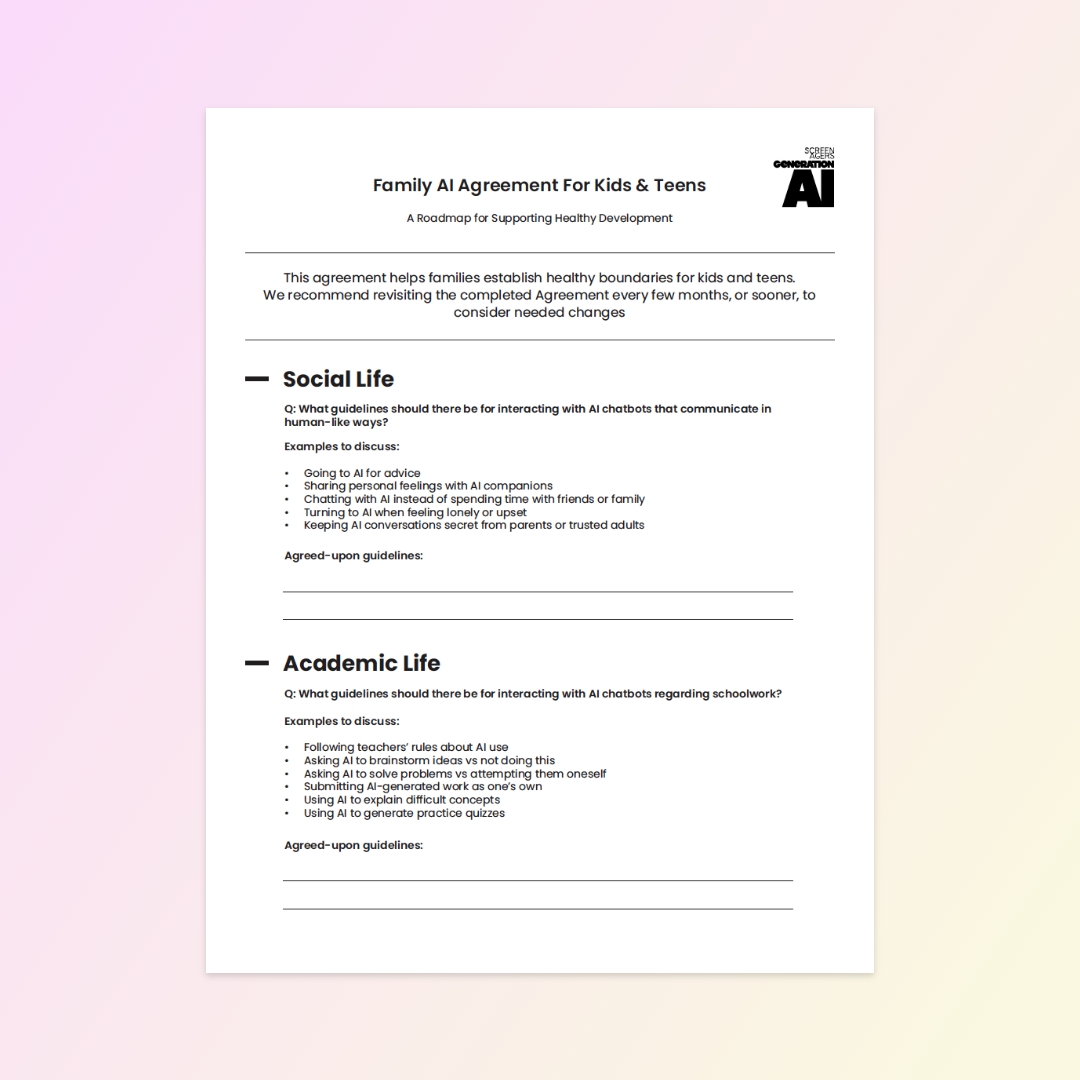
Nearly half of kids have never talked with their parents about AI safety. Our Family AI Agreement is a template to fill out together, covering social life, schoolwork, mental wellness, sleep, fakes, and privacy. The goal isn’t perfect rule-following but ongoing conversations about our WHYs.
READ MORE >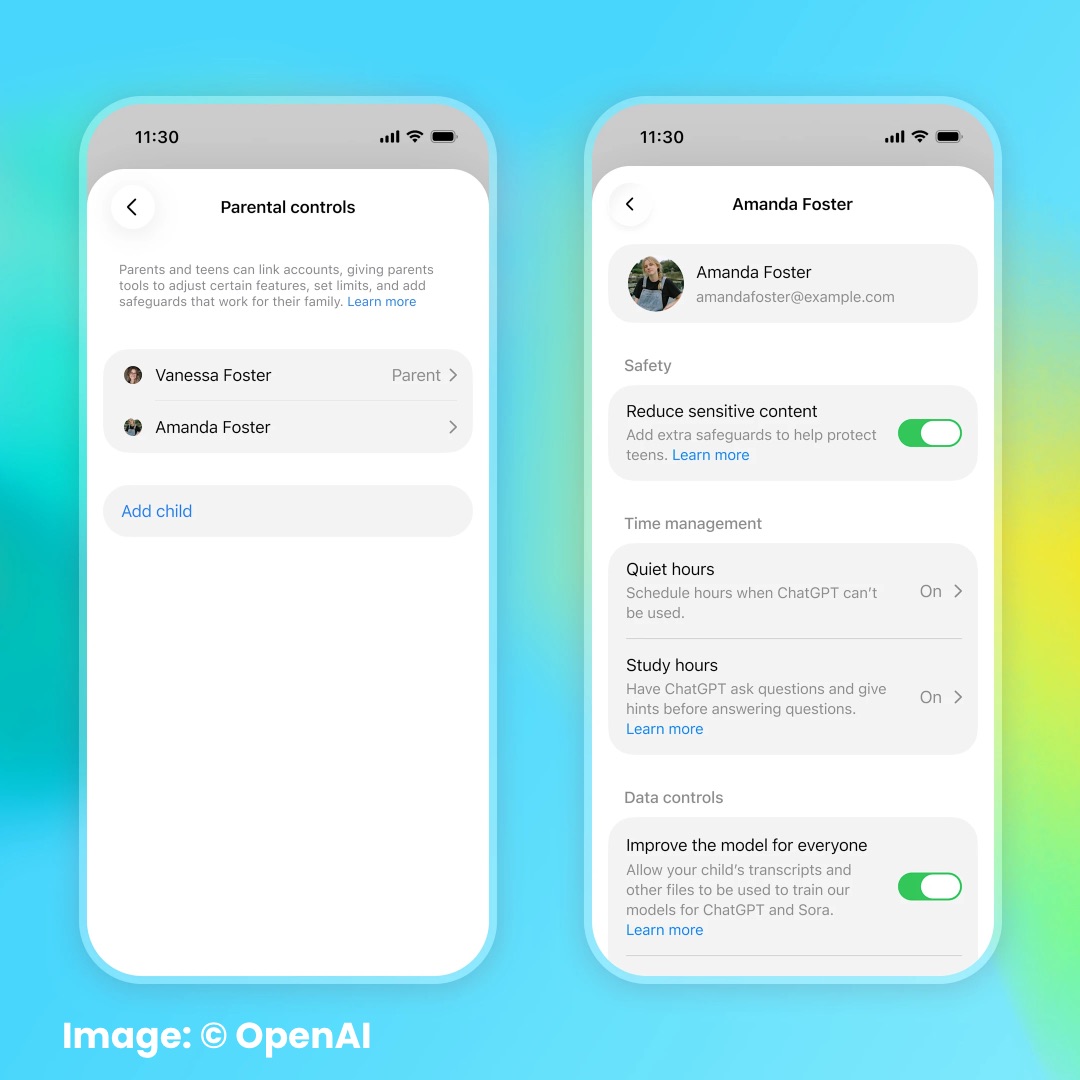
Common Sense Media’s Youth AI Safety Institute tested OpenAI’s new ChatGPT for Teens and rated it an “Unacceptable Risk” for all kids under 18. Parent alerts failed to fire even when teens discussed suicide, self-harm, or disordered eating, crisis support fell short, and it still does kids’ homework. The findings show why we need regulations requiring independent safety testing before these products reach teens.
READ MORE >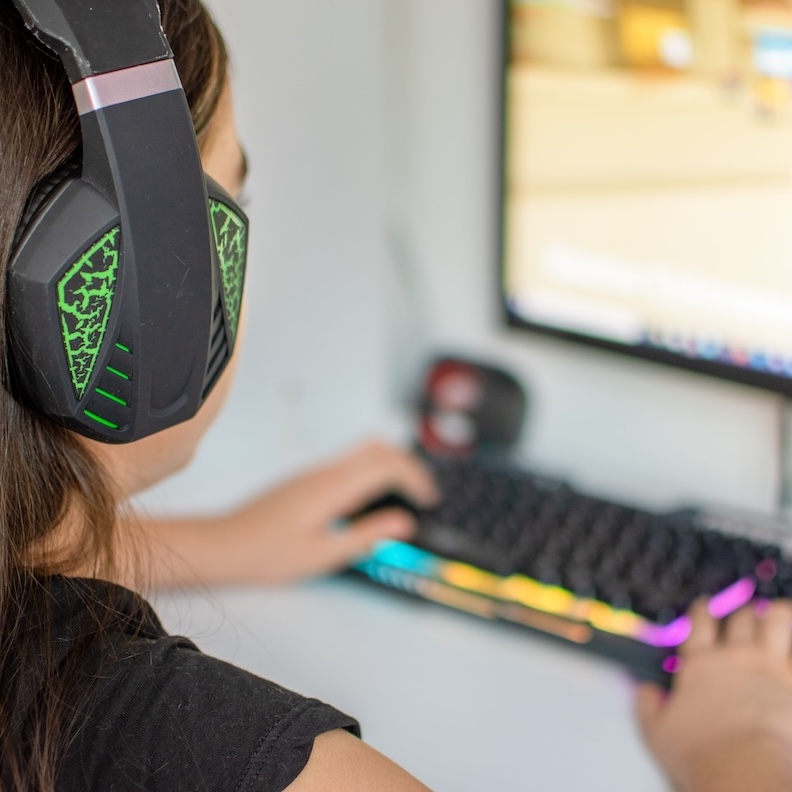
AI-powered game characters that kids can actually talk with are starting to appear. It's an emerging trend with real concerns, from privacy to kids turning to AI for support. I share where it's showing up and three questions to ask kids who game.
READ MORE >for more like this, DR. DELANEY RUSTON'S NEW BOOK, PARENTING IN THE SCREEN AGE, IS THE DEFINITIVE GUIDE FOR TODAY’S PARENTS. WITH INSIGHTS ON SCREEN TIME FROM RESEARCHERS, INPUT FROM KIDS & TEENS, THIS BOOK IS PACKED WITH SOLUTIONS FOR HOW TO START AND SUSTAIN PRODUCTIVE FAMILY TALKS ABOUT TECHNOLOGY AND IT’S IMPACT ON OUR MENTAL WELLBEING.