

"Don't let them take me away." Those were the words my mom repeated to me in an angry and scary voice as she held me in front of her, like a human shield, while two men in white coats gently told me that she needed to go with them.
It was the night of my 13th birthday, and we were in my bedroom. As my mom held me, I held on to the basket chair that hung from the ceiling, wanting so much to crawl in it and have this all stop.
More than anything, I wanted help for my mom. Something was wrong, desperately wrong. And, that night, she was acting so strange that I was frightened more than ever.
Mental illness, in its most severe forms, can be devastating. I know because it has caused such hardship for my family. I grew up with two parents who both had severe mental illness. I had no siblings and almost no family nearby.
As a society, we have assiduously avoided talking about severe mental illness with our youth in productive and compassionate ways. At the same time, there are all the media stories and films that paint certain pictures of severe mental illness that can gravely distort the realities of the vast majority of such individuals. These media stories influence the thinking of our kids in many unfortunate ways.
Because we are still in Mental Health Awareness Month, I wanted to share a bit of my life story and offer questions you can use when talking with kids and students about the media's portrayal of severe mental illness.
Until I was about 12, I was just living my life and not feeling any serious issues with my mom. I remember how I loved “cuddle time” — when we would lay on her bed, and I could feel her soft hands and smell her thick dark hair. I loved seeing her beautiful smile.
That said, there was very little that was normal. I can’t recall ever having dinner together. I made myself either grilled hot dogs in the broiler, spaghetti, or quesadillas. My mom would go out on many nights, and I was left with the TV as my babysitter. We had very little money, and the neighborhood where we lived created its own set of problems.
My dad had schizophrenia before I was born. My parents met while students at UC Berkeley, where my mom was studying to become a teacher and my dad was in graduate school in the English Department. My mom found my dad to be funny and smart, and while she knew he had something called “schizophrenia,” she once read that “love could cure it”.
When my mom was pregnant with me, they got evicted five times because my father’s illness caused his behavior to be out of control at times. When I was six months old, my mom snuck out one night and placed me in the back of the car, and drove to Los Angeles, where her parents lived.
After a year there, she moved us back to Berkeley. I would see my dad periodically.
When I was 12, my mom moved us to another house. It was around this time that my mom started acting very strange. She began to tell me that God was talking to her. She told me that she was going to marry a past boyfriend, and she started spending lots of money, saying that it was for her “dowry” — I had no idea what a dowry was.
On my 13th birthday, I had some friends over for a small party. We danced to Donna Summer’s “Hot Stuff” and “Bad Girls.” Then my friends went home. None of us knew that it was about to become one of the scariest nights of my life.


Learn more about showing our movies in your school or community!
Join Screenagers filmmaker Delaney Ruston MD for our latest Podcast

Learn more about our Screen-Free Sleep campaign at the website!
Our movie made for parents and educators of younger kids
Learn more about showing our movies in your school or community!
Register your interest in bringing our new movie to your school or community
My mom started laughing very strangely and then she started crying and fell to the floor. Then she stood up and started laughing again, and she fell back down.This kept repeating. It was like she was possessed.
I was frozen, so frightened seeing my mom this way. I finally ran to her, holding her shoulders, and cried, “Stop, mom, please stop.” I begged her but she didn’t stop.
Fortunately, my grandparents, who would visit once a year, were in town, and they called for help. Soon after, some type of white small truck arrived --It wasn’t an ambulance, and to this day, I don’t know what it was.
My mom grabbed my hand and ran us back into my bedroom. Then at my doorway, two men appeared that I remembered seemed nice. I wanted them to take my mom, to help her, but she held me so tight. I didn’t know what to do.
They said in kind voices that they could help my mom. That is what I wanted.
She repeated, “Don’t let them take me away.” Her words were sharp and biting, and I held tighter to my swinging basket chair.
I was glad that the men were able to get my mom to walk out with them. The next memory I have was standing outside our little house and watching the vehicle take her away and her looking out the back window at me.
This was not the first time I had seen one of my parents in a mental health crisis like this. My father’s schizophrenia sometimes completely took over his mind. For example, I recall when I was about ten, and he was yelling about the CIA being after him. He was extremely agitated and pulling at his hair. It was night, and there were police cars, and I was trying to hide behind my grandma Gigi’s legs (my dad’s mom). I focused on the red spinning lights. ”Focus, focus, breath, breath,” I told myself.
I felt such relief that people were there to do something for my dad.
Learn more about showing our movies in your school or community!
Join Screenagers filmmaker Delaney Ruston MD for our latest Podcast
Learn more about our Screen-Free Sleep campaign at the website!
Our movie made for parents and educators of younger kids
Join Screenagers filmmaker Delaney Ruston MD for our latest Podcast
Register your interest in bringing our new movie to your school or community
There was my story, and then there were all the stories in the media.
It seemed like the only stories in the news about mental illness were about people who committed heinous crimes. Yet, my parents weren’t violent.
Meanwhile, the film version of One Flew Over the Cuckoo's Nest was released when I was a tween. It was captivating but also really upsetting. I was trying to decipher the disconnect between people needing help and the actual hospital in the film. What was happening in that hospital was the opposite of help.
There was so much missing in the stories I saw--they often prompted fear rather than empathy. Where was the compassion for the individuals suffering from such hard illnesses and for their families?
Changing The Media
For many years, countless people have been working to change how mental illness is portrayed in the media – bringing fuller stories that tear down myths and build compassion.
Eighteen years ago is when I joined ranks with these change-makers. It was then that I made a short film about my father that premiered on PBS. (I kept filming our story and eventually completed a feature-length documentary, Unlisted: A Story of Schizophrenia.)
My work has addressed many topics around mental illness, both in the US and globally. One such topic is the fact that people with schizophrenia are much more likely to be victims of violence than to be perpetrators of it.
Another issue my work addresses is the fact that we need to make sure that crisis care is available and that we do much better at the quality of the care that is often the case. We need such care to be more benevolent, effective, and caring for the patient and the whole family. Furthermore, we need many more options than just hospitals.
Being part of the movement to help build empathy and advocate for solutions has been a major focus of my life.
And now, my latest film, Screenagers NEXT CHAPTER, is all about how we, as parents, schools, and other communities, ensure that all teens have the skills to help their mental health.
Let me conclude with just a bit more about my mother. The emergency workers took my mom to a hospital the night I mentioned above. My grandparents took me to see her the next day. I sat on a stool in a quiet hall, and she came and sat next to me. We didn’t talk much, but I liked that she was not the way she was the night before.
She stayed at the hospital for less than a week. Having her get some help during that crisis was a blessing.
My life with my mom has been very complicated and hard, as well as with my dad. Trying to explain my mom’s mental condition is not easy. But I will just say, for now, one of the most difficult parts of it all is that she has no insight into her mental health problems.
Living in a family rife with mental illness didn’t come without scars. I am grateful for my ability to confront these things honestly and seek therapy many times in my life.
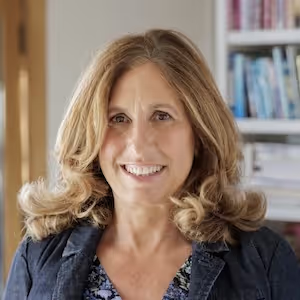
As we’re about to celebrate 10 years of Screenagers, we want to hear what’s been most helpful and what you’d like to see next.
Please click here to share your thoughts with us in our community survey. It only takes 5–10 minutes, and everyone who completes it will be entered to win one of five $50 Amazon vouchers.
"Don't let them take me away." Those were the words my mom repeated to me in an angry and scary voice as she held me in front of her, like a human shield, while two men in white coats gently told me that she needed to go with them.
It was the night of my 13th birthday, and we were in my bedroom. As my mom held me, I held on to the basket chair that hung from the ceiling, wanting so much to crawl in it and have this all stop.
More than anything, I wanted help for my mom. Something was wrong, desperately wrong. And, that night, she was acting so strange that I was frightened more than ever.
Mental illness, in its most severe forms, can be devastating. I know because it has caused such hardship for my family. I grew up with two parents who both had severe mental illness. I had no siblings and almost no family nearby.
As a society, we have assiduously avoided talking about severe mental illness with our youth in productive and compassionate ways. At the same time, there are all the media stories and films that paint certain pictures of severe mental illness that can gravely distort the realities of the vast majority of such individuals. These media stories influence the thinking of our kids in many unfortunate ways.
Because we are still in Mental Health Awareness Month, I wanted to share a bit of my life story and offer questions you can use when talking with kids and students about the media's portrayal of severe mental illness.
Until I was about 12, I was just living my life and not feeling any serious issues with my mom. I remember how I loved “cuddle time” — when we would lay on her bed, and I could feel her soft hands and smell her thick dark hair. I loved seeing her beautiful smile.
That said, there was very little that was normal. I can’t recall ever having dinner together. I made myself either grilled hot dogs in the broiler, spaghetti, or quesadillas. My mom would go out on many nights, and I was left with the TV as my babysitter. We had very little money, and the neighborhood where we lived created its own set of problems.
My dad had schizophrenia before I was born. My parents met while students at UC Berkeley, where my mom was studying to become a teacher and my dad was in graduate school in the English Department. My mom found my dad to be funny and smart, and while she knew he had something called “schizophrenia,” she once read that “love could cure it”.
When my mom was pregnant with me, they got evicted five times because my father’s illness caused his behavior to be out of control at times. When I was six months old, my mom snuck out one night and placed me in the back of the car, and drove to Los Angeles, where her parents lived.
After a year there, she moved us back to Berkeley. I would see my dad periodically.
When I was 12, my mom moved us to another house. It was around this time that my mom started acting very strange. She began to tell me that God was talking to her. She told me that she was going to marry a past boyfriend, and she started spending lots of money, saying that it was for her “dowry” — I had no idea what a dowry was.
On my 13th birthday, I had some friends over for a small party. We danced to Donna Summer’s “Hot Stuff” and “Bad Girls.” Then my friends went home. None of us knew that it was about to become one of the scariest nights of my life.
My mom started laughing very strangely and then she started crying and fell to the floor. Then she stood up and started laughing again, and she fell back down.This kept repeating. It was like she was possessed.
I was frozen, so frightened seeing my mom this way. I finally ran to her, holding her shoulders, and cried, “Stop, mom, please stop.” I begged her but she didn’t stop.
Fortunately, my grandparents, who would visit once a year, were in town, and they called for help. Soon after, some type of white small truck arrived --It wasn’t an ambulance, and to this day, I don’t know what it was.
My mom grabbed my hand and ran us back into my bedroom. Then at my doorway, two men appeared that I remembered seemed nice. I wanted them to take my mom, to help her, but she held me so tight. I didn’t know what to do.
They said in kind voices that they could help my mom. That is what I wanted.
She repeated, “Don’t let them take me away.” Her words were sharp and biting, and I held tighter to my swinging basket chair.
I was glad that the men were able to get my mom to walk out with them. The next memory I have was standing outside our little house and watching the vehicle take her away and her looking out the back window at me.
This was not the first time I had seen one of my parents in a mental health crisis like this. My father’s schizophrenia sometimes completely took over his mind. For example, I recall when I was about ten, and he was yelling about the CIA being after him. He was extremely agitated and pulling at his hair. It was night, and there were police cars, and I was trying to hide behind my grandma Gigi’s legs (my dad’s mom). I focused on the red spinning lights. ”Focus, focus, breath, breath,” I told myself.
I felt such relief that people were there to do something for my dad.
There was my story, and then there were all the stories in the media.
It seemed like the only stories in the news about mental illness were about people who committed heinous crimes. Yet, my parents weren’t violent.
Meanwhile, the film version of One Flew Over the Cuckoo's Nest was released when I was a tween. It was captivating but also really upsetting. I was trying to decipher the disconnect between people needing help and the actual hospital in the film. What was happening in that hospital was the opposite of help.
There was so much missing in the stories I saw--they often prompted fear rather than empathy. Where was the compassion for the individuals suffering from such hard illnesses and for their families?
Changing The Media
For many years, countless people have been working to change how mental illness is portrayed in the media – bringing fuller stories that tear down myths and build compassion.
Eighteen years ago is when I joined ranks with these change-makers. It was then that I made a short film about my father that premiered on PBS. (I kept filming our story and eventually completed a feature-length documentary, Unlisted: A Story of Schizophrenia.)
My work has addressed many topics around mental illness, both in the US and globally. One such topic is the fact that people with schizophrenia are much more likely to be victims of violence than to be perpetrators of it.
Another issue my work addresses is the fact that we need to make sure that crisis care is available and that we do much better at the quality of the care that is often the case. We need such care to be more benevolent, effective, and caring for the patient and the whole family. Furthermore, we need many more options than just hospitals.
Being part of the movement to help build empathy and advocate for solutions has been a major focus of my life.
And now, my latest film, Screenagers NEXT CHAPTER, is all about how we, as parents, schools, and other communities, ensure that all teens have the skills to help their mental health.
Let me conclude with just a bit more about my mother. The emergency workers took my mom to a hospital the night I mentioned above. My grandparents took me to see her the next day. I sat on a stool in a quiet hall, and she came and sat next to me. We didn’t talk much, but I liked that she was not the way she was the night before.
She stayed at the hospital for less than a week. Having her get some help during that crisis was a blessing.
My life with my mom has been very complicated and hard, as well as with my dad. Trying to explain my mom’s mental condition is not easy. But I will just say, for now, one of the most difficult parts of it all is that she has no insight into her mental health problems.
Living in a family rife with mental illness didn’t come without scars. I am grateful for my ability to confront these things honestly and seek therapy many times in my life.
Sign up here to receive the weekly Tech Talk Tuesdays newsletter from Screenagers filmmaker Delaney Ruston MD.
We respect your privacy.
"Don't let them take me away." Those were the words my mom repeated to me in an angry and scary voice as she held me in front of her, like a human shield, while two men in white coats gently told me that she needed to go with them.
It was the night of my 13th birthday, and we were in my bedroom. As my mom held me, I held on to the basket chair that hung from the ceiling, wanting so much to crawl in it and have this all stop.
More than anything, I wanted help for my mom. Something was wrong, desperately wrong. And, that night, she was acting so strange that I was frightened more than ever.
Mental illness, in its most severe forms, can be devastating. I know because it has caused such hardship for my family. I grew up with two parents who both had severe mental illness. I had no siblings and almost no family nearby.
As a society, we have assiduously avoided talking about severe mental illness with our youth in productive and compassionate ways. At the same time, there are all the media stories and films that paint certain pictures of severe mental illness that can gravely distort the realities of the vast majority of such individuals. These media stories influence the thinking of our kids in many unfortunate ways.
Because we are still in Mental Health Awareness Month, I wanted to share a bit of my life story and offer questions you can use when talking with kids and students about the media's portrayal of severe mental illness.
Until I was about 12, I was just living my life and not feeling any serious issues with my mom. I remember how I loved “cuddle time” — when we would lay on her bed, and I could feel her soft hands and smell her thick dark hair. I loved seeing her beautiful smile.
That said, there was very little that was normal. I can’t recall ever having dinner together. I made myself either grilled hot dogs in the broiler, spaghetti, or quesadillas. My mom would go out on many nights, and I was left with the TV as my babysitter. We had very little money, and the neighborhood where we lived created its own set of problems.
My dad had schizophrenia before I was born. My parents met while students at UC Berkeley, where my mom was studying to become a teacher and my dad was in graduate school in the English Department. My mom found my dad to be funny and smart, and while she knew he had something called “schizophrenia,” she once read that “love could cure it”.
When my mom was pregnant with me, they got evicted five times because my father’s illness caused his behavior to be out of control at times. When I was six months old, my mom snuck out one night and placed me in the back of the car, and drove to Los Angeles, where her parents lived.
After a year there, she moved us back to Berkeley. I would see my dad periodically.
When I was 12, my mom moved us to another house. It was around this time that my mom started acting very strange. She began to tell me that God was talking to her. She told me that she was going to marry a past boyfriend, and she started spending lots of money, saying that it was for her “dowry” — I had no idea what a dowry was.
On my 13th birthday, I had some friends over for a small party. We danced to Donna Summer’s “Hot Stuff” and “Bad Girls.” Then my friends went home. None of us knew that it was about to become one of the scariest nights of my life.

Tech journalist Manoush Zomorodi recently shared with Delaney the story behind her new book Body Electric and the citizen science experiment she ran with NPR and Dr. Keith Diaz of Columbia. The 20,000-person study found that five minutes of movement for every thirty minutes of sitting dropped fatigue by up to 28%, lowered blood glucose and blood pressure, and improved focus and mood. Plus, five practical reframes for talking to kids about movement without the eye rolls.
READ MORE >
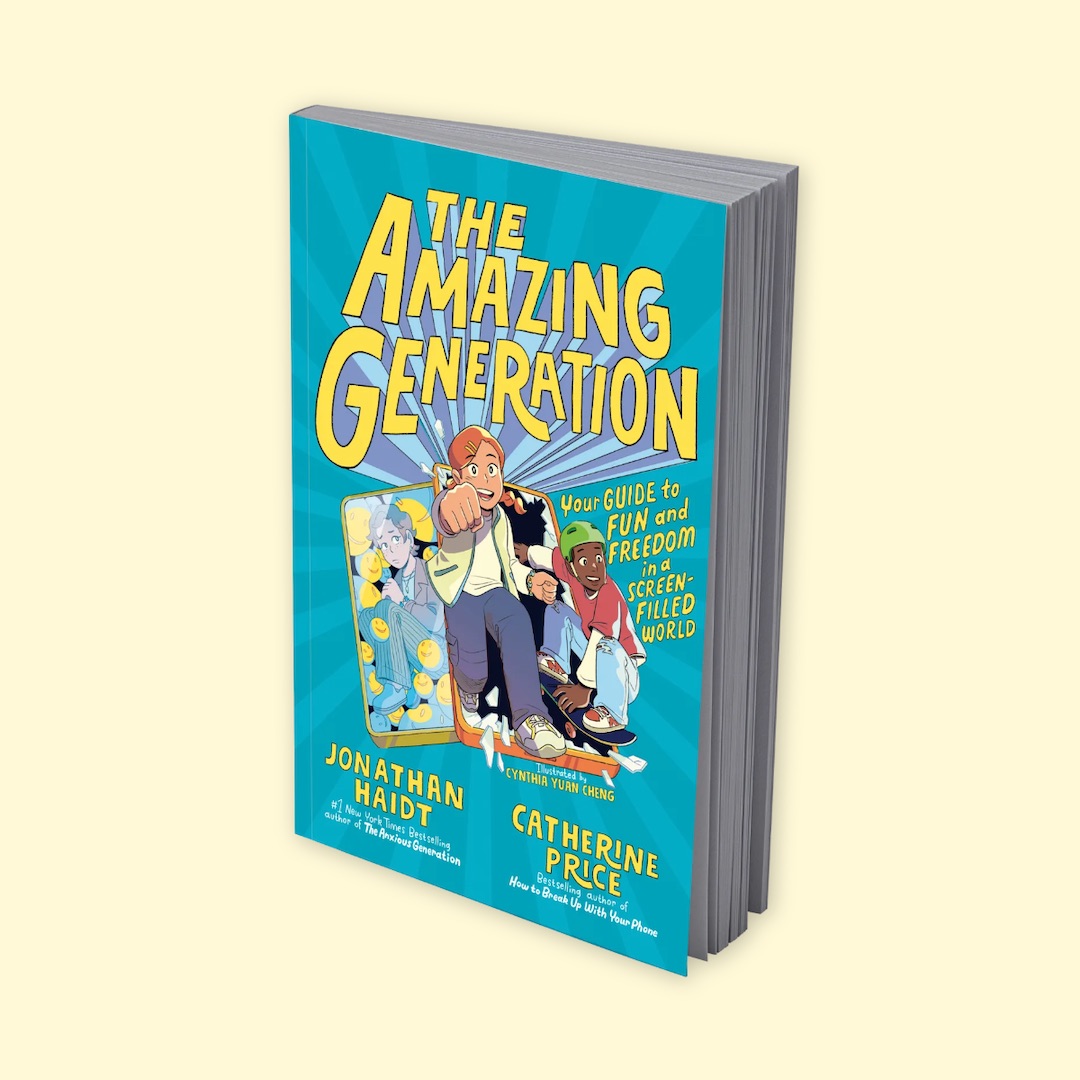
Catherine Price’s “Rebel's Code” focuses on intentional technology use and prioritizing real-world friendship, freedom, and fun. Her book The Amazing Generation, co-written with Jonathan Haidt, introduces these concepts to children through interactive formats and teen perspectives. Research indicates that when adolescents understand how platforms are designed to exploit attention, they show greater motivation to limit their social media use.
READ MORE >for more like this, DR. DELANEY RUSTON'S NEW BOOK, PARENTING IN THE SCREEN AGE, IS THE DEFINITIVE GUIDE FOR TODAY’S PARENTS. WITH INSIGHTS ON SCREEN TIME FROM RESEARCHERS, INPUT FROM KIDS & TEENS, THIS BOOK IS PACKED WITH SOLUTIONS FOR HOW TO START AND SUSTAIN PRODUCTIVE FAMILY TALKS ABOUT TECHNOLOGY AND IT’S IMPACT ON OUR MENTAL WELLBEING.