

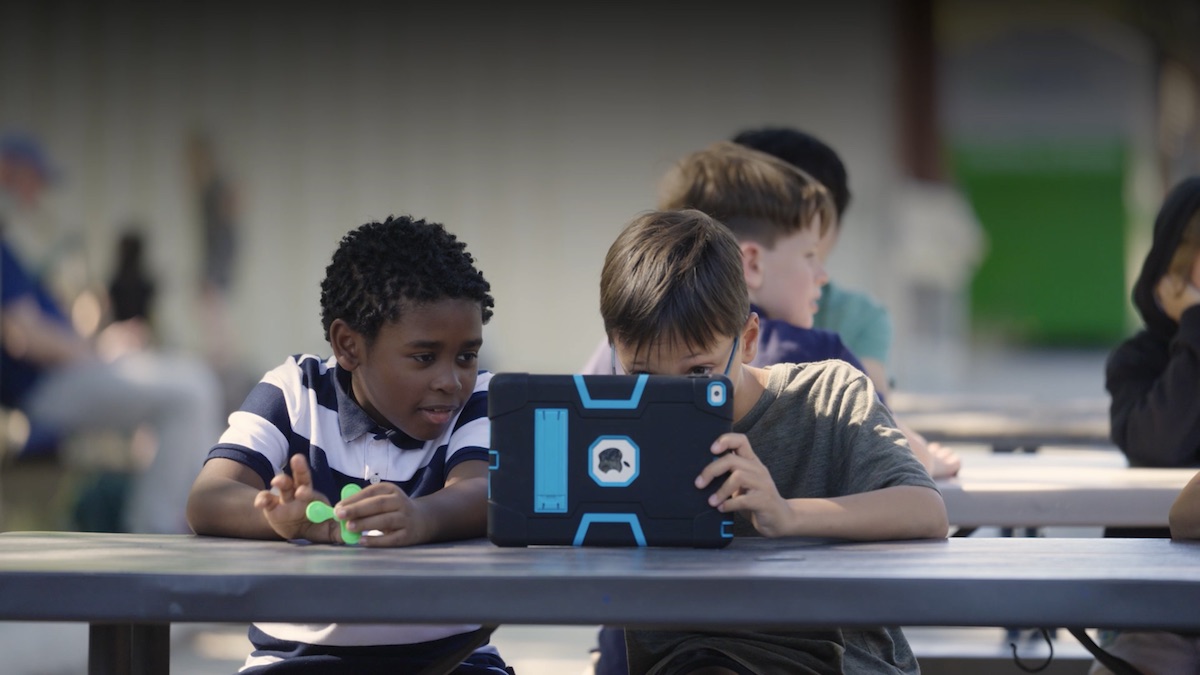

The Los Angeles Unified School District, the second-largest in the country, just approved districtwide screen time limits starting in the 2026–27 school year. Students through 1st grade won't use school devices, grades 2–5 will move from 1-to-1 iPads to shared laptop carts, and older students will face screen time limits with YouTube blocked. Devices also won't be allowed during passing periods, lunch, or recess. Credit goes to the parent- and teacher-led group Schools Beyond Screens, whose organizing and advocacy work helped make it happen.
I am extremely excited to be writing about today’s topic! The second-largest school district in the country just made a major move! And while I have seen this happen in other places, having an entire district do this is big time and very exciting.
Last week, the Los Angeles Unified School District Board of Education approved a plan to set districtwide screen time limits for students by the 2026–27 school year, a major move in the nation’s second-largest school system to rein in classroom tech use.
The policy follows last year’s rollout of a ban on student cellphone use during the school day.
In January 2013, one of the main reasons I pulled out my camera and started filming what would become the first Screenagers film was my son, who was in 8th grade at the time. His school decided to give each student an iPad to use at school and at home, known as a 1-to-1 program.
It immediately caused serious problems in our home.
Before the iPad, screen and online time at home was something I could see and manage. But suddenly his homework required him to be online, which meant the device had to be open and connected and I had no real way to tell whether he was doing homework or something else entirely. I worried about the inappropriate things he could be seeing online through the device.
Many parents were coming to me with similar concerns.
New social dramas in schools emerged as students spent more time on Facebook than ever before (yes, that was what was popular back then), and students were reported as hiding in school to play video games or consume online content.
Meanwhile, a representative from Google came to the school and gave a presentation to us parents, saying how great it was for kids to be “owning” these devices. Frankly, I didn’t believe what he was selling.


Learn more about showing our movies in your school or community!
Join Screenagers filmmaker Delaney Ruston MD for our latest Podcast

Learn more about our Screen-Free Sleep campaign at the website!
Our movie made for parents and educators of younger kids
Learn more about showing our movies in your school or community!
Register your interest in bringing our new movie to your school or community
The data is clear. As Jared Horvath, PhD, explains in The Digital Delusion and in his recent guest blog, there are noticeable inflection points where math and writing scores begin to decline in step with the adoption of one-to-one screen programs. The timing lines up across different places.
Rather than go into all the reasons why tech has not been the learning tool it was promised to be, today I’m focusing on the new policies in Los Angeles and giving credit where credit is due.
Particular thanks are owed to the advocacy group Schools Beyond Screens, who played a key role in pushing for the resolution.
The national coalition was founded by Los Angeles school district parents and teachers to advocate for student-centered classroom technology use. This resolution is the result of over a year of coordinated, consistent effort by parent volunteers, teachers, and students who have had enough of Big Tech’s encroachment on our schools.
I really encourage you to look at everything they have been advocating for.
Details are still being worked out, including specific daily limits, which have not yet been finalized:
Learn more about showing our movies in your school or community!
Join Screenagers filmmaker Delaney Ruston MD for our latest Podcast
Learn more about our Screen-Free Sleep campaign at the website!
Our movie made for parents and educators of younger kids
Join Screenagers filmmaker Delaney Ruston MD for our latest Podcast
Register your interest in bringing our new movie to your school or community
Subscribe to our YouTube Channel! We add new videos regularly and you'll find over 100 videos covering parenting advice, guidance, podcasts, movie clips and more. Here's our most recent:

As we’re about to celebrate 10 years of Screenagers, we want to hear what’s been most helpful and what you’d like to see next.
Please click here to share your thoughts with us in our community survey. It only takes 5–10 minutes, and everyone who completes it will be entered to win one of five $50 Amazon vouchers.
I am extremely excited to be writing about today’s topic! The second-largest school district in the country just made a major move! And while I have seen this happen in other places, having an entire district do this is big time and very exciting.
Last week, the Los Angeles Unified School District Board of Education approved a plan to set districtwide screen time limits for students by the 2026–27 school year, a major move in the nation’s second-largest school system to rein in classroom tech use.
The policy follows last year’s rollout of a ban on student cellphone use during the school day.
In January 2013, one of the main reasons I pulled out my camera and started filming what would become the first Screenagers film was my son, who was in 8th grade at the time. His school decided to give each student an iPad to use at school and at home, known as a 1-to-1 program.
It immediately caused serious problems in our home.
Before the iPad, screen and online time at home was something I could see and manage. But suddenly his homework required him to be online, which meant the device had to be open and connected and I had no real way to tell whether he was doing homework or something else entirely. I worried about the inappropriate things he could be seeing online through the device.
Many parents were coming to me with similar concerns.
New social dramas in schools emerged as students spent more time on Facebook than ever before (yes, that was what was popular back then), and students were reported as hiding in school to play video games or consume online content.
Meanwhile, a representative from Google came to the school and gave a presentation to us parents, saying how great it was for kids to be “owning” these devices. Frankly, I didn’t believe what he was selling.
The data is clear. As Jared Horvath, PhD, explains in The Digital Delusion and in his recent guest blog, there are noticeable inflection points where math and writing scores begin to decline in step with the adoption of one-to-one screen programs. The timing lines up across different places.
Rather than go into all the reasons why tech has not been the learning tool it was promised to be, today I’m focusing on the new policies in Los Angeles and giving credit where credit is due.
Particular thanks are owed to the advocacy group Schools Beyond Screens, who played a key role in pushing for the resolution.
The national coalition was founded by Los Angeles school district parents and teachers to advocate for student-centered classroom technology use. This resolution is the result of over a year of coordinated, consistent effort by parent volunteers, teachers, and students who have had enough of Big Tech’s encroachment on our schools.
I really encourage you to look at everything they have been advocating for.
Details are still being worked out, including specific daily limits, which have not yet been finalized:
Subscribe to our YouTube Channel! We add new videos regularly and you'll find over 100 videos covering parenting advice, guidance, podcasts, movie clips and more. Here's our most recent:
Sign up here to receive the weekly Tech Talk Tuesdays newsletter from Screenagers filmmaker Delaney Ruston MD.
We respect your privacy.
I am extremely excited to be writing about today’s topic! The second-largest school district in the country just made a major move! And while I have seen this happen in other places, having an entire district do this is big time and very exciting.
Last week, the Los Angeles Unified School District Board of Education approved a plan to set districtwide screen time limits for students by the 2026–27 school year, a major move in the nation’s second-largest school system to rein in classroom tech use.
The policy follows last year’s rollout of a ban on student cellphone use during the school day.
In January 2013, one of the main reasons I pulled out my camera and started filming what would become the first Screenagers film was my son, who was in 8th grade at the time. His school decided to give each student an iPad to use at school and at home, known as a 1-to-1 program.
It immediately caused serious problems in our home.
Before the iPad, screen and online time at home was something I could see and manage. But suddenly his homework required him to be online, which meant the device had to be open and connected and I had no real way to tell whether he was doing homework or something else entirely. I worried about the inappropriate things he could be seeing online through the device.
Many parents were coming to me with similar concerns.
New social dramas in schools emerged as students spent more time on Facebook than ever before (yes, that was what was popular back then), and students were reported as hiding in school to play video games or consume online content.
Meanwhile, a representative from Google came to the school and gave a presentation to us parents, saying how great it was for kids to be “owning” these devices. Frankly, I didn’t believe what he was selling.
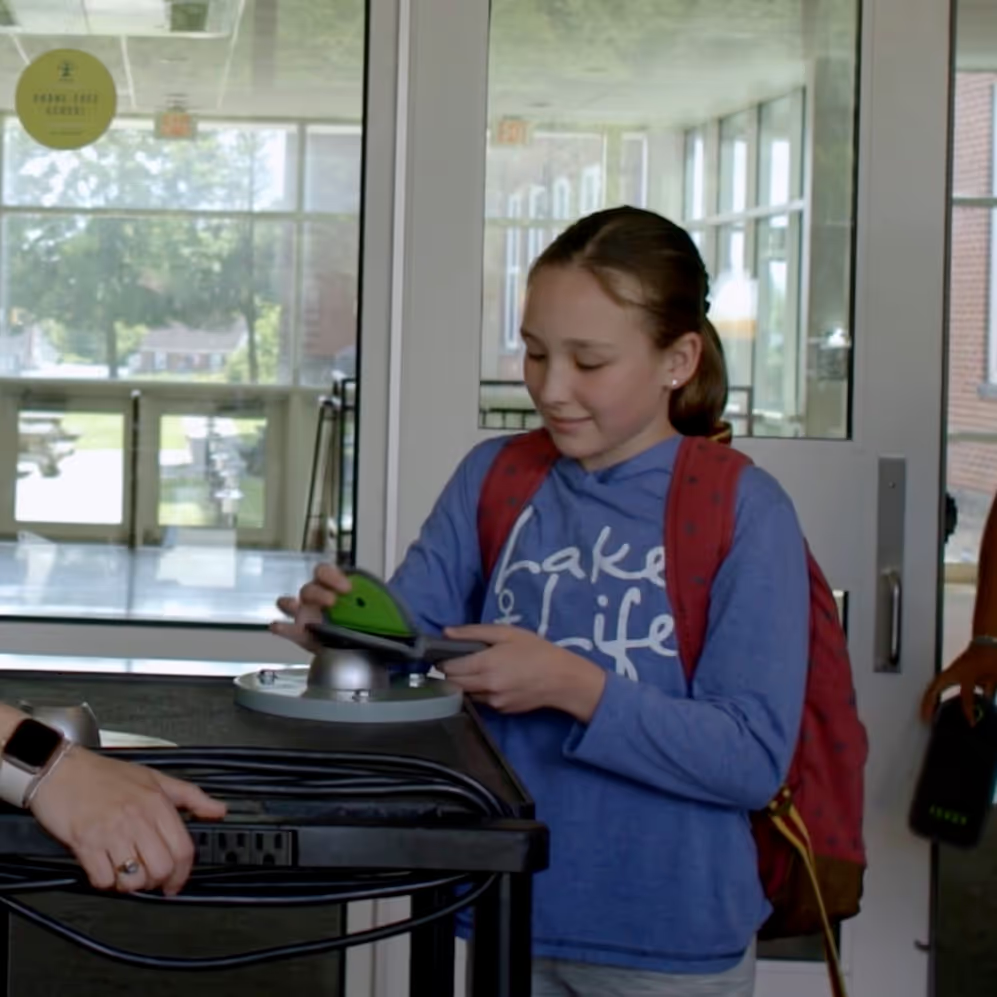
This year, millions of students are experiencing a major shift: school days without phones, smartwatches, or other personal devices. Today we explore the wins, hurdles, and solutions helping schools succeed. We also share our resources that you can use to support technology policy changes in your schools.
READ MORE >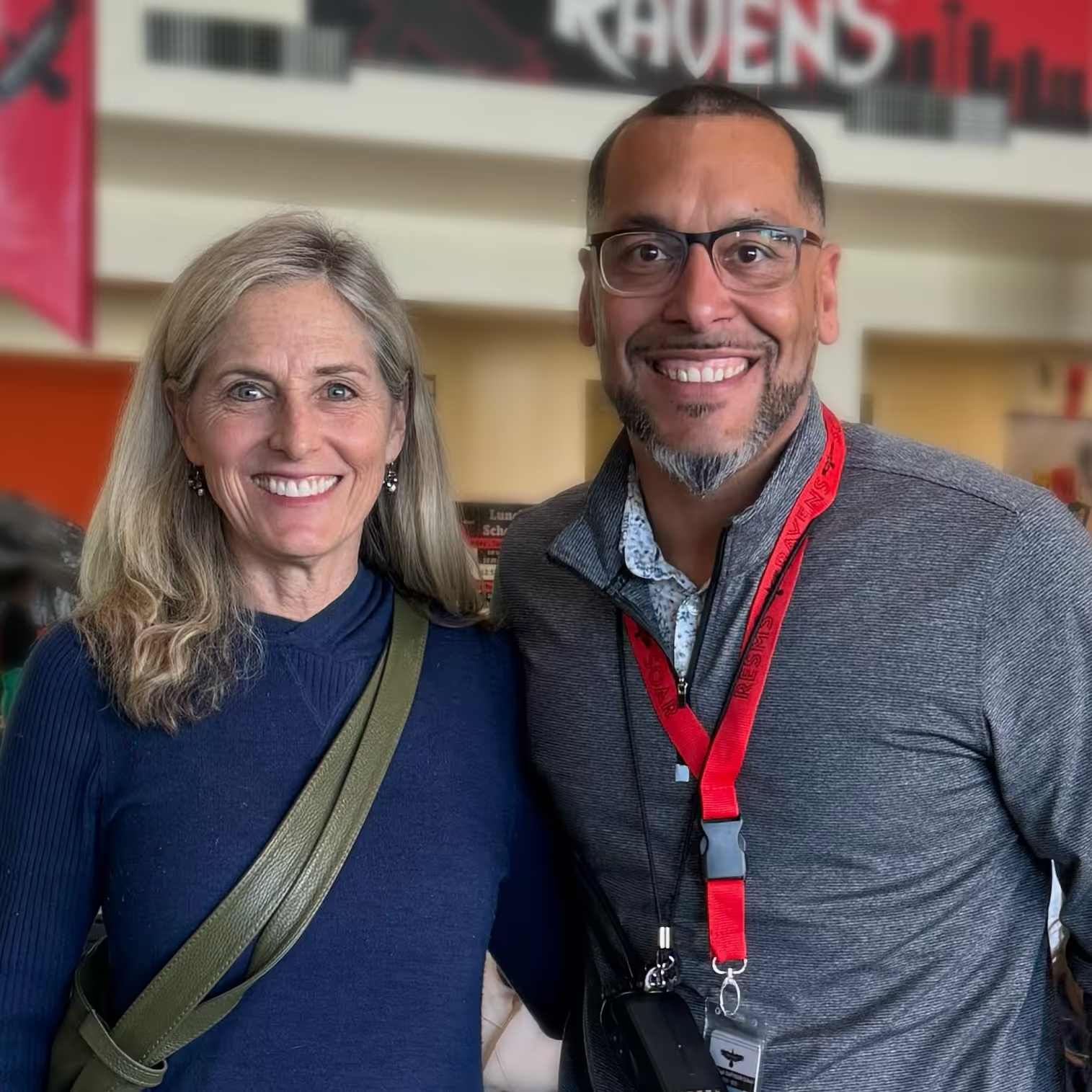
I recently sat down with middle school principal Zach at his school in Washington State. We talked about the challenges Zach and his team faced in his early years as principal when students used phones during school, and how he brought about a powerful transformation by having phones and smartwatches put away in locked pouches for the whole school day. In today’s blog, to raise awareness of the challenges, I share five real examples from Zach of the troubling ways students use phones at school to be unkind.
READ MORE >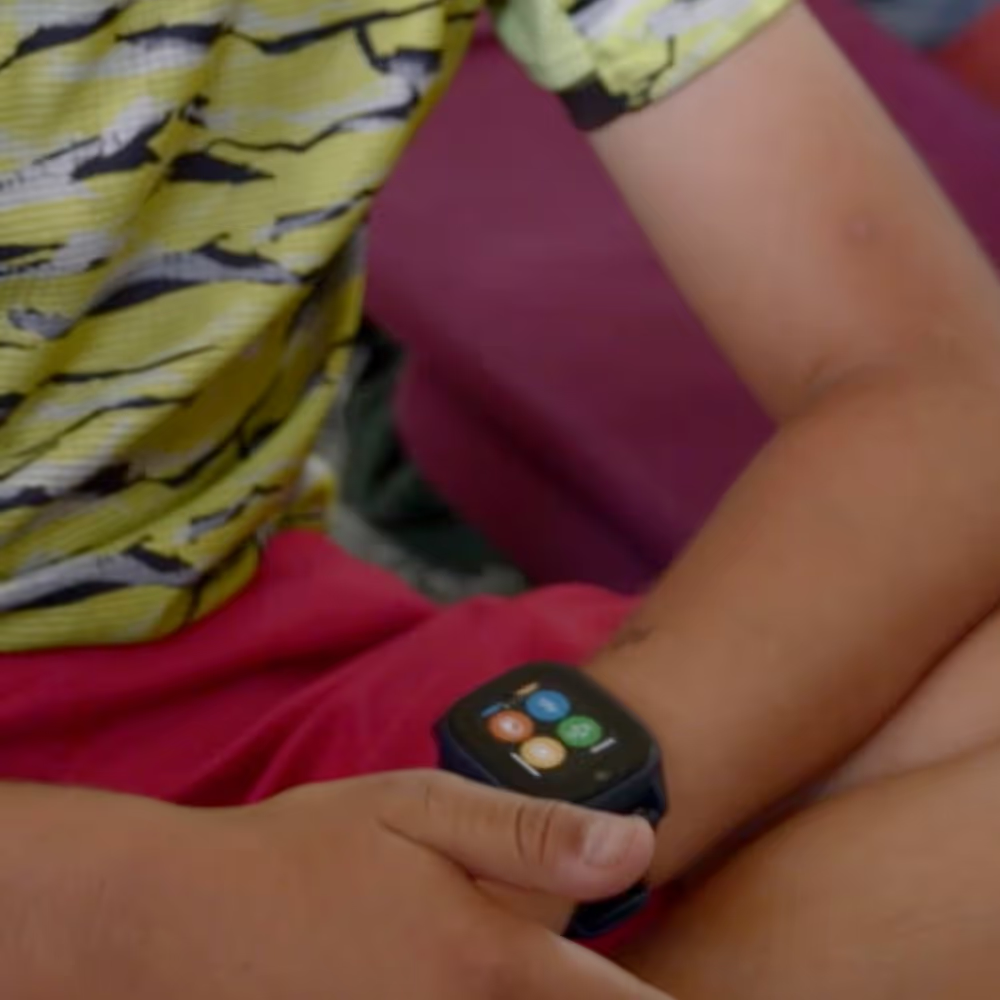
It is with great pleasure that I share with you today a piece that Lisa Tabb and I did for Jonathan Haidt's (Author of The Anxious Generation) and researcher Zack Rausch's Substack blog — After Babel. In it, we discuss the rise in use of smartwatches in elementary schools and the problems they pose. There is a real cost to arming (pun intended) our kids with these devices and sending them to school. Now is the time to stop and fully address this topic and ensure that schools become smartwatch and phone-free.
READ MORE >for more like this, DR. DELANEY RUSTON'S NEW BOOK, PARENTING IN THE SCREEN AGE, IS THE DEFINITIVE GUIDE FOR TODAY’S PARENTS. WITH INSIGHTS ON SCREEN TIME FROM RESEARCHERS, INPUT FROM KIDS & TEENS, THIS BOOK IS PACKED WITH SOLUTIONS FOR HOW TO START AND SUSTAIN PRODUCTIVE FAMILY TALKS ABOUT TECHNOLOGY AND IT’S IMPACT ON OUR MENTAL WELLBEING.