




Did you know that 45% of girls stop playing sports by age 14 due to low body confidence?
That is a shocking and devastating statistic.
This was shown to an audience of 123.4 million last Sunday when Dove, in partnership with Nike, aired a 30-second spot during the Super Bowl as part of “The Self-Esteem Project.”
In a world where what girls see on social media, influencers on YouTube on their favorite shows, and in advertising powerfully shape perceptions and behaviors, Dove's Super Bowl ad presents a critical conversation starter about the intersection of self-esteem, body image, and performance in societal contexts.
The statistic - 45% of girls dropping sports because of feeling body dissatisfaction - aligns with the broader discourse on how societal expectations and self-consciousness about appearance can significantly impact cognitive and physical performance.
In my first film, Screenagers: Growing Up in the Digital Age, I shared a study that showed body objectification of women negatively impacted their cognitive abilities.
Dubbed the “sweater study,” it revealed the psychological impact of self-objectification, where women performed worse on a math test when wearing a bathing suit compared to a sweater. See the clip from our movie (will add clip) here.
The study illustrates the tangible effects of body image concerns on performance, suggesting that the pressure to conform to certain physical standards can detract from an individual's focus and abilities in cognitive tasks.


Learn more about showing our movies in your school or community!
Join Screenagers filmmaker Delaney Ruston MD for our latest Podcast

Learn more about our Screen-Free Sleep campaign at the website!
Our movie made for parents and educators of younger kids
Learn more about showing our movies in your school or community!
Register your interest in bringing our new movie to your school or community
I applaud Dove for bringing the effort to turn this around to the international stage. In addition to the Super Bowl spot, their campaign uses social media to keep girls body-positive and confident.
Part of the campaign is the TikTok challenge #keepherconfident. Ambassadors Venus Williams, Kyle Kelce, Steve Young, and coaches encourage girls to share their sports skills and to tag and nominate friends for the challenge on TikTok using the #keepherconfident hashtag.
This is so smart. To bring body positivity to a platform that otherwise objectifies body dissatisfaction. This is one of many ways they are working to turn body image around for young girls.
Dove and Nike’s Body Confidence Sport program fosters body confidence for 11 to 17-year-old girls. The effort exemplifies a proactive approach to combatting the detrimental effects of negative body image, which can often lead to eating disorders and other mental health problems.
This international initiative not only seeks to keep girls engaged in sports but also aims to empower them to feel secure in their bodies, irrespective of societal standards, using practical coaching steps. Bravo!
Talking about this with your girls and boys will also help foster confidence that can surpass social media standards. Ask your kids what they think about Dove and Nike’s campaign and how they feel in the wake of filters and photoshopped images.
Learn more about showing our movies in your school or community!
Join Screenagers filmmaker Delaney Ruston MD for our latest Podcast
Learn more about our Screen-Free Sleep campaign at the website!
Our movie made for parents and educators of younger kids
Join Screenagers filmmaker Delaney Ruston MD for our latest Podcast
Register your interest in bringing our new movie to your school or community
With new videos posted every Tuesday and Friday, be sure to subscribe to our YouTube Channel! Here's our latest videos!
In the latest episode of The Screenagers Podcast that just released Dr. Delaney Ruston talks to author and psychologist Dr. Kristin Neff, Ph.D., about the power of self-compassion. They discuss the prevalent issue of self-criticism among parents, particularly regarding screen time, and how adopting self-compassion can help navigate such challenges
Listen to the full episode here: Apple Podcasts // Spotify // Website // YouTube

As we’re about to celebrate 10 years of Screenagers, we want to hear what’s been most helpful and what you’d like to see next.
Please click here to share your thoughts with us in our community survey. It only takes 5–10 minutes, and everyone who completes it will be entered to win one of five $50 Amazon vouchers.
Did you know that 45% of girls stop playing sports by age 14 due to low body confidence?
That is a shocking and devastating statistic.
This was shown to an audience of 123.4 million last Sunday when Dove, in partnership with Nike, aired a 30-second spot during the Super Bowl as part of “The Self-Esteem Project.”
In a world where what girls see on social media, influencers on YouTube on their favorite shows, and in advertising powerfully shape perceptions and behaviors, Dove's Super Bowl ad presents a critical conversation starter about the intersection of self-esteem, body image, and performance in societal contexts.
The statistic - 45% of girls dropping sports because of feeling body dissatisfaction - aligns with the broader discourse on how societal expectations and self-consciousness about appearance can significantly impact cognitive and physical performance.
In my first film, Screenagers: Growing Up in the Digital Age, I shared a study that showed body objectification of women negatively impacted their cognitive abilities.
Dubbed the “sweater study,” it revealed the psychological impact of self-objectification, where women performed worse on a math test when wearing a bathing suit compared to a sweater. See the clip from our movie (will add clip) here.
The study illustrates the tangible effects of body image concerns on performance, suggesting that the pressure to conform to certain physical standards can detract from an individual's focus and abilities in cognitive tasks.
I applaud Dove for bringing the effort to turn this around to the international stage. In addition to the Super Bowl spot, their campaign uses social media to keep girls body-positive and confident.
Part of the campaign is the TikTok challenge #keepherconfident. Ambassadors Venus Williams, Kyle Kelce, Steve Young, and coaches encourage girls to share their sports skills and to tag and nominate friends for the challenge on TikTok using the #keepherconfident hashtag.
This is so smart. To bring body positivity to a platform that otherwise objectifies body dissatisfaction. This is one of many ways they are working to turn body image around for young girls.
Dove and Nike’s Body Confidence Sport program fosters body confidence for 11 to 17-year-old girls. The effort exemplifies a proactive approach to combatting the detrimental effects of negative body image, which can often lead to eating disorders and other mental health problems.
This international initiative not only seeks to keep girls engaged in sports but also aims to empower them to feel secure in their bodies, irrespective of societal standards, using practical coaching steps. Bravo!
Talking about this with your girls and boys will also help foster confidence that can surpass social media standards. Ask your kids what they think about Dove and Nike’s campaign and how they feel in the wake of filters and photoshopped images.
With new videos posted every Tuesday and Friday, be sure to subscribe to our YouTube Channel! Here's our latest videos!
In the latest episode of The Screenagers Podcast that just released Dr. Delaney Ruston talks to author and psychologist Dr. Kristin Neff, Ph.D., about the power of self-compassion. They discuss the prevalent issue of self-criticism among parents, particularly regarding screen time, and how adopting self-compassion can help navigate such challenges
Listen to the full episode here: Apple Podcasts // Spotify // Website // YouTube
Sign up here to receive the weekly Tech Talk Tuesdays newsletter from Screenagers filmmaker Delaney Ruston MD.
We respect your privacy.
Did you know that 45% of girls stop playing sports by age 14 due to low body confidence?
That is a shocking and devastating statistic.
This was shown to an audience of 123.4 million last Sunday when Dove, in partnership with Nike, aired a 30-second spot during the Super Bowl as part of “The Self-Esteem Project.”
In a world where what girls see on social media, influencers on YouTube on their favorite shows, and in advertising powerfully shape perceptions and behaviors, Dove's Super Bowl ad presents a critical conversation starter about the intersection of self-esteem, body image, and performance in societal contexts.
The statistic - 45% of girls dropping sports because of feeling body dissatisfaction - aligns with the broader discourse on how societal expectations and self-consciousness about appearance can significantly impact cognitive and physical performance.
In my first film, Screenagers: Growing Up in the Digital Age, I shared a study that showed body objectification of women negatively impacted their cognitive abilities.
Dubbed the “sweater study,” it revealed the psychological impact of self-objectification, where women performed worse on a math test when wearing a bathing suit compared to a sweater. See the clip from our movie (will add clip) here.
The study illustrates the tangible effects of body image concerns on performance, suggesting that the pressure to conform to certain physical standards can detract from an individual's focus and abilities in cognitive tasks.
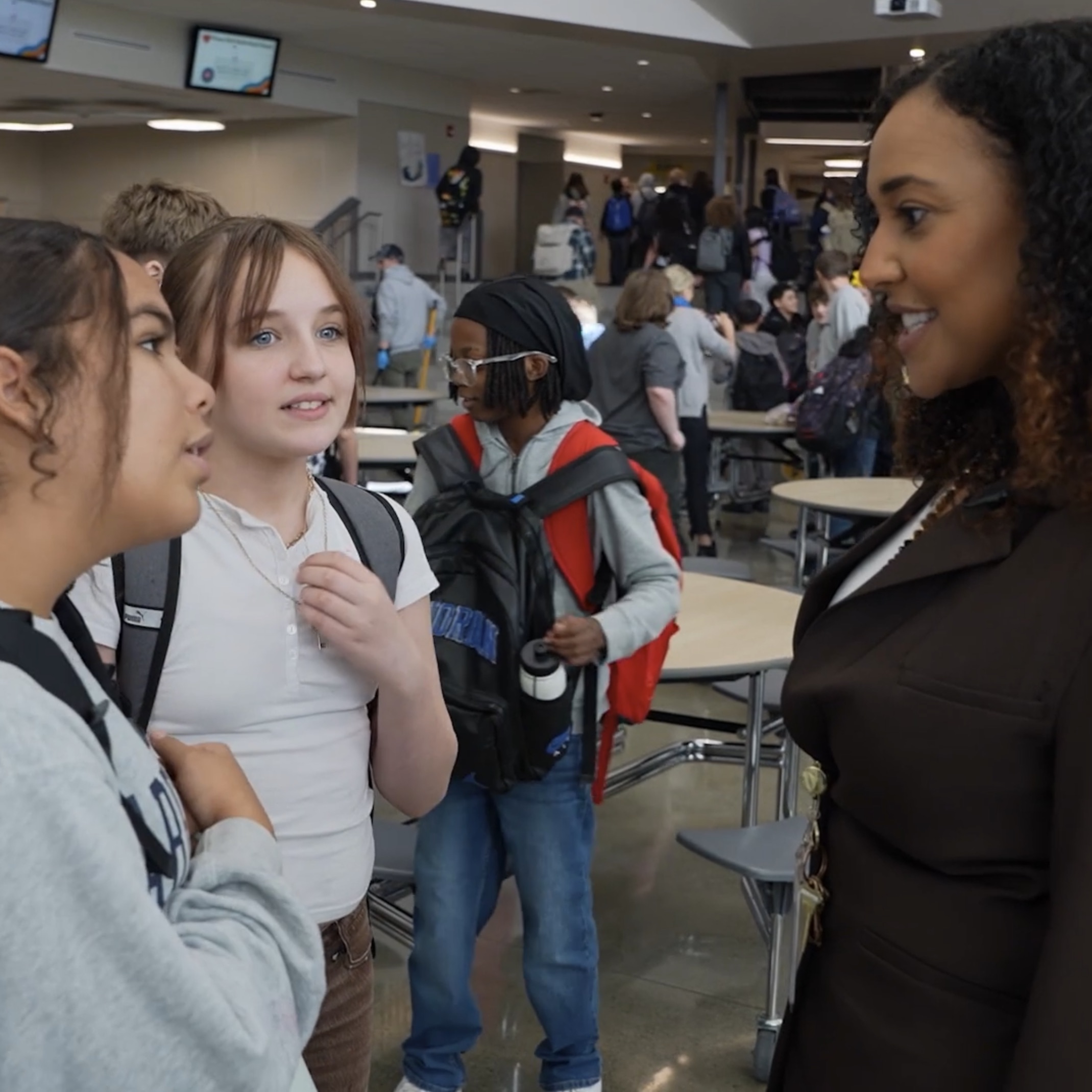
Many kids have nothing to do after school, so they go home to screens and, increasingly, AI chatbots. Spokane Public Schools tackled this by hiring "Engagement Navigators" who proactively find these students and help them get involved, a program we feature in Screenagers: Generation AI. I also share a patient's story, advice for parents whose teens refuse activities, and ways to help other kids get involved.
READ MORE >
Tech journalist Manoush Zomorodi recently shared with Delaney the story behind her new book Body Electric and the citizen science experiment she ran with NPR and Dr. Keith Diaz of Columbia. The 20,000-person study found that five minutes of movement for every thirty minutes of sitting dropped fatigue by up to 28%, lowered blood glucose and blood pressure, and improved focus and mood. Plus, five practical reframes for talking to kids about movement without the eye rolls.
READ MORE >
for more like this, DR. DELANEY RUSTON'S NEW BOOK, PARENTING IN THE SCREEN AGE, IS THE DEFINITIVE GUIDE FOR TODAY’S PARENTS. WITH INSIGHTS ON SCREEN TIME FROM RESEARCHERS, INPUT FROM KIDS & TEENS, THIS BOOK IS PACKED WITH SOLUTIONS FOR HOW TO START AND SUSTAIN PRODUCTIVE FAMILY TALKS ABOUT TECHNOLOGY AND IT’S IMPACT ON OUR MENTAL WELLBEING.