


A week ago, Instagram announced changes to its rules for “Teen Accounts.” All new teen users will be defaulted into these accounts, and current teen users will transition over the next two months.
I listened to a podcast in which Naomi Gleit, Instagram’s head of Products, discussed these changes, and one comment surprised me. She mentioned that teens aged 13 to 16 will need parental permission to have a public account, hoping this would encourage dialogue between teens and parents about social media use. However, I feel this still puts too much responsibility on parents when we need broader societal solutions.
While I’m glad to see these changes, they’re late and not the full answer.
Gleit talks about how Instagram employees spoke with many parents and narrowed down their main concerns in the following three areas. Insta got this right — these are the three big ones:
So, let's go over the changes:
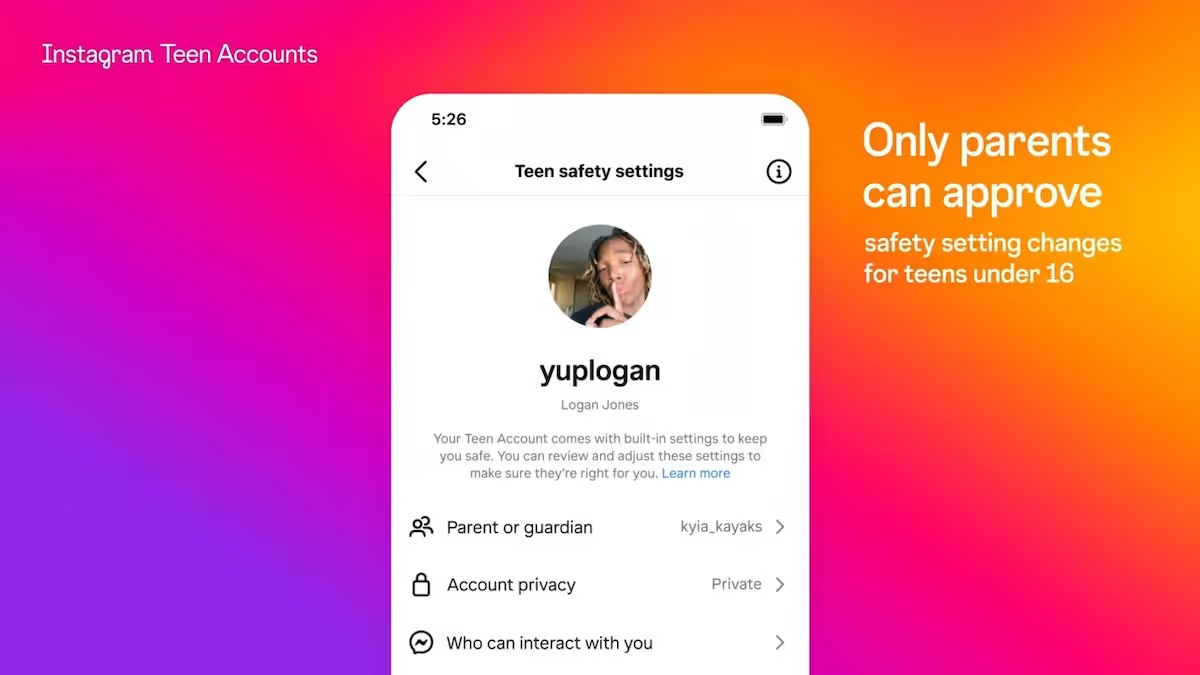
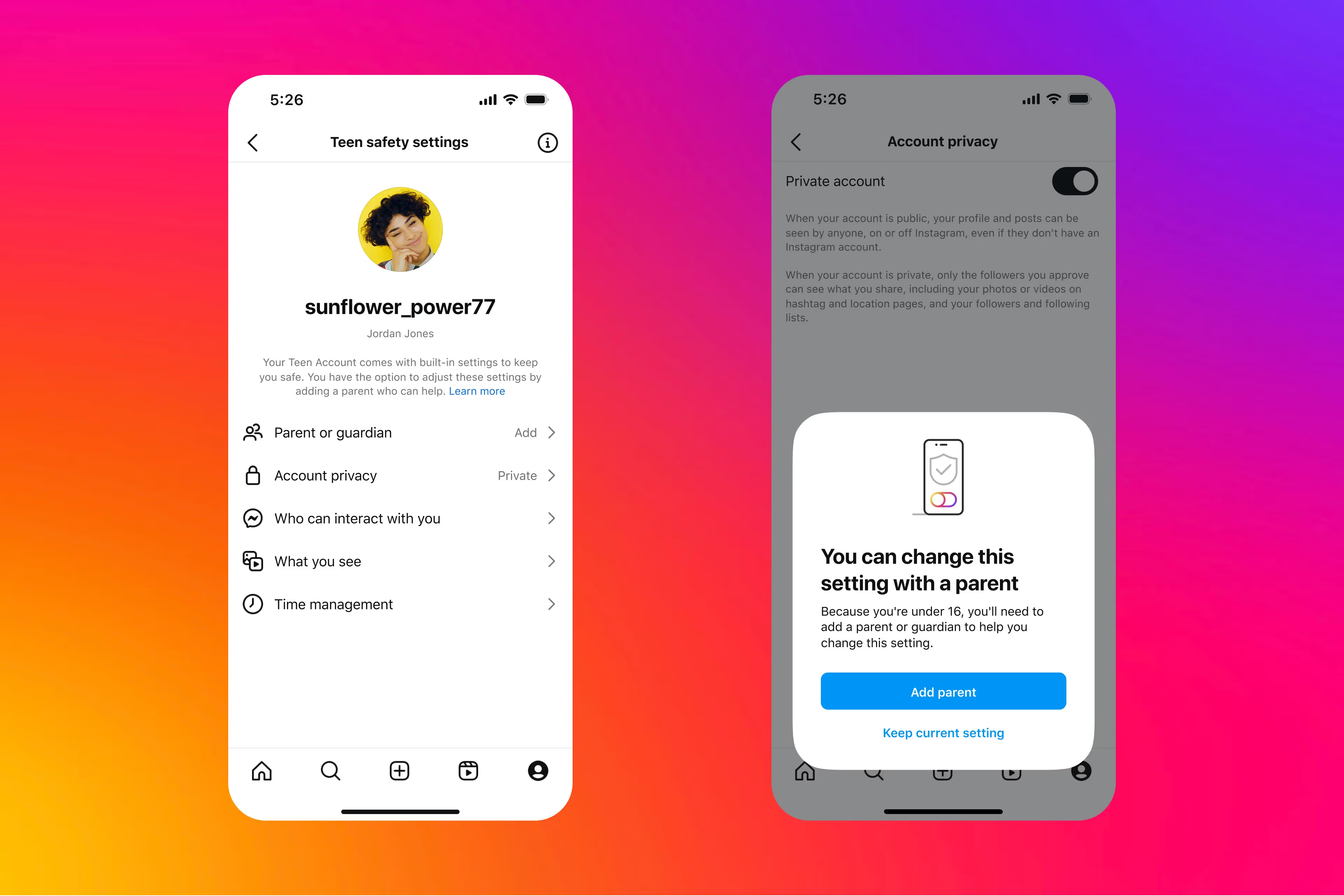
The biggest change is that teens will default to private accounts. Teens between 13 and 16 will need parents to give them permission to change their accounts to public.
To get permission, teens must set up parental supervision on Instagram. If parents want more oversight over their older teen’s (16+) experiences, they simply have to turn on parental supervision. Then, they can approve any changes to these settings, irrespective of their teen’s age.
Once supervision is established, parents can approve and deny their teens’ requests to change settings or allow teens to manage their settings themselves. Soon, parents will also be able to change these settings directly to be more protective. Learn more about how to manage Teen Accounts.
Another significant change is that only people the teen follows or is connected can message that teen. This is a much-needed change.
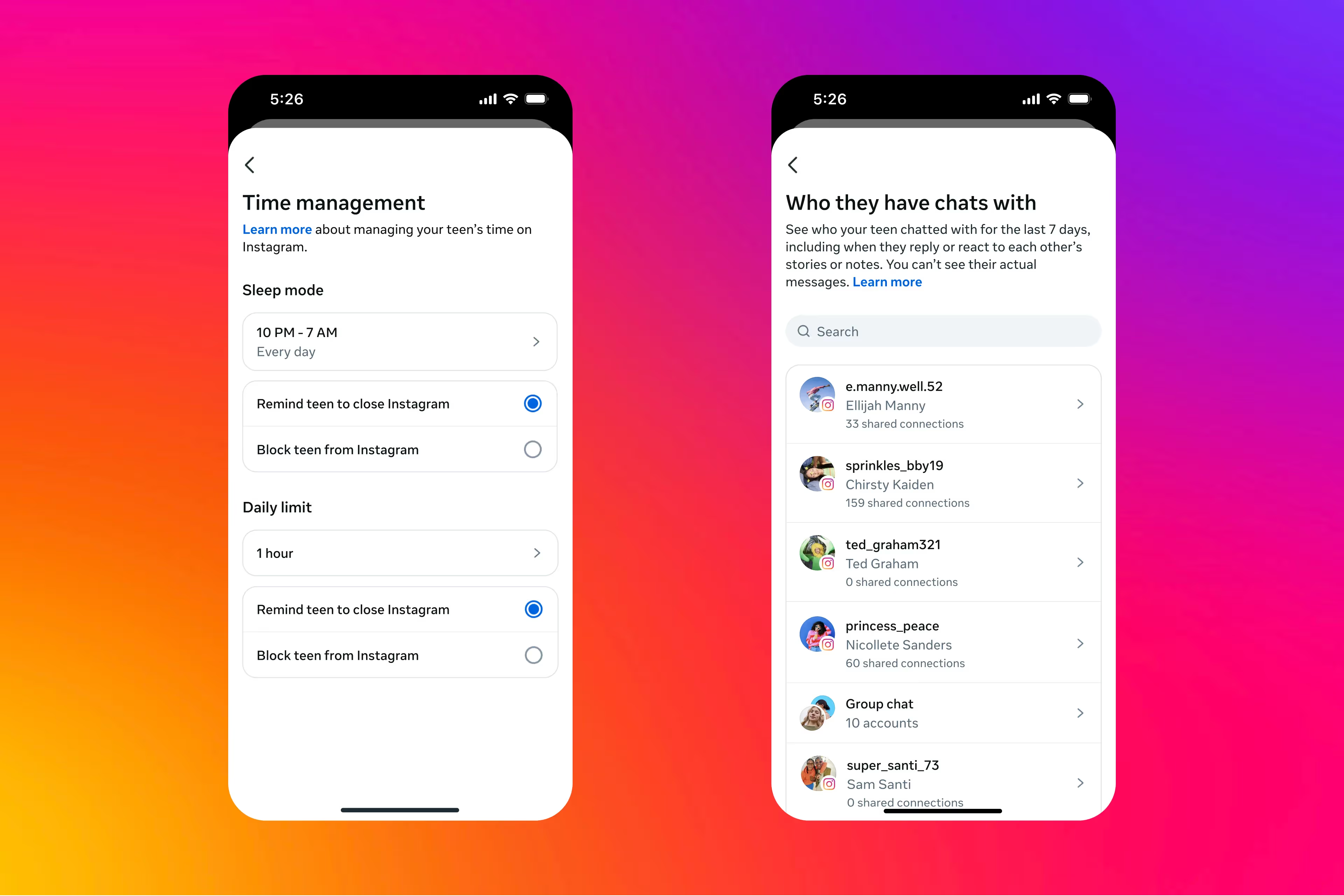
Get insights into who their teens are chatting with: While parents can’t read their teen’s messages, now they will be able to see who their teen has messaged in the past seven days.
Fortunately, the company is saying that they will make it easier for people/ parents to report issues on the site, such as harassment, and that they will respond faster. I really hope this improves because trying to get these platforms to respond to their concerns is a major issue that parents face.
Sensitive content restrictions: Teens will automatically be placed into the most restrictive setting of our sensitive content control, which limits the type of sensitive content (such as content that shows people fighting or promotes cosmetic procedures) teens see in places like Explore and Reels.
Regarding parent involvement in content teens see, a new feature allows parents to see what kids are searching for. This is via a new “interest” feature the Teen account has.
See topics your teen is looking at: Parents can view the age-appropriate topics their teen has chosen to see content from based on their interests.


Learn more about showing our movies in your school or community!
Join Screenagers filmmaker Delaney Ruston MD for our latest Podcast

Learn more about our Screen-Free Sleep campaign at the website!
Our movie made for parents and educators of younger kids
Learn more about showing our movies in your school or community!
Register your interest in bringing our new movie to your school or community
And then there are things around time management, such as teens getting reminders to leave the app after 60 minutes of being on it.
Sleep mode now halts all notifications from 10 pm to 7 am.
Set total daily time limits for teens’ Instagram usage: Parents can decide how much time their teen can spend on Instagram each day. Once a teen hits that limit, they’ll no longer be able to access the app.
Block teens from using Instagram for specific time periods: Parents can choose to block their teens from using Instagram at night or specific time periods with one easy button.
Insta says there are new ways to check whether teens are opening new accounts and ways to prevent that. Interestingly, they plan to get a teen’s ID to verify age, and since some teens do not have IDs, they will use a video tool, i.e., look at the person to know that they do not have another Insta account. I must confess, I am not entirely sure how this will all work. Insta also mentions that requiring parents’ permission to open an account will play into this.
A 1998 law states that teens under 13 should not use social media, given that private information about users on the platform is gathered. However, it is well known that youth under 13 have used false birthdates to access the platform.
Insta is working on systems for the future that can get ideas if a holder of an account is younger than 13 to shut down their account then,
I should be more excited about Instagram’s “Teen Accounts” announcement, but the truth is I am frustrated. We, the millions of parents, work so hard to raise healthy kids in the face of this tech avalanche. Instagram’s changes still put a lot of burden on us.
I’m also concerned about the lack of transparency and oversight over these companies. Researchers, government agencies, and civil society organizations have very limited access to see what's really happening inside the company. Frances Haugen, the Meta whistleblower, has stressed the need for transparency so we can identify and fix the issues.
Thankfully, the Kids Online Safety Act (KOSA) passed in the Senate and is heading for a House vote. COPPA 2.0 is also moving forward. Fingers crossed for more progress.
Learn more about showing our movies in your school or community!
Join Screenagers filmmaker Delaney Ruston MD for our latest Podcast
Learn more about our Screen-Free Sleep campaign at the website!
Our movie made for parents and educators of younger kids
Join Screenagers filmmaker Delaney Ruston MD for our latest Podcast
Register your interest in bringing our new movie to your school or community
Be sure to subscribe to our YouTube Channel! With new ones added regularly, you'll find over 100 videos covering parenting advice, guidance, podcasts, movie clips and more. Here's our latest!

As we’re about to celebrate 10 years of Screenagers, we want to hear what’s been most helpful and what you’d like to see next.
Please click here to share your thoughts with us in our community survey. It only takes 5–10 minutes, and everyone who completes it will be entered to win one of five $50 Amazon vouchers.
A week ago, Instagram announced changes to its rules for “Teen Accounts.” All new teen users will be defaulted into these accounts, and current teen users will transition over the next two months.
I listened to a podcast in which Naomi Gleit, Instagram’s head of Products, discussed these changes, and one comment surprised me. She mentioned that teens aged 13 to 16 will need parental permission to have a public account, hoping this would encourage dialogue between teens and parents about social media use. However, I feel this still puts too much responsibility on parents when we need broader societal solutions.
While I’m glad to see these changes, they’re late and not the full answer.
Gleit talks about how Instagram employees spoke with many parents and narrowed down their main concerns in the following three areas. Insta got this right — these are the three big ones:
So, let's go over the changes:
The biggest change is that teens will default to private accounts. Teens between 13 and 16 will need parents to give them permission to change their accounts to public.
To get permission, teens must set up parental supervision on Instagram. If parents want more oversight over their older teen’s (16+) experiences, they simply have to turn on parental supervision. Then, they can approve any changes to these settings, irrespective of their teen’s age.
Once supervision is established, parents can approve and deny their teens’ requests to change settings or allow teens to manage their settings themselves. Soon, parents will also be able to change these settings directly to be more protective. Learn more about how to manage Teen Accounts.
Another significant change is that only people the teen follows or is connected can message that teen. This is a much-needed change.
Get insights into who their teens are chatting with: While parents can’t read their teen’s messages, now they will be able to see who their teen has messaged in the past seven days.
Fortunately, the company is saying that they will make it easier for people/ parents to report issues on the site, such as harassment, and that they will respond faster. I really hope this improves because trying to get these platforms to respond to their concerns is a major issue that parents face.
Sensitive content restrictions: Teens will automatically be placed into the most restrictive setting of our sensitive content control, which limits the type of sensitive content (such as content that shows people fighting or promotes cosmetic procedures) teens see in places like Explore and Reels.
Regarding parent involvement in content teens see, a new feature allows parents to see what kids are searching for. This is via a new “interest” feature the Teen account has.
See topics your teen is looking at: Parents can view the age-appropriate topics their teen has chosen to see content from based on their interests.
And then there are things around time management, such as teens getting reminders to leave the app after 60 minutes of being on it.
Sleep mode now halts all notifications from 10 pm to 7 am.
Set total daily time limits for teens’ Instagram usage: Parents can decide how much time their teen can spend on Instagram each day. Once a teen hits that limit, they’ll no longer be able to access the app.
Block teens from using Instagram for specific time periods: Parents can choose to block their teens from using Instagram at night or specific time periods with one easy button.
Insta says there are new ways to check whether teens are opening new accounts and ways to prevent that. Interestingly, they plan to get a teen’s ID to verify age, and since some teens do not have IDs, they will use a video tool, i.e., look at the person to know that they do not have another Insta account. I must confess, I am not entirely sure how this will all work. Insta also mentions that requiring parents’ permission to open an account will play into this.
A 1998 law states that teens under 13 should not use social media, given that private information about users on the platform is gathered. However, it is well known that youth under 13 have used false birthdates to access the platform.
Insta is working on systems for the future that can get ideas if a holder of an account is younger than 13 to shut down their account then,
I should be more excited about Instagram’s “Teen Accounts” announcement, but the truth is I am frustrated. We, the millions of parents, work so hard to raise healthy kids in the face of this tech avalanche. Instagram’s changes still put a lot of burden on us.
I’m also concerned about the lack of transparency and oversight over these companies. Researchers, government agencies, and civil society organizations have very limited access to see what's really happening inside the company. Frances Haugen, the Meta whistleblower, has stressed the need for transparency so we can identify and fix the issues.
Thankfully, the Kids Online Safety Act (KOSA) passed in the Senate and is heading for a House vote. COPPA 2.0 is also moving forward. Fingers crossed for more progress.
Be sure to subscribe to our YouTube Channel! With new ones added regularly, you'll find over 100 videos covering parenting advice, guidance, podcasts, movie clips and more. Here's our latest!
Sign up here to receive the weekly Tech Talk Tuesdays newsletter from Screenagers filmmaker Delaney Ruston MD.
We respect your privacy.
A week ago, Instagram announced changes to its rules for “Teen Accounts.” All new teen users will be defaulted into these accounts, and current teen users will transition over the next two months.
I listened to a podcast in which Naomi Gleit, Instagram’s head of Products, discussed these changes, and one comment surprised me. She mentioned that teens aged 13 to 16 will need parental permission to have a public account, hoping this would encourage dialogue between teens and parents about social media use. However, I feel this still puts too much responsibility on parents when we need broader societal solutions.
While I’m glad to see these changes, they’re late and not the full answer.
Gleit talks about how Instagram employees spoke with many parents and narrowed down their main concerns in the following three areas. Insta got this right — these are the three big ones:
So, let's go over the changes:
The biggest change is that teens will default to private accounts. Teens between 13 and 16 will need parents to give them permission to change their accounts to public.
To get permission, teens must set up parental supervision on Instagram. If parents want more oversight over their older teen’s (16+) experiences, they simply have to turn on parental supervision. Then, they can approve any changes to these settings, irrespective of their teen’s age.
Once supervision is established, parents can approve and deny their teens’ requests to change settings or allow teens to manage their settings themselves. Soon, parents will also be able to change these settings directly to be more protective. Learn more about how to manage Teen Accounts.
Another significant change is that only people the teen follows or is connected can message that teen. This is a much-needed change.
Get insights into who their teens are chatting with: While parents can’t read their teen’s messages, now they will be able to see who their teen has messaged in the past seven days.
Fortunately, the company is saying that they will make it easier for people/ parents to report issues on the site, such as harassment, and that they will respond faster. I really hope this improves because trying to get these platforms to respond to their concerns is a major issue that parents face.
Sensitive content restrictions: Teens will automatically be placed into the most restrictive setting of our sensitive content control, which limits the type of sensitive content (such as content that shows people fighting or promotes cosmetic procedures) teens see in places like Explore and Reels.
Regarding parent involvement in content teens see, a new feature allows parents to see what kids are searching for. This is via a new “interest” feature the Teen account has.
See topics your teen is looking at: Parents can view the age-appropriate topics their teen has chosen to see content from based on their interests.
Meta's $17.1 billion settlement requires new safety measures for under-18 users, including a two-hour daily limit and blocking Instagram and Facebook overnight. I'm frustrated it took this long, and that an overnight block can falsely reassure parents when what we really need is a national push for screen-free sleep. I'm glad it happened. And with AI, we have to move much faster.
READ MORE >
The first of more than a thousand school district lawsuits against TikTok, Snapchat, Meta, and YouTube has settled, with a small Kentucky district awarded $27 million. Discovery records made public showed the companies designed to reach kids during the school day, from in-class alerts to keeping notifications on against safety teams' advice, while research finds students spend about 1.5 hours of a 6.5-hour school day on their phones.
READ MORE >
The first of 1,200+ school district lawsuits against social media companies just settled, with Meta, YouTube, Snap, and TikTok all paying out rather than face a jury. Meta points to its Teen Accounts feature as proof of safety, but a study by former Meta safety lead Arturo Bejar found only 8 of 47 advertised features actually work as described.
READ MORE >for more like this, DR. DELANEY RUSTON'S NEW BOOK, PARENTING IN THE SCREEN AGE, IS THE DEFINITIVE GUIDE FOR TODAY’S PARENTS. WITH INSIGHTS ON SCREEN TIME FROM RESEARCHERS, INPUT FROM KIDS & TEENS, THIS BOOK IS PACKED WITH SOLUTIONS FOR HOW TO START AND SUSTAIN PRODUCTIVE FAMILY TALKS ABOUT TECHNOLOGY AND IT’S IMPACT ON OUR MENTAL WELLBEING.