



With video games especially top-of-mind during gift-giving season, this post shares a simple three-part “game plan” to help families be more intentional about gaming. It focuses on creating a clear Gaming Agreement with shared expectations, trying prosocial games that emphasize cooperation and connection, and sharing stories that encourage reflection about balance and choice. Drawing on insights from Cam Adair, the emphasis is not on banning games, but on helping young people avoid displacing other meaningful interests, skills, and real-world opportunities.
Recently, video games have been on my mind for the following reasons:
First, my car battery died last week, and a kind neighbor helped jump-start it. During our conversation, I learned that his job is creating video games.
He later sent me a trailer for his game, and the visuals in the trailer he sent blew me away. The trailer has no gore, but it is a violent game, rated M+. Boy, you would never guess that from the trailer.
Second, I just spoke with a dad who tried to get his son to play a video game with him using a hand controller, but his son refused.
I was surprised to learn that some kids who play a lot of Roblox and Fortnite, like this son, are used to playing with a computer keyboard and don’t enjoy using a hand controller.
And finally… gift-giving season is upon us and as always video games will be at the top of many people's wish lists.
All of this got me thinking: what better time to share a three-part “game plan” to help parents engage in thoughtful planning with their child around gaming?
This plan includes insights from me, as well as from Cam Adair, who founded an organization that helps prevent gaming overuse/addiction and supports those already struggling with these things.
And if you happen to check out this week's podcast episode, you will hear Cam share helpful parenting strategies that go beyond what’s covered in this blog.


Learn more about showing our movies in your school or community!
Join Screenagers filmmaker Delaney Ruston MD for our latest Podcast

Learn more about our Screen-Free Sleep campaign at the website!
Our movie made for parents and educators of younger kids
Learn more about showing our movies in your school or community!
Register your interest in bringing our new movie to your school or community
Whether you are giving your child a new video game or navigating games they already play, step one of the plan is to take 10 minutes to sit down together and create a “Gaming Agreement.”
Just as we often recommend creating an agreement, or even calling it a contract when a child receives a phone, this follows that same idea.
Many popular games focus on competition or “crushing” others. The holidays are the perfect time to try out a game that emphasizes cooperation, problem-solving, and empathy. We call these prosocial games. Remember Animal Crossing? That counts as one.
A great example is Overcooked 2. In this cooking simulator, teams of up to four players work together to prepare and serve meals in wild restaurants.
I learned about this game from the dad I mentioned at the start. He said he and his son used to love playing this together, and he is going to try to get his son to try it out again with him.
It's a local multiplayer game so everyone plays together on the same screen and communicates with each other in-person.
Consider sharing, or reading together, a story about someone who realized gaming was taking over their life and chose to make a change. You could also listen together to this week’s podcast episode, where Cam Adair tells this story.
It is about a young man named Andrew, who was 17, and was gaming excessively. He found himself lying to his parents and feeling bad about it. Andrew decided to stop gaming for 90 days.
During that time, instead of gaming, he picked up his family’s camera and discovered a passion for photography.
Today, he travels the world taking photos and has even been mentored by a National Geographic photographer. The camera had always been there; he just never picked it up because gaming took all of his time.
Learn more about showing our movies in your school or community!
Join Screenagers filmmaker Delaney Ruston MD for our latest Podcast
Learn more about our Screen-Free Sleep campaign at the website!
Our movie made for parents and educators of younger kids
Join Screenagers filmmaker Delaney Ruston MD for our latest Podcast
Register your interest in bringing our new movie to your school or community
Subscribe to our YouTube Channel! We add new videos regularly and you'll find over 100 videos covering parenting advice, guidance, podcasts, movie clips and more. Here's our most recent:

As we’re about to celebrate 10 years of Screenagers, we want to hear what’s been most helpful and what you’d like to see next.
Please click here to share your thoughts with us in our community survey. It only takes 5–10 minutes, and everyone who completes it will be entered to win one of five $50 Amazon vouchers.
Recently, video games have been on my mind for the following reasons:
First, my car battery died last week, and a kind neighbor helped jump-start it. During our conversation, I learned that his job is creating video games.
He later sent me a trailer for his game, and the visuals in the trailer he sent blew me away. The trailer has no gore, but it is a violent game, rated M+. Boy, you would never guess that from the trailer.
Second, I just spoke with a dad who tried to get his son to play a video game with him using a hand controller, but his son refused.
I was surprised to learn that some kids who play a lot of Roblox and Fortnite, like this son, are used to playing with a computer keyboard and don’t enjoy using a hand controller.
And finally… gift-giving season is upon us and as always video games will be at the top of many people's wish lists.
All of this got me thinking: what better time to share a three-part “game plan” to help parents engage in thoughtful planning with their child around gaming?
This plan includes insights from me, as well as from Cam Adair, who founded an organization that helps prevent gaming overuse/addiction and supports those already struggling with these things.
And if you happen to check out this week's podcast episode, you will hear Cam share helpful parenting strategies that go beyond what’s covered in this blog.
Whether you are giving your child a new video game or navigating games they already play, step one of the plan is to take 10 minutes to sit down together and create a “Gaming Agreement.”
Just as we often recommend creating an agreement, or even calling it a contract when a child receives a phone, this follows that same idea.
Many popular games focus on competition or “crushing” others. The holidays are the perfect time to try out a game that emphasizes cooperation, problem-solving, and empathy. We call these prosocial games. Remember Animal Crossing? That counts as one.
A great example is Overcooked 2. In this cooking simulator, teams of up to four players work together to prepare and serve meals in wild restaurants.
I learned about this game from the dad I mentioned at the start. He said he and his son used to love playing this together, and he is going to try to get his son to try it out again with him.
It's a local multiplayer game so everyone plays together on the same screen and communicates with each other in-person.
Consider sharing, or reading together, a story about someone who realized gaming was taking over their life and chose to make a change. You could also listen together to this week’s podcast episode, where Cam Adair tells this story.
It is about a young man named Andrew, who was 17, and was gaming excessively. He found himself lying to his parents and feeling bad about it. Andrew decided to stop gaming for 90 days.
During that time, instead of gaming, he picked up his family’s camera and discovered a passion for photography.
Today, he travels the world taking photos and has even been mentored by a National Geographic photographer. The camera had always been there; he just never picked it up because gaming took all of his time.
Subscribe to our YouTube Channel! We add new videos regularly and you'll find over 100 videos covering parenting advice, guidance, podcasts, movie clips and more. Here's our most recent:
Sign up here to receive the weekly Tech Talk Tuesdays newsletter from Screenagers filmmaker Delaney Ruston MD.
We respect your privacy.
Recently, video games have been on my mind for the following reasons:
First, my car battery died last week, and a kind neighbor helped jump-start it. During our conversation, I learned that his job is creating video games.
He later sent me a trailer for his game, and the visuals in the trailer he sent blew me away. The trailer has no gore, but it is a violent game, rated M+. Boy, you would never guess that from the trailer.
Second, I just spoke with a dad who tried to get his son to play a video game with him using a hand controller, but his son refused.
I was surprised to learn that some kids who play a lot of Roblox and Fortnite, like this son, are used to playing with a computer keyboard and don’t enjoy using a hand controller.
And finally… gift-giving season is upon us and as always video games will be at the top of many people's wish lists.
All of this got me thinking: what better time to share a three-part “game plan” to help parents engage in thoughtful planning with their child around gaming?
This plan includes insights from me, as well as from Cam Adair, who founded an organization that helps prevent gaming overuse/addiction and supports those already struggling with these things.
And if you happen to check out this week's podcast episode, you will hear Cam share helpful parenting strategies that go beyond what’s covered in this blog.

Games like Roblox and Fortnite, which are especially popular among younger video gamers, may seem highly appealing due to their free-to-play model. Of course, they are not truly free. Young people are powerfully compelled to purchase in game currencies using real money, which in turn are used to purchase virtual items like costumes (skins) and weapons. Learn more about how this works in practice and what we can do as parents to help guide our kids.
READ MORE >
For a long time, people have been talking about how video games might be linked to extreme acts of violence, such as school shootings. The fact is millions of youth have played violent video games, and far less than 1% will ever do any such acts of violence. Today I look at two studies that shed more light on the ACTUAL effects that violent games can have on youth behaviors.
READ MORE >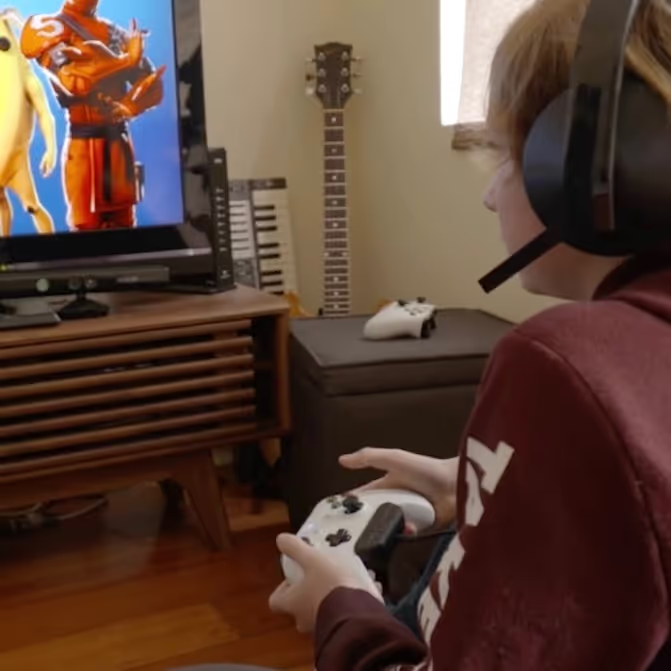
In today's blog, I delve into the darker side of gaming, from the aggressive exchanges and trash-talking in first-person shooters like Call of Duty and even Minecraft and Roblox. This discussion is featured in my latest podcast episode, where I interview a gamer and Dr. Kishonna Gray, an assistant professor in digital studies at the University of Kentucky. Dr. Gray, who explores the human dynamics in video games and assists parents in navigating challenging aspects of gaming culture, provides valuable insights and solutions.
READ MORE >for more like this, DR. DELANEY RUSTON'S NEW BOOK, PARENTING IN THE SCREEN AGE, IS THE DEFINITIVE GUIDE FOR TODAY’S PARENTS. WITH INSIGHTS ON SCREEN TIME FROM RESEARCHERS, INPUT FROM KIDS & TEENS, THIS BOOK IS PACKED WITH SOLUTIONS FOR HOW TO START AND SUSTAIN PRODUCTIVE FAMILY TALKS ABOUT TECHNOLOGY AND IT’S IMPACT ON OUR MENTAL WELLBEING.