

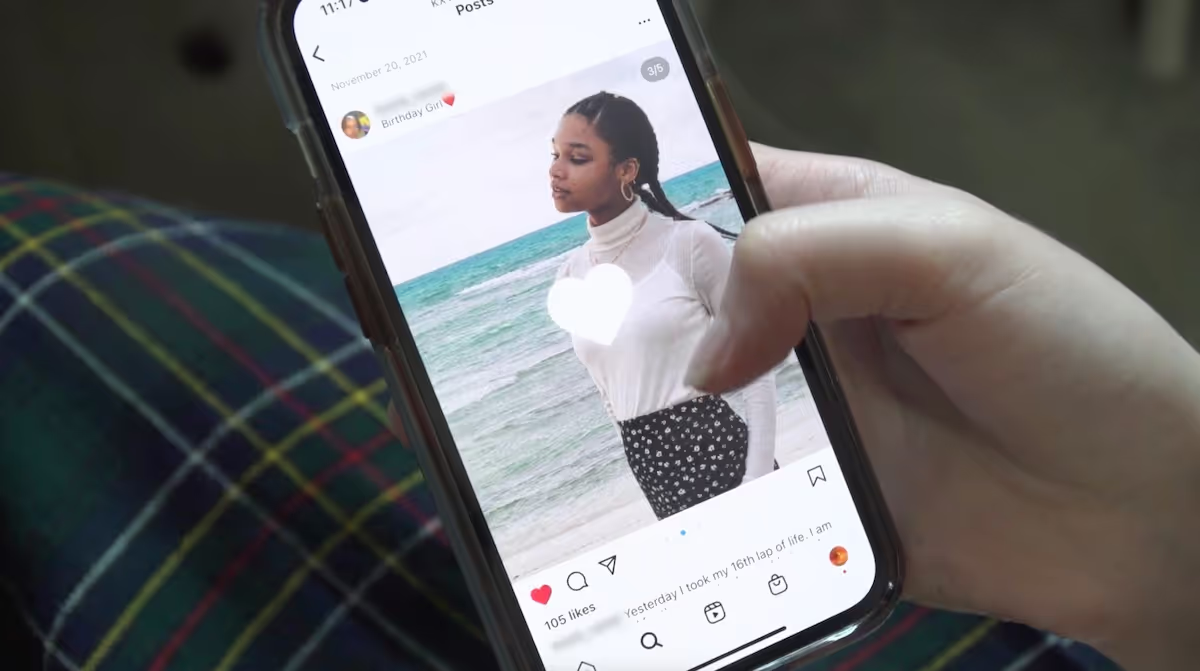

Today’s blog highlights teen’s views on Instagram. Yesterday we released a new Screenager’s Podcast episode which is my candid interview with 3 teenage girls about Instagram. And it is, in my unbiased opinion, an awesome interview :).
The podcast is titled Instagram Unfiltered: Teens Tell All and can be found here: Apple Podcasts // Spotify // Youtube // Website
So, in today's blog, I highlight some key points we discussed and encourage you to listen to the podcast with kids, girls, and boys, as well as use the discussion questions at the end of this blog.
My guests come from various stages of life — middle school, high school, and college—providing a broad spectrum of insights on the topic. Jen, a middle schooler, got Instagram at 13 because she liked the funny memes and her family members were using it. Anya, a high schooler, downloaded the app at 16 to manage social media for her school clubs. Farah, who is now in college, started using Instagram at 12 when her parents gave her permission to have social media after getting a phone.
On the show, we explore how they are using Instagram and what's helpful and what's not.
Instagram’s ability to captivate attention was a recurring theme. Jen mentioned that she can get distracted by quick, random posts about people's lives. Anya and Farah both spoke about how easy it is to spend hours scrolling through posts, Reels, and memes, which often adds up without them even realizing it.
Farah emphasized that while staying informed is beneficial, the constant news stream can sometimes be overwhelming and negatively impact her mood.
Comparison is inevitable on social media. Farah highlighted how influencers often present only the good parts of their lives, making it easy for others to feel inadequate by comparison. Despite being aware that social media is highly curated, it still impacts users' self-esteem and self-worth. Jen agreed that seeing the fuller versions of people's lives, including their struggles, could make social media more relatable and reduce feelings of inadequacy.
If you listen to the episode, you will hear about my experience posting about my real feelings and what happened in response (Spoiler alert: it was good).


Learn more about showing our movies in your school or community!
Join Screenagers filmmaker Delaney Ruston MD for our latest Podcast

Learn more about our Screen-Free Sleep campaign at the website!
Our movie made for parents and educators of younger kids
Learn more about showing our movies in your school or community!
Register your interest in bringing our new movie to your school or community
And we talk about how people's posts are generally curated and happy. Yet, what about the fuller aspects of ourselves? Is it ever okay to reveal some of that?
In addition, a topic that I feel is greatly under-discussed is the egregious content of inappropriate ads coming to our kids. For example, the 13-year-old in the interview reports seeing numerous beer ads. Recently there has been an explosion of ads for Zyns-- the oral pouches that deliver nicotine. Just the other day, a young man who knows about our film, Screenagers Under The Influence, wanted to tell me about all the ads for Zyns flooding his feed. He doesn't use Zyns, and he was really disheartened to see the ads everywhere.
The teens also shared their thoughts on advertisements and sponsored posts that flood their Instagram feeds. Jen, who is still in middle school, noted receiving age-inappropriate ads like ones for alcohol. Anya found location-based ads unsettling, while Farah got a mix of jewelry and comedic content.
The teens had different approaches to posting. Per her parents ' guidelines, Jen doesn’t post pictures of her face or anything too personal. Farah posts occasionally but keeps her account private to control who sees her content.
As we wrapped up, Farah shared that some of her friends have decided to delete social media for the summer to focus more on themselves. This conversation highlighted the importance of setting boundaries and taking breaks from social media to maintain mental well-being.
Learn more about showing our movies in your school or community!
Join Screenagers filmmaker Delaney Ruston MD for our latest Podcast
Learn more about our Screen-Free Sleep campaign at the website!
Our movie made for parents and educators of younger kids
Join Screenagers filmmaker Delaney Ruston MD for our latest Podcast
Register your interest in bringing our new movie to your school or community
Be sure to subscribe to our YouTube Channel! With new ones added regularly, you'll find over 100 videos covering parenting advice, guidance, podcasts, movie clips and more. Here's our latest!

As we’re about to celebrate 10 years of Screenagers, we want to hear what’s been most helpful and what you’d like to see next.
Please click here to share your thoughts with us in our community survey. It only takes 5–10 minutes, and everyone who completes it will be entered to win one of five $50 Amazon vouchers.
Today’s blog highlights teen’s views on Instagram. Yesterday we released a new Screenager’s Podcast episode which is my candid interview with 3 teenage girls about Instagram. And it is, in my unbiased opinion, an awesome interview :).
The podcast is titled Instagram Unfiltered: Teens Tell All and can be found here: Apple Podcasts // Spotify // Youtube // Website
So, in today's blog, I highlight some key points we discussed and encourage you to listen to the podcast with kids, girls, and boys, as well as use the discussion questions at the end of this blog.
My guests come from various stages of life — middle school, high school, and college—providing a broad spectrum of insights on the topic. Jen, a middle schooler, got Instagram at 13 because she liked the funny memes and her family members were using it. Anya, a high schooler, downloaded the app at 16 to manage social media for her school clubs. Farah, who is now in college, started using Instagram at 12 when her parents gave her permission to have social media after getting a phone.
On the show, we explore how they are using Instagram and what's helpful and what's not.
Instagram’s ability to captivate attention was a recurring theme. Jen mentioned that she can get distracted by quick, random posts about people's lives. Anya and Farah both spoke about how easy it is to spend hours scrolling through posts, Reels, and memes, which often adds up without them even realizing it.
Farah emphasized that while staying informed is beneficial, the constant news stream can sometimes be overwhelming and negatively impact her mood.
Comparison is inevitable on social media. Farah highlighted how influencers often present only the good parts of their lives, making it easy for others to feel inadequate by comparison. Despite being aware that social media is highly curated, it still impacts users' self-esteem and self-worth. Jen agreed that seeing the fuller versions of people's lives, including their struggles, could make social media more relatable and reduce feelings of inadequacy.
If you listen to the episode, you will hear about my experience posting about my real feelings and what happened in response (Spoiler alert: it was good).
And we talk about how people's posts are generally curated and happy. Yet, what about the fuller aspects of ourselves? Is it ever okay to reveal some of that?
In addition, a topic that I feel is greatly under-discussed is the egregious content of inappropriate ads coming to our kids. For example, the 13-year-old in the interview reports seeing numerous beer ads. Recently there has been an explosion of ads for Zyns-- the oral pouches that deliver nicotine. Just the other day, a young man who knows about our film, Screenagers Under The Influence, wanted to tell me about all the ads for Zyns flooding his feed. He doesn't use Zyns, and he was really disheartened to see the ads everywhere.
The teens also shared their thoughts on advertisements and sponsored posts that flood their Instagram feeds. Jen, who is still in middle school, noted receiving age-inappropriate ads like ones for alcohol. Anya found location-based ads unsettling, while Farah got a mix of jewelry and comedic content.
The teens had different approaches to posting. Per her parents ' guidelines, Jen doesn’t post pictures of her face or anything too personal. Farah posts occasionally but keeps her account private to control who sees her content.
As we wrapped up, Farah shared that some of her friends have decided to delete social media for the summer to focus more on themselves. This conversation highlighted the importance of setting boundaries and taking breaks from social media to maintain mental well-being.
Be sure to subscribe to our YouTube Channel! With new ones added regularly, you'll find over 100 videos covering parenting advice, guidance, podcasts, movie clips and more. Here's our latest!
Sign up here to receive the weekly Tech Talk Tuesdays newsletter from Screenagers filmmaker Delaney Ruston MD.
We respect your privacy.
Today’s blog highlights teen’s views on Instagram. Yesterday we released a new Screenager’s Podcast episode which is my candid interview with 3 teenage girls about Instagram. And it is, in my unbiased opinion, an awesome interview :).
The podcast is titled Instagram Unfiltered: Teens Tell All and can be found here: Apple Podcasts // Spotify // Youtube // Website
So, in today's blog, I highlight some key points we discussed and encourage you to listen to the podcast with kids, girls, and boys, as well as use the discussion questions at the end of this blog.
My guests come from various stages of life — middle school, high school, and college—providing a broad spectrum of insights on the topic. Jen, a middle schooler, got Instagram at 13 because she liked the funny memes and her family members were using it. Anya, a high schooler, downloaded the app at 16 to manage social media for her school clubs. Farah, who is now in college, started using Instagram at 12 when her parents gave her permission to have social media after getting a phone.
On the show, we explore how they are using Instagram and what's helpful and what's not.
Instagram’s ability to captivate attention was a recurring theme. Jen mentioned that she can get distracted by quick, random posts about people's lives. Anya and Farah both spoke about how easy it is to spend hours scrolling through posts, Reels, and memes, which often adds up without them even realizing it.
Farah emphasized that while staying informed is beneficial, the constant news stream can sometimes be overwhelming and negatively impact her mood.
Comparison is inevitable on social media. Farah highlighted how influencers often present only the good parts of their lives, making it easy for others to feel inadequate by comparison. Despite being aware that social media is highly curated, it still impacts users' self-esteem and self-worth. Jen agreed that seeing the fuller versions of people's lives, including their struggles, could make social media more relatable and reduce feelings of inadequacy.
If you listen to the episode, you will hear about my experience posting about my real feelings and what happened in response (Spoiler alert: it was good).

Meta's $17.1 billion settlement requires new safety measures for under-18 users, including a two-hour daily limit and blocking Instagram and Facebook overnight. I'm frustrated it took this long, and that an overnight block can falsely reassure parents when what we really need is a national push for screen-free sleep. I'm glad it happened. And with AI, we have to move much faster.
READ MORE >
The first of more than a thousand school district lawsuits against TikTok, Snapchat, Meta, and YouTube has settled, with a small Kentucky district awarded $27 million. Discovery records made public showed the companies designed to reach kids during the school day, from in-class alerts to keeping notifications on against safety teams' advice, while research finds students spend about 1.5 hours of a 6.5-hour school day on their phones.
READ MORE >
The first of 1,200+ school district lawsuits against social media companies just settled, with Meta, YouTube, Snap, and TikTok all paying out rather than face a jury. Meta points to its Teen Accounts feature as proof of safety, but a study by former Meta safety lead Arturo Bejar found only 8 of 47 advertised features actually work as described.
READ MORE >for more like this, DR. DELANEY RUSTON'S NEW BOOK, PARENTING IN THE SCREEN AGE, IS THE DEFINITIVE GUIDE FOR TODAY’S PARENTS. WITH INSIGHTS ON SCREEN TIME FROM RESEARCHERS, INPUT FROM KIDS & TEENS, THIS BOOK IS PACKED WITH SOLUTIONS FOR HOW TO START AND SUSTAIN PRODUCTIVE FAMILY TALKS ABOUT TECHNOLOGY AND IT’S IMPACT ON OUR MENTAL WELLBEING.